 Life & Style
NA must embody spirit of action, innovation, development: top legislator
1.
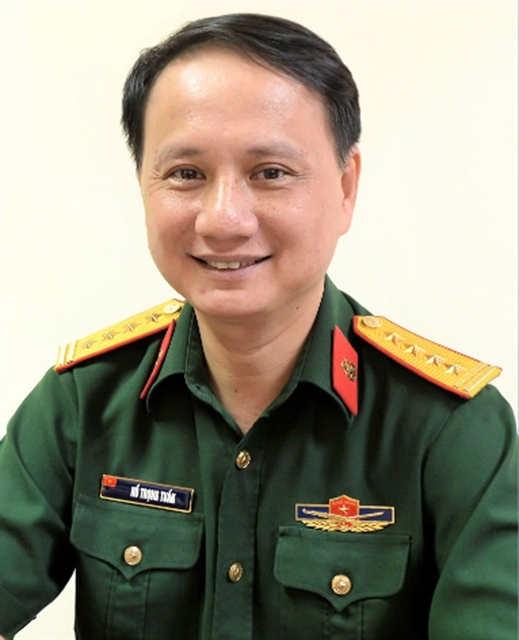 |
| Colonel musican Hồ Trọng Tuấn. Photo qdnd.vn |
The Military University of Culture and Arts has established the Military Symphony Orchestra (MSO), marking a significant step in enriching cultural life, enhancing spiritual well-being and advancing the spread of cultural values both within the armed forces and throughout society.
Vietnam News Agency's Culture & Sports daily interviewed Colonel and musician Hồ Trọng Tuấn about the newly established orchestra.
What is the significance of establishing a professional symphony orchestra within the military?
It can be said that, by international standards, the number of symphony orchestras in Việt Nam remains limited. Although there have been increased investment efforts in recent years, with several new ensembles emerging from organisations and private groups, these developments have yet to fully meet the demands of musical growth in the new era.
In that context, the establishment of the MSO represents a strategic move reflecting the vision of the Central Military Commission and the Ministry of National Defence in enhancing the quality of musical life within the armed forces, while also contributing to the nation’s broader music scene.
The orchestra has emerged at the right moment, bringing together all the necessary elements, from practical demand and institutional support to the capabilities of its artistic personnel.
How, then, will military musicians approach symphonic performance in a way that forges a distinctive identity?
Discipline is our core strength. In fact, it is also a fundamental element of any symphony orchestra worldwide. When we invite guest artists from outside the military, all adhere strictly to shared regulations, ensuring unity and professionalism in performance.
At the same time, we have a strong team of composers and arrangers, enabling us to maintain a high degree of autonomy across various stages of production.
The orchestra is oriented towards contemporary development while also elevating revolutionary music through the language of symphonic expression, thereby bringing classical music closer to the public.
We have been built on a relatively large scale, with a view to meeting international standards. In addition to traditional symphonic sections, the orchestra incorporates modern elements such as electronic instruments.
A defining feature is that, alongside performing classical repertoire, the orchestra is also tasked with presenting revolutionary works, particularly those centred on the soldier. As such, expanding the sound palette allows for greater flexibility in staging and performance, making the orchestra adaptable to a wide range of venues and audiences.
Could you elaborate on the process of building the orchestra?
We identified quality as the top priority. As such, the recruitment of musicians has been carried out with great rigour. After the first round of recruitment, we were only able to meet part of our target. However, the second round attracted nearly 100 applications, underscoring the orchestra’s growing appeal.
With the existing personnel within the military, combined with newly recruited artists, we are largely able to meet operational requirements in the initial phase.
In the long term, we will continue to train, attract and nurture talent both at home and abroad, with a view to gradually refining the organisation and enhancing its artistic quality.
Right now, we will focus on drawing from the rich repertoire of revolutionary and folk music, arranging it in a symphonic language. This approach not only enhances artistic value but also makes the music more accessible to audiences.
The orchestra will gradually expand into more in-depth instrumental programmes, integrating a range of artistic forms. We aim to strike a balance between academic rigour and broad public appeal, ensuring that symphonic music is no longer confined to an ivory tower.
This is a challenging task, but also a strong driving force for us to strive forward. In the future, the orchestra will shape a distinctive style, blending classical music with Vietnamese cultural identity.
We aim to bring symphonic music closer to the public while gradually expanding our presence on the international stage.
As the MSO develops its own distinct identity and mission, how will the body of instrumental works by generations of composers both within and outside the military contribute to its operations?
Việt Nam is home to talented composers whose works across generations have accompanied and carried a sense of mission within the country’s development.
The early generation, such as Đỗ Nhuận, Nguyễn Xuân Khoát, Nguyễn Văn Thương, Doãn Nho, followed by later names like Đỗ Hồng Quân and Trần Mạnh Hùng, and today’s emerging generation, Đỗ Bảo and Đình Thắng.
However, Vietnamese instrumental music has yet to develop to its full potential, largely due to a lack of platforms for performance.
Compositions lack the space and orchestral forces needed to be brought to life and reach audiences. There remains a shortage of cultural infrastructure to popularise classical music. In Hà Nội, for instance, only venues such as the Hà Nội Opera House and, more recently, the Hồ Gươm Opera House are available.
Classical music requires systematic, long-term investment from the State, alongside the participation of the private sector, to elevate the field in line with public expectations.
What plans do you have in place for training and developing its human resources for MSO?
Training orchestral musicians requires a long-term process, typically spanning 10 to 15 years. Based on practical needs, we have been developing plans to propose the opening of long-term training programmes.
From 2025, with the resumption of civilian training, we will put forward proposals to expand programmes in orchestral performance and classical instrumental studies, ensuring a steady pipeline of talent to support development over the next 15 to 35 years. — OVN/VNS
Life & Style
 Life & Style
 Life & Style
 Life & Style
 Life & Style
 Life & Style
 Life & Style
 Life & Style
 Life & Style
 Life & Style
 Life & Style
 Life & Style
 Life & Style
 Life & Style
 Life & Style