 Life & Style
Việt Nam's first lady, Danish Queen present Vietnamese book collection to Copenhagen library
1.
|
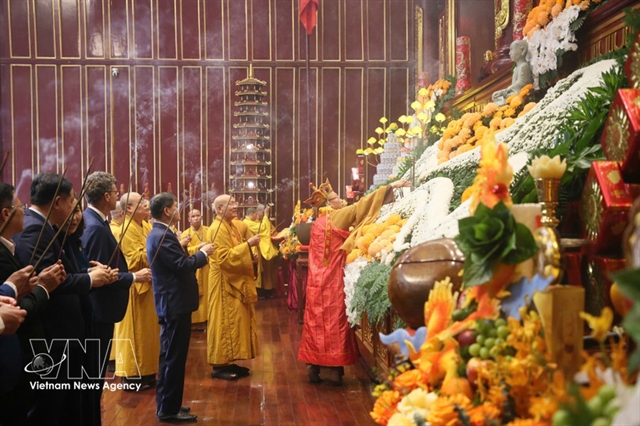
| Officials and Buddhist monks and nuns offer incense at the opening ceremony of the Yên Tử Spring Festival 2026 on February 26. — VNA/VNS Photo |
QUẢNG NINH — The Yên Tử Spring Festival 2026 opened in the northern province of Quảng Ninh on February 26 (the 10th day of the first lunar month), marking an important milestone following the July 2025 UNESCO World Cultural Heritage inscription of the Yên Tử – Vĩnh Nghiêm – Côn Sơn, Kiếp Bạc Complex of Monuments and Landscapes.
In his opening remarks, Chairman of the provincial People’s Committee Bùi Văn Khang stressed that Yên Tử is a place where not only sacred mountains and rivers converge but the distinctive values of Vietnamese culture and Buddhism also crystallise. More than seven centuries ago, King Trần Nhân Tông chose this sacred mountain to pursue monastic life and founded the Trúc Lâm Zen sect – a uniquely Vietnamese school of Zen that upholds service to humanity and the nation as its guiding principle.
Highlighting the new stature of the heritage site, the provincial leader said the festival is not merely the opening ritual of a new festive season, but also an affirmation of Yên Tử’s position on the world cultural heritage map. The World Heritage title sets higher requirements for the organisation, management and preservation of the heritage space, as well as for the development of spiritual cultural tourism in tandem with safeguarding and promoting Yên Tử’s values.
Sharing his view on the site’s outstanding universal value, UNESCO Representative to Việt Nam Jonathan Wallace Baker expressed his impression of Yên Tử's vibrant spiritual landscape. He affirmed that the inscription represents international recognition of the region’s historical depth and distinctive cultural values.
Cultural heritage can only be sustainable when it is cherished by communities and passed down through generations, he said, adding that UNESCO remains committed to providing technical support to ensure effective management while harmonising conservation and development.
|
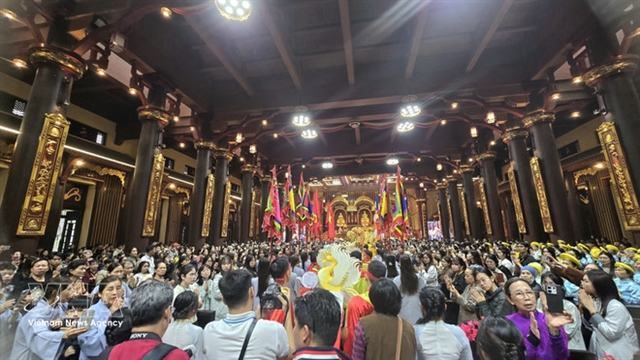
| Participants in a ritual held at the Yên Tử Spring Festival 2026. — VNA/VNS Photo |
The year 2026 marks a turning point in heritage management in Quảng Ninh, with breakthrough welfare policies and technological applications. In appreciation of local residents and visitors who supported the journey to secure the World Heritage status for Yen Tu, the province decided to grant a 100 per cent exemption of entrance fees to Yên Tử scenic sites from 2026 through the end of 2028. In addition, visitors will enjoy free parking at the Hạ Kiệu bus station through the end of 2026 and complimentary insurance coverage during their visit.
Notably, Quảng Ninh has pioneered the application of artificial intelligence to heritage management through an automated visitor recognition system at the site’s entry and exit points. These measures not only improve service quality but also demonstrate a modern governance mindset, creating favourable conditions for the heritage to truly belong to the community.
During the nine-day Lunar New Year holiday, February 14–22, the Yên Tử historical and scenic site welcomed around 171,000 visitors, 2.2 times higher than the same period in 2025, statistics showed.
The 2026 Yên Tử Spring Festival, imbued with the enduring values of the Trúc Lâm Zen sect and the stature of a world heritage site, is opening a new chapter for Quảng Ninh’s tourism. It is not only a sacred pilgrimage destination but also a symbol of the connection between historical legacy and a modern future, and between national spirit and universal human values. — VNA/VNS
Life & Style
 Life & Style
 Life & Style
 Life & Style
 Life & Style
 Life & Style
 Life & Style
 Life & Style
 Life & Style
 Life & Style
 Life & Style
 Life & Style
 Life & Style
 Life & Style
 Life & Style

.jpg)



