 Life & Style
Youth-led initiative opens up opportunities for disadvantaged children
1.
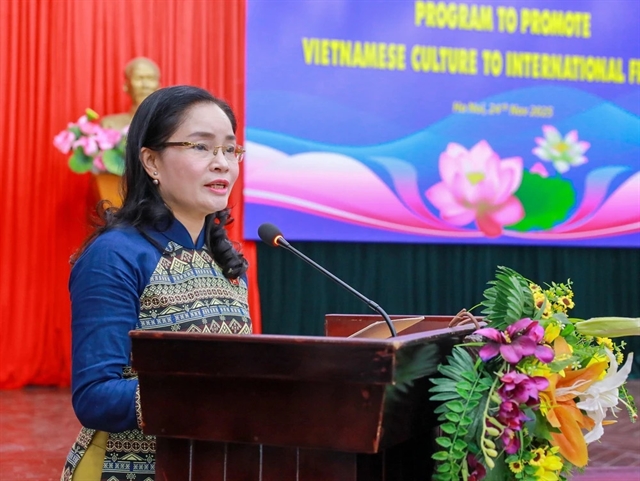 |
| Deputy Minister of Culture, Sports and Tourism Trịnh Thị Thủy speaks at an event promoting Vietnamese culture to international audiences. VNA/VNS Photo Khánh Hoà |
In an interview with Trọng Lịch of the Vietnam News Agency, Deputy Minister of Culture, Sports and Tourism Trịnh Thị Thủy frames culture as the foundation of national vitality. More than a symbol, she calls it a dynamic force that fosters unity, pride and progress — the spark capable of turning aspiration into action and hope into tangible achievement.
Inner Sanctum: Looking back at 2025, the Culture, Sports and Tourism sector handled a tremendous workload and organised many major events that fostered patriotism, national pride and development aspirations while promoting Việt Nam’s image as united, dynamic and innovative. What do you see as the most outstanding results that contributed to the country’s overall achievements?
Guided closely by the direction of Party and State leaders, particularly the orientation emphasising culture as a foundational pillar of development, the entire leadership of the Ministry of Culture, Sports and Tourism worked with a strong sense of unity, discipline and responsibility. We approached our tasks with flexibility, practicality and a close link to real-life needs, and this approach helped us achieve many important outcomes.
A key achievement was the institutionalisation of the Party and State’s policies and resolutions through concrete programmes, projects and action plans. We focused especially on implementing the resolutions of the 13th Central Committee of the Communist Party of Việt Nam and seven specialised resolutions of the Politburo, ensuring that strategic orientations were translated into practical action.
Within the Party organisation of the ministry, Party congresses at all levels were organised successfully, culminating in the first Congress of the ministry’s Party Organisation for the 2025–2030 term. This congress adopted many strategic and breakthrough directions and, for the first time, articulated what we consider a guiding declaration of action for the entire sector: culture as the foundation, information as the flow, sports as strength and tourism as the bridge of connection.
Commemorative activities marking major national milestones also left a strong impression. Large-scale events such as the 50th anniversary of the Liberation of the South and National Reunification, the 80th National Day celebrations and the exhibition 80 Years: Journey of Independence – Freedom – Happiness were organised on an unprecedented scale. These events not only honoured history but also strengthened social cohesion and national confidence.
In external relations, cultural diplomacy continued to make its mark. Cultural and artistic exchanges, along with cooperation agreements in culture, sports and tourism signed during high-level visits, helped deepen international partnerships. A particularly significant milestone was the adoption by the UNESCO General Conference of the initiative on an International Decade of Culture for Sustainable Development, proposed by Việt Nam. This reflected the country’s growing role and responsibility in contributing to a peaceful, prosperous and humane future.
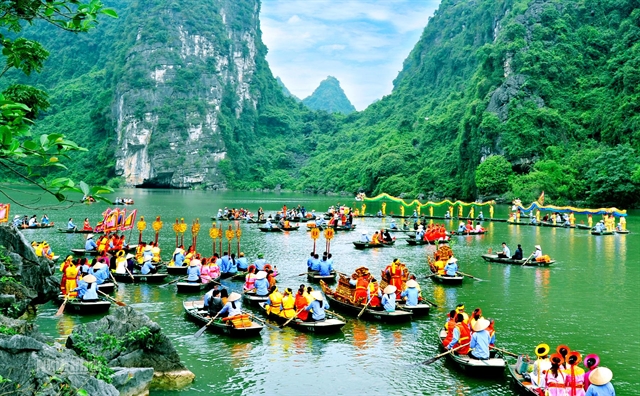 |
| Ninh Bình continues to attract a growing number of visitors drawn to its dramatic landscapes and cultural heritage. Photo lsvn.vn |
Tourism was a bright spot in the socio-economic picture. In 2025, Việt Nam welcomed 21.5 million international visitors, up 25.1 per cent year-on-year, and 135.5 million domestic visitors, up 8.3 per cent. Total tourism revenue exceeded VNĐ1 quadrillion (around US$40 billion). Việt Nam’s tourism competitiveness also rose sharply, ranking 59th out of 119 economies according to the World Economic Forum.
In sports, national teams competed successfully at regional and international events, while mass sports movements continued to expand, with the campaign encouraging people to exercise following President Hồ Chí Minh’s example, attracting wide participation.
Inner Sanctum: Tourism maintained strong growth thanks to new thinking, improved promotion and digital transformation. Could you share more about the measures taken and the results achieved?
The breakthrough in tourism came from a change in mindset and approach. We focused on developing new products, improving service quality and creating more favourable policies, while also professionalising promotion and marketing.
The ministry worked closely with other ministries and sectors to advise the Government on breakthrough mechanisms, particularly more open visa policies and regulations that reduce input costs for businesses. These measures created a more favourable legal environment and served as a powerful boost to international arrivals.
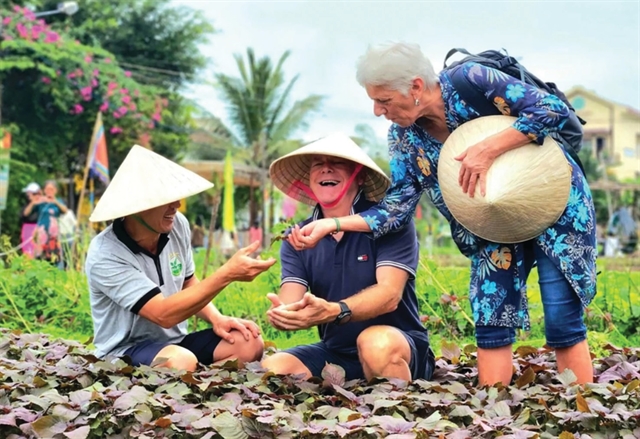 |
| International visitors experience community-based tourism activities at Trà Quế vegetable village in former Quảng Nam Province, now part of enlarged Đà Nẵng City. Photo Trường An |
We paid close attention to developing new types of tourism linked to nature, wellness, cuisine, golf and the night-time economy. These products help extend visitors’ stays and spending, while localities have been encouraged to coordinate and create distinctive offerings based on their cultural and historical values.
Tourism promotion has also been renewed in a more modern and professional direction, making better use of public–private partnerships and combining State budget resources with social contributions. At the same time, we have strengthened measures to ensure security and safety, guided legal compliance in travel and accommodation services and supported localities in repositioning their destination brands.
International recognition has reinforced these efforts. Việt Nam has been honoured in numerous categories at regional and global tourism and culinary awards, confirming its growing reputation as a leading destination in Asia.
Inner Sanctum: How do you assess the role of the press in building social consensus and nurturing development aspirations? What are the notable new points in the revised Press Law that will help media agencies thrive in the digital era?
The press plays an extremely important role in building social consensus and inspiring national development aspirations. In an era of multi-dimensional information and increasingly sophisticated misinformation online, mainstream journalism remains the key force ensuring accuracy, spreading positive values and protecting the ideological foundation of the nation.
Official media outlets provide timely and reliable information, help orient public opinion and highlight effective models, creative approaches and exemplary individuals. They nurture patriotism, preserve cultural traditions and actively participate in the fight against corruption, waste and negative phenomena.
In drafting the revised Press Law, we focused on institutionalising the Party’s viewpoints while addressing practical bottlenecks that have emerged over more than eight years of implementation. The revised law ensures greater consistency within the legal system and creates a clearer, more favourable legal corridor for journalistic activities.
Notable new points include provisions for press activities in cyberspace, the development of key multi-platform media agencies with strong capacity to lead public opinion and occupy the online information space, and principles for the application of artificial intelligence in journalism. These changes aim to help Vietnamese journalism remain professional, humane and modern in the digital age.
Inner Sanctum: The Government has approved the Strategy for the Development of Việt Nam’s Cultural Industries to 2030, with a vision to 2045. What are the key tasks and solutions for effective implementation? How will the ministry both leverage the influence of public figures and strengthen management of the online environment?
The strategy demonstrates the Government’s determination to develop cultural industries into an important economic sector, meeting the requirements of deep international integration, digital transformation and the use of cultural soft power.
Our top priority is completing institutions and creating a favourable environment for creativity. We are focusing on developing high-quality human resources, accelerating digital transformation and applying technology in the production and distribution of cultural products. Building creative infrastructure and spaces, protecting intellectual property, expanding markets, promoting cultural exports and strengthening public–private partnerships are also central tasks.
We identify five pillars: cultural identity as the core source of competitiveness; modern institutions and policies; technology and digital transformation as drivers; creative human resources as the centre; and cultural enterprises and markets as the direct producers of value, protected by strong copyright mechanisms.
Alongside promoting positive information and leveraging the influence of artists, creators and opinion leaders, we are also determined to make the online environment healthier. This involves tightening information discipline, strengthening technological capacity to detect and handle harmful content and proactively leading positive information flows. The ministry will provide official data sources and work with influential figures to spread constructive messages and push back against misinformation.
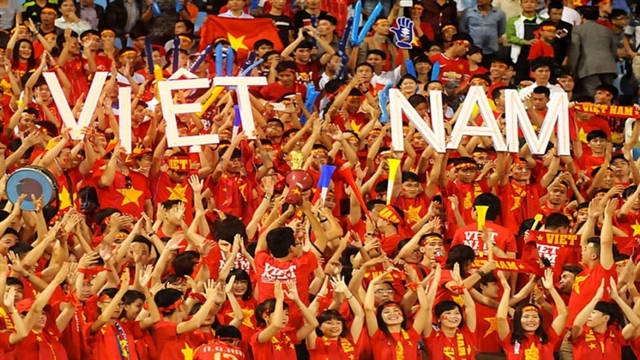 |
| Vietnamese fans show passionate support for the national team at a major sporting event. Photo dantri.com.vn |
Inner Sanctum: Vietnamese sport has achieved notable results regionally and internationally. What are the strategic goals and solutions for developing both mass sport and high-performance sport in the coming period?
Vietnamese sport has affirmed its position in Southeast Asia, with strong performances at the recent SEA Games. We have built a relatively solid foundation, with key sports, a developing athlete pipeline and the capacity to maintain a leading regional position.
However, the gap with stronger Asian countries remains significant in terms of physical condition, depth of experience, application of sports science and modern management. We see sport as a measure of the nation’s health and a pillar in enhancing Việt Nam’s international standing.
In the next phase, we will shift from a short-term achievement mindset to a more focused, in-depth approach to elite sport. Priority will be given to selected Olympic and Asian Games sports where Việt Nam has strengths and potential. At the same time, we will build systematic talent identification and training pathways, with school sport and mass sport as the foundation for selecting elite athletes.
Greater application of sports science, sports medicine and modern training technology will be promoted, alongside investment in modern training centres and equipment that meet regional and international standards.
Our determination is not only to maintain a leading regional position but also to gradually leave a mark at the continental and global levels. Sport, together with culture, tourism and media, will accompany Việt Nam as it moves toward a more civilised, prosperous and happy era of development. — VNS
Life & Style
 Life & Style
 Life & Style
 Life & Style
 Life & Style
 Life & Style
 Life & Style
.jpg) Life & Style
Life & Style
 Life & Style
 Life & Style
 Life & Style
 Life & Style
 Life & Style
 Life & Style
 Life & Style


.jpg)



