Life & Style

Top leader meets with Danish Parliament Speaker Henrik Frandsen in Copenhagen
1.
|
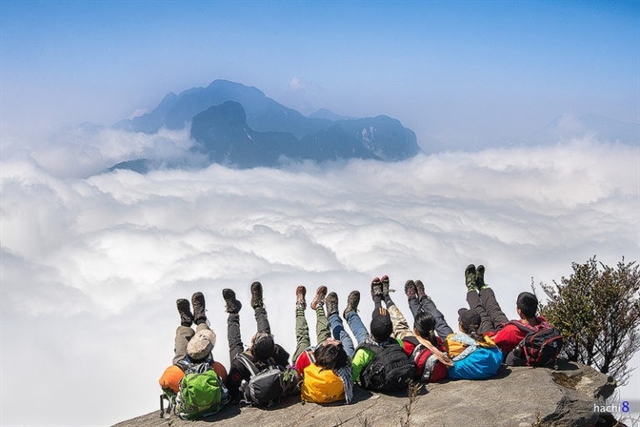
| Cloud hunting in Y Tý, Lào Cai Province. — Photos baovanhoa.vn |
HÀ NỘI — While beaches still hold their charm, more and more young Vietnamese travellers are turning their backs on sunburn and sand, choosing instead the chill of the highlands. As temperatures drop towards the end of the year, mountains across the country transform into playgrounds for cloud hunters, trekkers and amateur stargazers.
The trend fits perfectly with the idea of 'coolcations' – holidays in cooler climates – which has become a buzzword among Gen Z travellers. In Việt Nam, destinations like Sa Pa, Hà Giang and Tà Xùa are rising stars on the travel map, especially during the colder months, when nature is at its most dramatic.
Floating above the clouds in Sa Pa
|
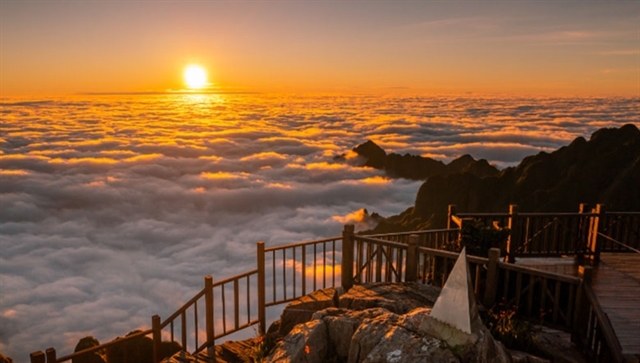
| A sea of clouds blankets the mountains in Sa Pa. |
In Sa Pa, once the golden rice harvest season ends, the cloud season begins. From October through April, thick white cloud layers frequently roll across the mountains in the early morning and late afternoon, turning valleys and slopes into a dreamlike ocean of mist.
With temperatures ranging from 14 to 20 degrees Celsius, the air is crisp and calm – a refreshing contrast to the noise and rush of city life. For many young travellers, Sa Pa is a place to pause, breathe and feel small in the best possible way.
Trekking, mountain climbing and catching the sunrise or sunset from high vantage points are among the most popular activities. At the top of the list is Fansipan Peak, standing at 3,143 metres, often referred to as the 'Roof of Indochina'.
From here, Sa Pa appears as a miniature town nestled in the valley, while the Hoàng Liên Sơn mountain range stretches endlessly into the distance. Sunlight filters through drifting clouds, creating a constantly shifting landscape of light and shadow that feels almost unreal.
Ngọc Hương, a visitor from Hà Nội, said her trip during the cold season was worth every shiver. Watching the scenery from the mountaintop made everyday worries seem to melt away in the vastness of nature, she said.
Hà Giang’s flowers, roads and highland life
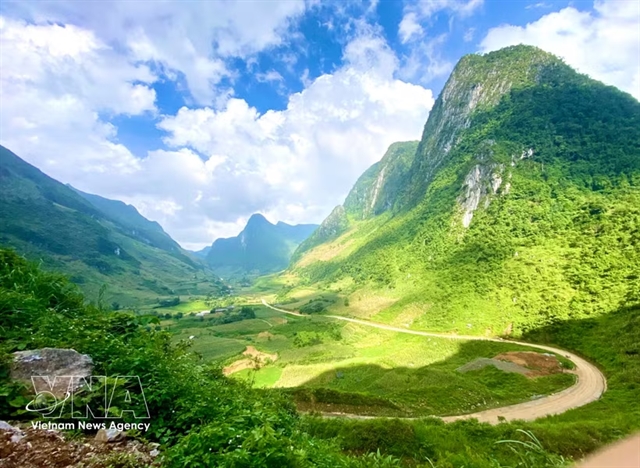
If Sa Pa captivates with its cloud seas, Hà Giang steals hearts with fields of buckwheat flowers and the stark beauty of its rocky plateau.
Towards the end of the year, after the terraced fields have been harvested, pink and purple buckwheat blossoms begin to blanket areas from Quản Bạ and Yên Minh to Đồng Văn. Under clear skies and soft golden sunlight, winding mountain roads become irresistible routes for young explorers.
Hotspots like Thẩm Mã Pass and Lô Lô Chải Village are often packed with visitors during peak season, sometimes even experiencing traffic congestion. Yet for many, the crowds are a small price to pay for the views.
For Mạnh Hùng, a traveller from Hải Dương, a road trip with six friends through Hà Giang was a string of laughter-filled days. From lively villages to early morning markets scented with grilled corn and traditional thắng cố (H’Mông stew), the journey felt both exciting and warmly familiar.
When the mountains turn into a planetarium
|
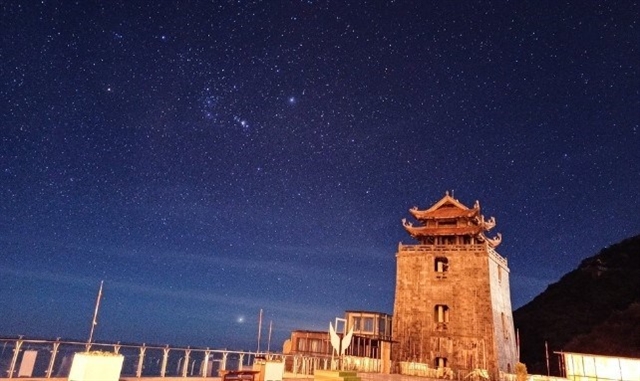
| A star-filled sky shines above Fansipan Peak at night. |
Beyond cloud hunting and taking photos, cold-season travel in the highlands is increasingly linked to stargazing. Remote mountainous areas with little light pollution are becoming ideal natural observatories, where visitors can admire the night sky – and sometimes even spot the Milky Way with the naked eye.
One location frequently mentioned by Gen Z travellers is Tà Xùa. Sitting at an altitude of around 2,800 metres, this area is often dubbed a 'night sky paradise' in northern Việt Nam. With minimal artificial lighting and clear skies, stars appear sharp and bright, especially from March to October on moonless nights.
Spots like the Dinosaur Spine ridge, Gió Peak and Mây Station are popular camping and stargazing sites, despite the challenging road from Bắc Yên to Tà Xùa.
Fansipan also offers its own celestial show. When night falls and the mountains fall silent, stars begin to glitter above the dark silhouettes of peaks and forests. From November to April, when the skies are clearer, visitors can combine a summit adventure with a late-night date under the stars. For those less experienced in trekking, the cable car from Sa Pa provides an easier way to reach high altitudes.
Other destinations such as Măng Đen and Mù Cang Chải are also gradually appearing on Việt Nam’s astro-tourism map, offering night-sky experiences woven together with nature exploration and local cultural encounters.
Tips for a perfect star-hunting trip
Seasoned travellers have shared a few key tips for a successful stargazing journey: choose clear, moonless nights; aim for the hours between 11pm and 4am; bring warm clothing and a sleeping bag if staying outdoors; and use apps like Star Walk, Sky Guide or Stellarium to identify constellations.
Equally important is respecting the environment. Avoid littering and don't light fires carelessly, to keep these highland areas as pristine as the stars above them.
For many young travellers, these mountain journeys are more than just check-ins or social media photos. Lying on a cold ridge, watching clouds drift below or stars burn quietly overhead, they find something harder to name: a sense of freedom, perspective and a reminder of how vast the world really is. — VNS
Life & Style
 Life & Style
 Life & Style
 Life & Style
 Life & Style
 Life & Style
 Life & Style
 Life & Style
 Life & Style
 Life & Style
 Life & Style
 Life & Style
 Life & Style
 Life & Style
 Life & Style