 Life & Style

AIMCONNECT 2026 Held in Singapore, Bringing Global Automotive Leaders Together to Explore the Future of AI, Trust and Connected Mobility
1.
Dr Hiroshi Chiba*
In the lively rhythm of Vietnamese life, subtle health changes can be missed. Yet, for many, involuntary shaking, known as essential tremor (ET), can deeply affect daily functioning and emotional health.
ET is the most common tremor disorder, marked by action tremors, shaking during voluntary movement or when holding a posture. It usually begins gradually and worsens over time. Most often affecting the arms and hands, it can also involve the head, voice or legs. Unlike Parkinson’s resting tremor, ET occurs during activity.
Daily challenges of ET
ET makes everyday tasks frustrating. Writing, eating, threading a needle, using a smartphone or holding a bowl of phở can become difficult. Many patients feel embarrassed or socially withdrawn. Stress, common in busy cities, often worsens symptoms.

|
| Writing, eating, or using a smartphone can be difficult with essential tremor. Photo canva.com |
What might contribute
Though the exact cause remains unknown, genetics plays a major role; up to 70 per cent of cases have a family history, especially with early onset. Other possible contributors include:
Beyond the shaking
ET is more than a motor issue. It may involve:
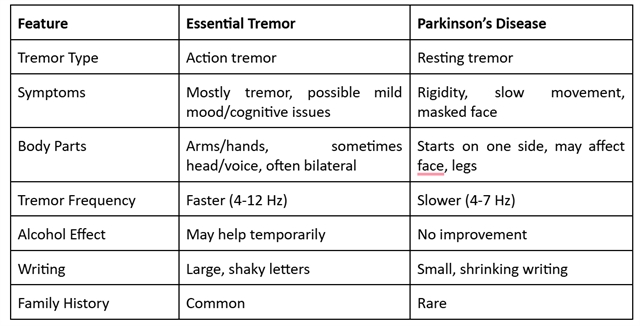
ET vs Parkinson’s disease
People often confuse ET with Parkinson’s. Key differences include:
|
Diagnosis and management
Diagnosis of essential tremor is clinical, based on history, exam and family background.
Treatment aims to reduce disability and improve quality of life. Options include:
While research continues, personalised care helps people with ET live fulfilling lives. Seek professional advice early to explore the best path forward. Family Medical Practice
|
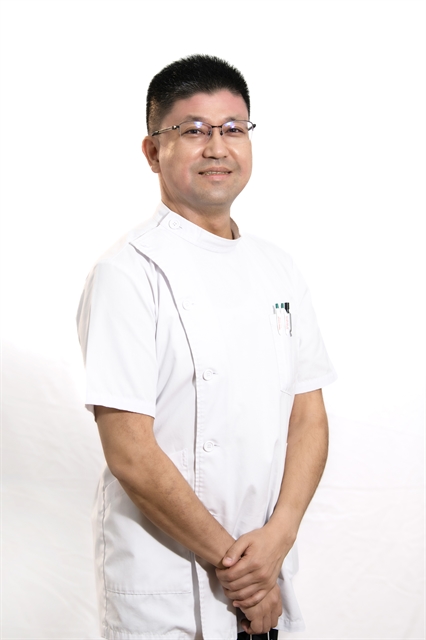
| Dr Hiroshi Chiba. Photo courtesy of Family Medical Practice |
*Dr Chiba Hiroshi is a Japanese family doctor with 20 years of experience working in Japan and Cambodia, specialising in primary care, travel medicine and urgent care. He graduated from Tohoku University School of Medicine in 1998 and received his PhD in Geriatrics in 2004. He provides consultation on a wide range of health problems for all age groups. Other areas of speciality and interest include infectious disease, infection control and medical education.
FMP Healthcare Group operates medical centres in major cities including HCM City, Hà Nội and Đà Nẵng, offering consultations with international doctors, check-up centres and emergency ambulance services.
Visit FMP Hanoi 24/7 at 298I Kim Mã Street, Ngọc Hà Ward, Hà Nội.
To book an appointment, please call (024) 3843 0784, or contact via WhatsApp, Viber or Zalo on +84 944 43 1919, or email hanoi@vietnammedicalpractice.com.
Life & Style
 Life & Style
 Life & Style
 Life & Style
 Life & Style
 Life & Style
 Life & Style
 Life & Style
 Life & Style
 Life & Style
 Life & Style
 Life & Style
 Life & Style
 Life & Style
 Life & Style