 Life & Style
Ministry proposes fund to boost energy efficiency
1.
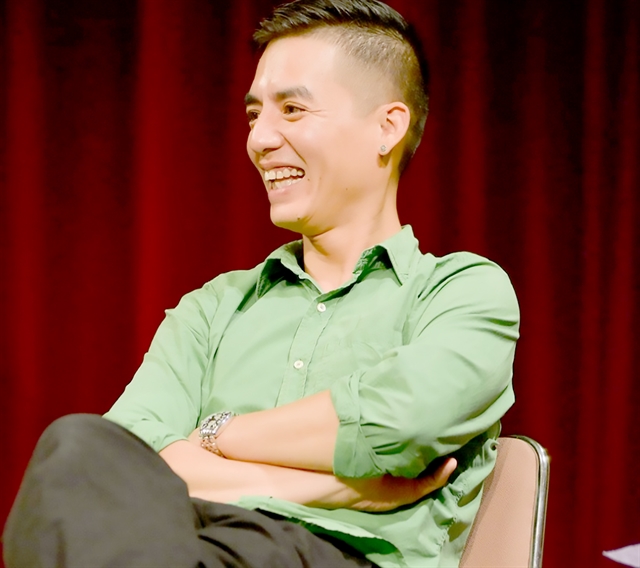 |
| Choreographer Bùi Ngọc Quân. Photo facebook Bùi Ngọc Quân |
HÀ NỘI — Turning up the tempo, Vietnamese hip-hop and contemporary dance piece 129BPM has made its debut at Malaysia’s George Town Festival, one of Asia’s premier performing arts events.
The annual festival, founded in 2010, is staged in George Town, a UNESCO-recognised World Cultural Heritage city.
129BPM was choreographed by Bùi Ngọc Quân, who trained in classical ballet at the Việt Nam Dance School before studying contemporary dance in France. He has taught and performed internationally and currently works at a high artistic level with Belgian company Les Ballets C de la B.
Quân also spoke about his creative process and the development of experimental dance in Việt Nam.
You had two performances at the festival. Could you tell our readers about them?
We are proud of them. The fact that the work 129BPM was presented in another country, in my opinion, is a turning point worthy of everyone’s efforts. Hopefully, the performance impressed the audience and helped them appreciate the dedication of the team of artists, producers and technicians.
It also demonstrates the development of experimental art in Việt Nam within the process of international integration.
The festival is an opportunity to promote the work and to help us find performance opportunities in other countries. But it does not depend on me alone. The only certainty is that I am confident in my work, which can be performed anywhere in the world in the future.
How did you create the work?
129BPM originated from the desire to create and collaborate with young Vietnamese artists who are full of energy and enthusiasm. They and I share the same feelings and they understand and engage with my professional concerns.
For me, all the art forms I choose complement each other, expressing both my personality and the Vietnamese culture within me. Each element has its own rhythm, but overall, there is a sense of connection and mutual support.
My creative choices stem from personal memories, abstraction, and a sense of closeness and attachment to Vietnamese culture.
The work combines dance and hip hop. Personally, I have always believed that whether performing hip hop on the streets, on small stages, or in large theatres, the most important thing is to preserve the roots and essence of the genre and its expressive power.
It can be said that I achieved some success when the performance at the end of last December in HCM City was well-received and loved.
I want to pass on my knowledge to young artists so they can adopt and sustain it in their own careers. More simply, it is my desire to give back to my home country.
Why did you name the work 129BPM?
In 2020, I created the project Come on Feet in Belgium, combining street movement, contemporary dance and footwork. It was performed live by six Belgian dancers, accompanied by drums, electronics and pre-recorded vocals.
During a 2023 performance of Come on Feet, I met producer Nguyễn Hải Yến by chance, and we came up with the idea of creating a similar show in Việt Nam.
Yến later became the production director and performance manager of 129BPM. The name 129BPM refers to the average heart rate during moments of intense pressure, when dancers’ physical and emotional limits are pushed.
From this state, their bodies become embodiments of resistance, desire and liberation, exploring identity, conflict and human connections in an increasingly urbanised world.
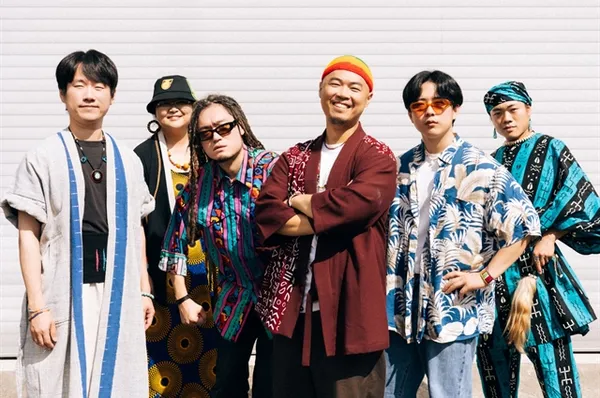
The work is an interweaving of street dance and contemporary folk music, set against a stage backdrop of flowing fabric.
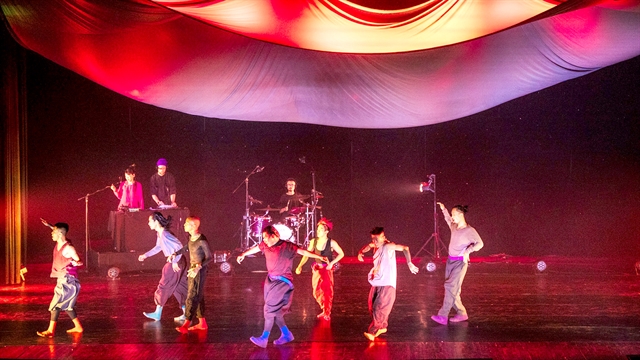 |
| 129BPM performance combines hiphop and contemporary dance. Photo H2Q Dance Company - Vietnam |
You currently work in both France and Việt Nam. So what makes you want to return?
Experimental art is thriving in Việt Nam. Everyone wants to create and bring new ideas to the community. That is also the main reason why I return home to work.
Vietnamese audiences are no longer unfamiliar with this form as they once were, thanks to information channels. Moreover, the artists’ desire to create new and more challenging work gives me greater confidence when carrying out my projects.
In my observation, experimental dance in Việt Nam is progressing rapidly, catching up with international trends and approaching global standards.
However, it is also necessary to acknowledge that artists need more diverse professional experiences to dig deeper and fully realise their creativity. For me, the most important factor in advancing this art form is each artist’s willingness to explore and challenge themselves in new conditions.
What do you think about experimental dance in Việt Nam?
The scripts still borrow heavily from abroad, as well as the 'framing' of characters, even though the dance itself has strength. In my view, every movement of the body carries its own story and character, so it is important to study and harness it, returning its inherent power rather than simply adding new layers of meaning.
In other words, movement in contemporary dance—and in other art forms that use the body—comes from the inner self, not just from choreography. Therefore, it has the ability to reach anyone in the world, even if expressed in a rather abstract “language.”
For me, art created through body movement is a mindset, not a style. That is what we must understand in order to truly feel and appreciate it. This is why I am confident in presenting the work in Malaysia as well as in other countries. — VNS
Life & Style
 Life & Style
 Life & Style
 Life & Style
 Life & Style
 Life & Style
 Life & Style
 Life & Style
 Life & Style
 Life & Style
 Life & Style
 Life & Style
 Life & Style
 Life & Style
 Life & Style