 Economy



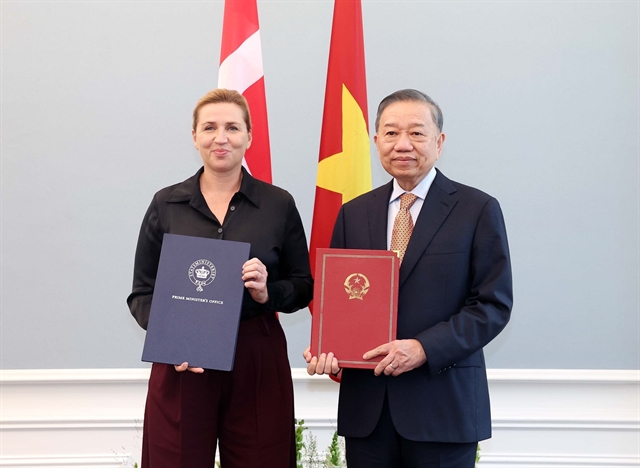
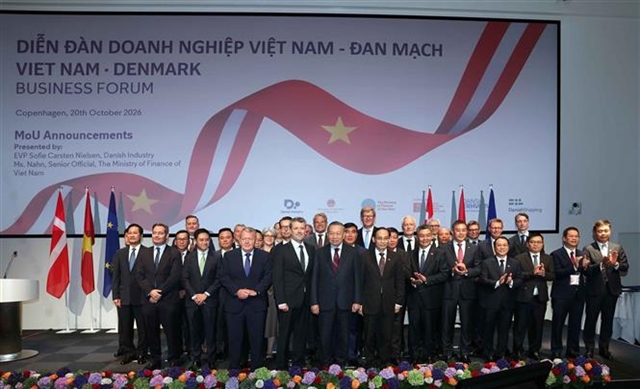
Việt Nam, Denmark issue joint statement on establishment of Comprehensive Strategic Partnership
1.

|
| Võ Trí Thành |
*Võ Trí Thành
As Việt Nam enters a new development era, labour stands alongside institutions and infrastructure as a decisive pillar of fast, sustainable and inclusive development. Achieving high economic growth in the coming decade will depend on a profound transformation of the workforce.
Yet, the labour reality today reveals a large and widening gap between demand and capacity. Việt Nam has strong demographic potential but also faces a set of paradoxes that, if not resolved, will constrain growth at the very moment when opportunities are greatest.
In 2025, the population is estimated at 102.3 million, up 1 per cent from 2024. Việt Nam remains in its golden population period, but this window will last just over 13 more years.
Population ageing is accelerating, with the share of people aged 60 and above rising from 8.8 per cent in 2020 to more than 10 per cent in 2024–25 and projected to exceed 18 per cent by 2030, among the fastest ageing transitions in the world.
Labour restructuring has followed the classic path from agriculture to industry and services. Services now record the fastest growth in both size and share. But the labour force has recovered slowly after COVID-19, falling from 54.8 million in 2020 to 50.6 million in 2021, and only reaching around 53 million in 2025.
Việt Nam is widely regarded as a learning society, yet the proportion of trained workers with formal degrees or certificates has increased slowly and remains just above 29 per cent. Highly skilled labour accounts for less than 8 per cent of the workforce. This is alarming when forecasts suggest that more than 95 per cent of future labour demand will require formal training, with around a quarter at university level.
Nominal average monthly income has risen from VNĐ6.6 million in 2020 to nearly VNĐ8.4 million in 2025, up 9 per cent from the previous year. But this increase does not translate into a rapid improvement in living standards for many workers. The challenge of improving job quality in line with productivity remains significant.
Official unemployment is low, but informal employment remains very high at more than 60 per cent. Many workers lack stability and proper social protection, including full social insurance coverage.
At the same time, the demand to attract investment, talent, experts and highly skilled workers is rising sharply. Yet regulations, living conditions, visa policies and the overall environment remain insufficiently competitive by international standards. The large community of Vietnamese and people of Vietnamese origin abroad has not been effectively mobilised for national development.
These realities point to a deeper issue. Vietnamese labour has not kept pace with regional and global competition, labour mobility and rapid technological breakthroughs. The problem is becoming more serious as the country faces population ageing and job instability caused by climate change, particularly in the central region and the Mekong Delta.
The current labour structure remains concentrated in low-productivity sectors. Workers generally face several weaknesses: limited professional skills, weak foreign language ability and relatively low physical health and endurance. These constraints reduce adaptability in an increasingly global and technology-driven labour market.

|
| Workers at VietGlory Co Ltd in Diễn Trường commune, Diễn Châu district, Nghệ An province. – VNA/VNS Photo |
Addressing these issues requires a comprehensive vision. Labour development cannot be separated from population policy, education and training reform, formalisation of employment and the strengthening of the social security system.
The Government has already issued important resolutions that form a policy foundation for this transformation.
The Communist Party of Việt Nam (CPV)'s Resolution 68 on private economy development promotes small- and medium-sized enterprises, which are crucial for creating formal jobs. The Party's Resolution 57 on science, technology and innovation is closely linked to future skill demands in semiconductors, AI, information technology, IoT, big data, logistics, health care and renewable energy. Other two resolutions of the Party, Resolution 71 on education reform and Resolution 72 on strengthening the healthcare system, address the social foundations of labour quality.
However, policies must be translated into coherent and practical actions.
Labour strategy should be closely linked with population development, industrialisation, modernisation, urbanisation and both domestic and international labour mobility. The Vietnamese diaspora and people of Vietnamese origin abroad should be seen as an important source of expertise and knowledge. At the same time, attracting foreign high-skilled workers must be viewed as part of building a high-quality expert workforce for strategic industries and science and technology development.
A more rational relationship between economic growth, labour productivity and wage growth must be established. Workers should fairly benefit from the fruits of growth. Direct income distribution policies should be combined with redistributive measures to reduce inequality.
Institutional protection for workers in the informal sector needs urgent improvement. Flexible contracts, social insurance access and safe working conditions should be expanded. Policies promoting gender equality and support for vulnerable workers, including older persons and people with disabilities, should be integrated into socio-economic programmes.

|
A series of fundamental solutions is needed to improve labour skills.
Education and vocational training must be aligned with market demand through updated curricula, stronger links between businesses and schools, expanded internships and short courses for existing workers. Greater investment, dedicated training funds, wider use of technology in teaching and stronger foreign language capacity are essential.
Training and career transition centres should be developed around industrial and economic zones, supported by a national system for skills assessment and recognition to promote lifelong learning and flexible mobility. Policies should also encourage research and innovation in vocational education, with financial support for participants.
At the same time, better working conditions, health care and occupational safety must be ensured, while employment service systems should support labour mobility, especially for agricultural and middle-aged untrained workers, alongside policies to formalise informal labour.
Finally, the labour market information system must be modernised, linking data on labour supply, demand and education to improve forecasting and policymaking down to the provincial level.
To achieve fast, sustainable and inclusive growth in the next decade, Việt Nam needs a genuine revolution in its human resources. As the demographic window narrows, technology advances and global competition for talent intensifies, labour becomes a strategic factor that will determine the country’s success. With the right vision, policies and implementation, Việt Nam can turn its labour paradox into a decisive advantage for the future.
* Võ Trí Thành is former vice-president of the Central Institute for Economic Management (CIEM) and a member of the National Financial and Monetary Policy Advisory Council. With a doctorate in economics from the Australian National University, he focuses on macroeconomic policy, trade liberalisation and institutional reform.
Economy
 Economy
.jpg) Economy
Economy
 Economy
 Economy
 Economy
 Economy
 Economy
 Economy
 Economy
 Economy
 Economy
 Economy
 Economy
 Economy