 Economy

Arts festival gives young people stage to tell their stories
1.

|
| Processing tea at Liên Minh Agricultural Cooperative in Thái Nguyên Province. The Ministry of Finance has been asked to complete a decree on the Small and Medium Enterprise Development Fund before January 15. — VNA/VNS Photo |
HÀ NỘI — The Prime Minister has requested that in the first quarter of 2026, all guiding documents must be completed to substantively remove institutional bottlenecks relating to capital, land and technology for the private economic sector.
According to the Notice No 6 issued on January 5 by the Government Office about the Prime Minister's conclusions on implementing the Politburo’s Resolution 68, after nearly eight months of implementing the Resolution 68 on the development of the private economy, the private economic sector has continued to make important contributions to economic growth and import-export activities.
In addition, they actively participated in the implementation of Resolution No 57 on the development of science, technology, innovation and national digital transformation.
The impact of Resolution 68 has become increasingly evident as the number of enterprises and business households entering the market has risen sharply.
In 2025 as a whole, more than 300,000 enterprises were newly established or resumed operations nationwide, an increase of over 30 per cent, with total registered capital exceeding VNĐ6 quadrillion (US$230 billion), up more than 71 per cent compared with 2024.
In 2025, about 564 projects and works nationwide were commenced or inaugurated with a total investment exceeding VNĐ5.14 quadrillion, equivalent to about 40 per cent of GDP. Of this amount, private capital accounted for as much as 74.6 per cent.
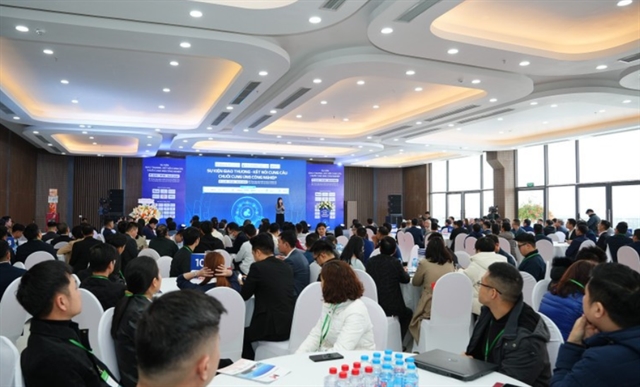
At the same time, the role of business associations and organisations representing the business community has been increasingly emphasised, with more substantive participation in policy formulation and policy feedback. Many business opinions have been listened to and directly discussed at conferences, forums and meetings of the Government.
However, the notice also pointed out several shortcomings, including administrative procedure reforms in certain areas falling short of requirements and some direct support policies for enterprises not yet fully institutionalised.
The Prime Minister stressed the need to reduce input costs and compliance costs through three strategic breakthroughs in institutions, infrastructure and human resources.
Accordingly, the Prime Minister requested the Ministry of Finance to complete a decree on the Small and Medium Enterprise Development Fund before January 15.
The Ministry of Agriculture and Environment must also submit to the Prime Minister a decision guiding the identification of green projects and projects meeting circular economy criteria, and the application of environmental, social, and governance (ESG) standards.
The Ministry of Industry and Trade is tasked with submitting to the Government a decree amending Decree 32 on the management and development of industrial clusters that was issued on March 15, 2024.
Relevant ministries and sectors are assigned to urgently issue or submit for issuance in the first quarter detailed guiding documents on policies to support the private economy, including support in accessing production land, interest rate, technology and digital transformation.
They also include support in the development of pioneering enterprises and enterprises expanding to abroad markets.
Localities are required to closely monitor the situation of enterprises in their areas, ensure the stable operation of the two-tier local government system and have supports for businesses.
Enterprises, in turn, are expected to work alongside and cooperate with authorities toward shared national goals and interests.
The Prime Minister also emphasised creating favourable conditions for the development of large private enterprises and leading enterprises capable of supporting small and medium-sized enterprises, while effectively supporting small, micro-enterprises and household businesses and facilitating the transformation of eligible household businesses into enterprises.
With this in mind, the Ministry of Finance is to focus on improving the legal framework for household businesses, including proposing the study and development of a Law on Household Businesses.
The ministry also must complete the legal framework for corporate bonds in the domestic market and for corporate bonds offered in international markets to improve quality and expand stable capital mobilisation channels for the private economy; and accounting and insurance regulations for micro-enterprises.
The Ministry of Public Security is tasked with researching and developing programmes and mechanisms to protect and support enterprises in combating online fraud.
Finally, the Prime Minister stressed the need to strengthen substantive dialogue to promptly respond to the recommendations of enterprises, based on sharing risks and harmonising interests between authorities and enterprises. — VNS
Economy
 Economy
 Economy
 Economy
 Economy
 Economy
 Economy
 Economy
 Economy
 Economy
 Economy
 Economy
 Economy
 Economy
 Economy