 Economy


Business incubator helps SMEs enhance competitiveness
1.
|
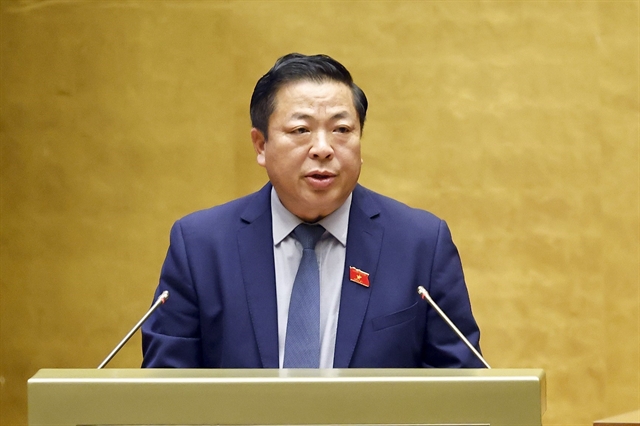
| Minister of Construction Trần Hồng Minh. — VNA/VNS Photo Doãn Tấn |
Minister of Construction Trần Hồng Minh spoke to the Vietnam News Agency on the sector’s achievements in 2025 and its future goals to develop a synchronised and modern infrastructure system, contributing to the country’s new era of growth.
In 2025, the Ministry of Construction (MoC) ranked first among ministries and sectors in terms of the quality of public service delivery on the National Public Service Portal, while also achieving breakthroughs in institutional reform. What are the sector’s key lessons and future priorities to better serve citizens and businesses?
The year 2025 marked a very special milestone for the construction ministry. From March 1, 2025, the Ministry of Transport and the Ministry of Construction were merged into a new Ministry of Construction (MoC), with an expanded scope of state management defined in the Government’s Decree 33/2025/NĐ-CP.
This merger was not merely an organisational restructuring but also imposed requirements for renewing management thinking, streamlining the apparatus, eliminating overlaps, and ensuring coherent and seamless governance with no legal vacuum in any field.
Before the merger, the two ministries reviewed and reorganised their structures, consolidating the apparatus in a streamlined, effective and efficient manner. Following the merger, the MoC’s Party Committee has focused on ensuring smooth and stable operations across all units, creating a solid foundation to effectively carry out the tasks assigned, particularly those involving institutional development and improvement, which are identified as a key and overarching mission of governance.
Last year, the MoC completed an unprecedented volume of work, drafting 134 legal documents. During the year, the National Assembly (NA) adopted five resolutions approving investment policies for five projects, while the Government approved 10 other major projects, notably the investment policy and special mechanisms for the North–South high-speed railway, and the commencement of the first sub-project of the Lào Cai–Hà Nội–Hải Phòng railway.
The new legal documents reduced administrative procedures by over 30 per cent and cut business investment conditions by 35 per cent, exceeding the targets set out in Government Resolution 66/NQ-CP dated March 26, 2025, on reducing and simplifying administrative procedures related to production and business activities in 2025 and 2026.
They also promptly concretise key strategic resolutions of the Politburo, such as resolutions 57-NQ/TW, 66-NQ/TW and 68-NQ/TW, marking a shift from a ‘management’ mindset to a ‘development-enabling’ approach. These included numerous innovative and breakthrough measures with strong impacts on national infrastructure development, decentralisation and delegation of authority, and leveraging innovative, scientific and technological advances. They also help improve the business and investment environment, support business growth, ensure social welfare and resolve bottlenecks, thus meeting the country’s development requirements in the new era.
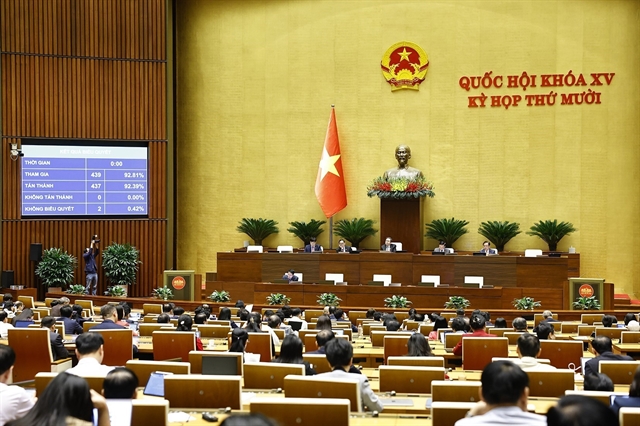
The revision and adoption of four important laws during the term of the 15th-tenure NA – including the Railway Law, the Construction Law, the Law on Civil Aviation, and the revised Law on Urban and Rural Planning – have created a more open, transparent and effective legal framework for national infrastructure development. These have not only accelerated the progress of key projects but also enhanced investment quality, making an important contribution to the country’s sustainable socio-economic growth.
|
| The 15th-tenure National Assembly vote on the amended Construction Law during its 10th session on December 10, 2025. — VNA/VNS Photo Doãn Tấn |
In implementing decentralisation and delegation of authority in line with the two-tier local government model, the MoC reviewed more than 600 legal documents, proposed amendments to nearly 70 documents, and issued nine documents to carry out decentralisation, delegation and clarification of authority. In total, 118 tasks were decentralised or delegated, 133 tasks had authority clearly defined and 45 per cent of administrative procedures were removed or simplified.
Strengthening decentralisation and delegation of authority not only increases local responsibility but also grants local authorities greater autonomy and innovation in carrying out tasks and solutions, maximising each locality’s potential to achieve growth objectives and contribute to national targets.
In 2025, the MoC ranked first among ministries and sectors in quality of public service delivery.
These outcomes demonstrate that the legal system in the construction and transport sectors is becoming increasingly coherent to better serve citizens and businesses.
In the near future, the MoC will continue working on institutional improvement as a key task, while accelerating digital transformation, renewing management methods and enhancing the quality of public services, contributing to a solid legal framework for the country’s rapid and sustainable development.
Numerous national key projects were breaking ground or being inaugurated in 2025. What are the construction sector’s roles and contributions in advancing these projects and creating breakthroughs in infrastructure development?
The year 2025 was a particularly significant milestone, as three rounds of ground-breaking and inaugurations were held nationwide for the first time, counting more than 560 projects with a total investment exceeding VNĐ5 quadrillion (US$192.3 billion). This stands as vivid evidence of the Party’s and State’s determination to promote investment in infrastructure development, seen as the foundation for rapid and sustainable growth.
Notably, the private sector accounted for nearly 75 per cent of total capital, reflecting strong business confidence in the investment environment as well as the State’s guiding role. All projects are strategic in nature, aiming to create new development space, ensure national defence and security, and directly improve people’s livelihoods.

|
| A rendering of the Red River Boulevard project in Hà Nội, which broke ground on December 19, 2025, alongside other major infrastructure projects across the country. — VNA/VNS Photo Phan Phương |
In its role as the agency in charge, the MoC coordinated with other ministries, sectors and localities to review project lists, develop an overall plan and advise the Prime Minister on direction and coordination with clear assignment of responsibilities.
During implementation, the ministry conducted frequent on-site inspections, addressed bottlenecks related to site clearance, construction materials and capital, and urged investors and contractors to work decisively to ensure progress, quality and safety.
At the same time, the ministry worked closely with press agencies to organise ground-breaking and inauguration ceremonies in a thorough yet economical manner, helping spread a sense of momentum and confidence in the country’s development in the new era.
What achievements have been made, and what priorities will guide the construction sector in advancing social housing as a pillar of economic growth and social welfare?
Caring for and addressing housing needs has always been a priority of the Party and the State, identified as a key task in the country’s socio-economic development. The development of social housing is required for social welfare, stabilisation of the real estate market and sustainable growth.
In recent years, the Government, the Prime Minister, ministries, sectors and localities have issued directives and implemented solutions to remove bottlenecks in social housing development, thereby accelerating the project to build at least one million social housing units in the 2021-2030 period.
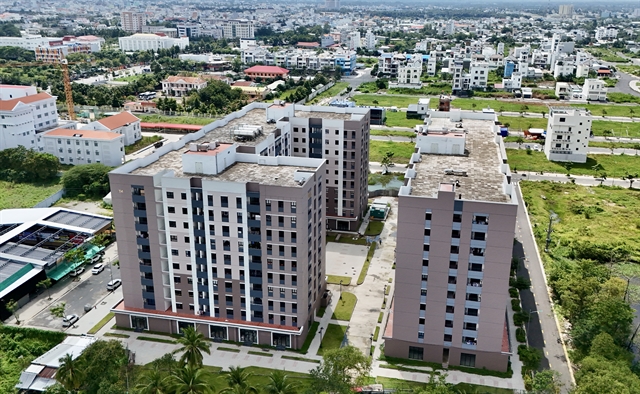
|
| Units in the Golden City social housing project in Long Xuyên Ward, An Giang Province were handed over to residents in July 2025. — VNA/VNS Photo Thanh Sang |
In 2025, the NA adopted Resolution 201/2025/QH15 on piloting special mechanisms for social housing development, promptly concretising the Party’s guidelines and policies, mitigating institutional challenges, creating a more open legal framework with practical incentives and reducing administrative procedures, thus attracting more businesses to invest in social housing construction.
As a result, last year the country completed 102,633 social housing units, reaching 102 per cent of the plan. By the end of 2025, there were 698 social housing projects of around 657,395 units, achieving 62 per cent of the project’s goal, with 19 localities meeting or exceeding their assigned targets.
In addition, the housing support programme for people with meritorious services to the national revolution was completed four months ahead of schedule, before July 27 (War Invalids and Martyrs Day), benefitting 34,754 households. The same support programme for poor households also exceeded its plan by four months, reaching a total of 85,897 households.
The MoC will continue to review and refine regulations and policies on housing and real estate in a comprehensive and unified manner, while also establishing a National Housing Fund to develop and manage rental housing.
The ministry also plans to look into founding a State-managed real estate trading centre, and has asked localities to allocate budgets for compensation and site clearance to secure land lots at favourable locations with adequate technical infrastructure for social housing projects. The goal is to complete project targets as soon as possible, ensuring that every citizen truly has access to secure, stable housing.
In implementing the resolution of the first congress of the 2025-2030 Government Party Committee, what key tasks, projects and policies will the construction sector focus on in 2026 to drive effective and sustainable infrastructure development, particularly in transport?
The MoC has identified its main task for 2026 and beyond as developing the socio-economic infrastructure system. Transport infrastructure plays a pivotal role, leading the way for rapid and sustainable national development.
Several achievements were attained by the construction sector under the strong leadership of the Party Central Committee, the Politburo and the Party Secretariat, the close supervision of the NA, the flexible and decisive administration of the Government and the PM, and the comprehensive engagement of the entire political system.
Sectoral growth is estimated at over 9 per cent, contributing approximately 16.9 to 17.1 per cent of GDP, equivalent to nearly two percentage points of overall economic growth. The scale, speed and efficiency of infrastructure investment have improved markedly, further confirming the sector’s decisive role in socio-economic development.
In particular, the national transport infrastructure system has seen rapid development. By the end of 2025, the country had completed 3,345km of main expressways and 458km of interchanges and access roads, surpassing the target of 3,000km of expressways set by the NA and Government in the last five-year socio-economic development plan.
Other achievements include the completion of 1,586km of national highways and 1,701km of coastal roads. Over the 2021-2025 period, 2,025km of expressways have opened to traffic, twice the total length achieved over the previous two decades.
Notably, the entire North–South Expressway from Cao Bằng Province to Cà Mau Cape has been opened to traffic, while further construction continues for the Cà Mau–Cái Nước Expressway and horizontal routes such as Tân Phú–Bảo Lộc and Quy Nhơn–Pleiku. Seaport capacity has increased by nearly 1.3 times, while airport capacity has risen by more than 1.6 times compared to 2020.
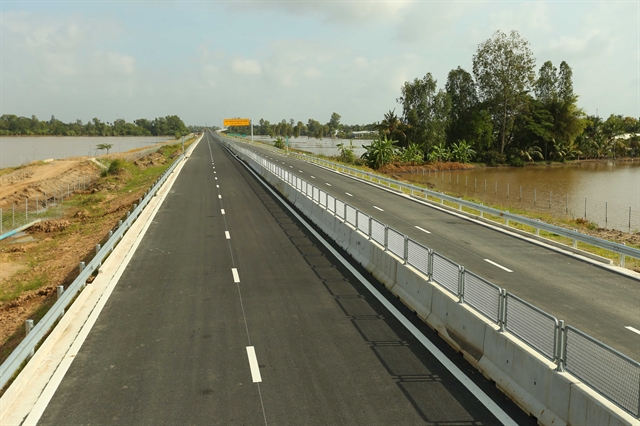
|
| A section of the North–South Expressway running through Vĩnh Tường Commune, Cần Thơ City was inaugurated on December 19, 2025, alongside other major national projects. — VNA/VNS Photo Duy Khương |
These achievements have made an important contribution to reducing logistics costs from 21 per cent of GDP in 2018 to around 17-18 per cent at present, thereby enhancing the competitiveness of the economy. The sector has also begun to lay the foundations for green, digital and climate-resilient infrastructure, with smart urban models, intelligent transport systems and green buildings and materials.
At the same time, we acknowledge that infrastructure development still faces multiple shortcomings, such as insufficient synchronisation and regional connectivity. Infrastructure planning has not yet taken on a true leading role, in addition to urban congestion and infrastructure overload, fragmented investments, underutilisation of investment models and unsatisfactory progress in digital and green transformation in infrastructure management and development.
As the world is rapidly shifting toward green, digital and circular economies, and as science, technology and artificial intelligence fundamentally reshape the way we operate, infrastructure development in the new era can no longer stop at ‘concretisation’ alone. It must move decisively toward smart and green development, with efficiency, sustainable growth and improved quality of life as overarching objectives.
In formulating the 2026-2030 socio-economic development plan and the medium-term public investment plan, the MoC’s Party Committee and leaders have identified a consistent focus on developing a modern, smart and green national infrastructure system, concentrating central resources on strategic infrastructure and national key projects and strongly innovating mechanisms to mobilise private resources.
The ministry will focus on improving regulations and policies, strengthening decentralisation and delegation of authority in line with the two-tier local government model, with clear delineation of powers and responsibilities between the central and local levels. We will also enhance discipline and order in construction investment management, accelerate digital transformation and science and technology application to improve project management and construction quality and refuse to trade quality, safety and long-term effectiveness for speed.
In terms of investment, the MoC will prioritise strategic, impactful and inter-regional projects, focusing on forming a modern national infrastructure framework. Priority will be given to completing and improving the operational efficiency of the North–South expressway system and other key national transport networks.
At the same time, the ministry will coordinate with local authorities to invest in regional routes and major urban ring roads per approved planning, ensuring comprehensiveness, interconnectivity and effective operation.
The MoC will continue to propose policies to diversify and effectively mobilise investment resources, combining State budget funds with public-private partnership models, ODA, concessional loans and other social resources.
With a comprehensive approach that integrates institutional improvement, focused investment, effective resource mobilisation and enhanced management quality, the MoC is determined to collectively realise breakthroughs in infrastructure development in line with the congress resolution of the Government’s Party Committee, creating growth momentum, improving people’s quality of life and enhancing the competitiveness of the economy in the future.
In the wake of increasingly frequent natural disasters that have caused serious damage to roads and bridges over the past year, what key lessons should guide transport infrastructure development in the future?
In recent years and particularly 2025, increasingly complex natural disasters have caused serious damage to transport infrastructure nationwide. This serves as a clear call for sustainable, climate-resilient infrastructure.
The lessons lie first in construction quality and standards. Urgent requirements include upgrading technical standards, selecting durable materials and ensuring that transport works can withstand flooding, landslides and extreme weather events. Forecast-based planning and risk management must be at the forefront, while regular maintenance and management are key factors. Periodic inspections, quality assessments and timely repairs can significantly reduce the risk of severe damage when disasters occur.
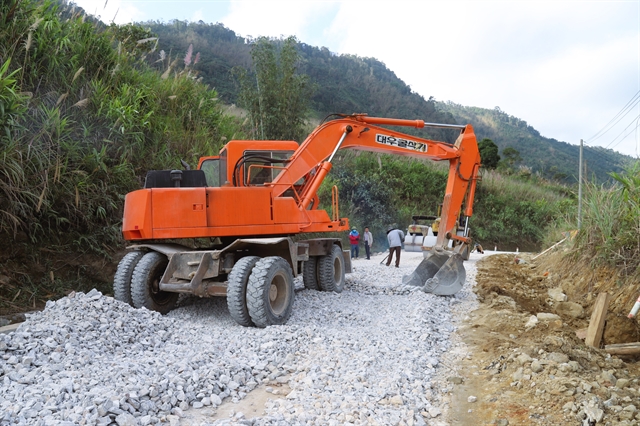
|
| Heavy machinery is mobilised to repair a section of National Route 16 running through Nghệ An Province, which was damaged by storms and floods in the latter half of 2025. — VNA/VNS Photo Xuân Tiến |
In the near future, the MoC will regard climate change adaptation as an overarching principle, focusing on building infrastructure that is both safe and flexible, ensuring uninterrupted transport even when disasters strike. The ministry will implement comprehensive planning, identify critical routes requiring upgrades and prioritise investment in areas with high disaster risks.
The MoC will also carefully calculate early warning systems, bypass roads and backup bridges to minimise damage, apply new technologies and materials in traffic construction and management to enhance safety, durability and resilience and emphasise the development of green, sustainable transport infrastructure combined with measures for environmental protection and climate impact mitigation. These are not only technical requirements but also a social responsibility, ensuring that future generations can benefit from a safe, sustainable and reliable transport system.
Alongside these tasks and solutions, the ministry will continue to review legal documents related to disaster prevention and control, reviewing and amending them as a basis for transport infrastructure development that meets the demands of disaster prevention and response. The overarching objective is to raise urban infrastructure standards in a green, smart, climate-resilient direction. This will serve as a foundation for improving urban quality of life and ensuring sustainable growth. — VNS
Economy
 Economy
 Economy
 Economy
 Economy
 Economy
 Economy
 Economy
 Economy
 Economy
 Economy
 Economy
 Economy
 Economy
 Economy