 Economy



Việt Nam's first lady, Danish Queen present Vietnamese book collection to Copenhagen library
1.
 |
| Minister of Finance Nguyễn Văn Thắng. VNA/VNS Photo |
Compiled by Khoa Anh
This has been a year for maintaining budgetary stability, and one that lays the groundwork for the 2026–2030 development period, according to economists and policymakers.
Estimates approved by the National Assembly reveal that the State budget revenue in 2025 is expected to reach nearly VNĐ1.97 quadrillion (US$80.4 billion), up more than 15 per cent compared with the 2024 estimate.
Total State spending is projected at around VNĐ2.55 quadrillion, with the budget deficit kept at about 3.8 per cent of GDP. In a context where significant resources are allocated to wage reform, social welfare and administrative restructuring, keeping the deficit within the approved ceiling reflects continued fiscal discipline.
Budget revenue collection results show a positive trend. Deputy Minister of Finance Đỗ Thành Trung said that as of December 15, State budget revenue had reached about VNĐ2.47 quadrillion, exceeding the estimate by 25 per cent.
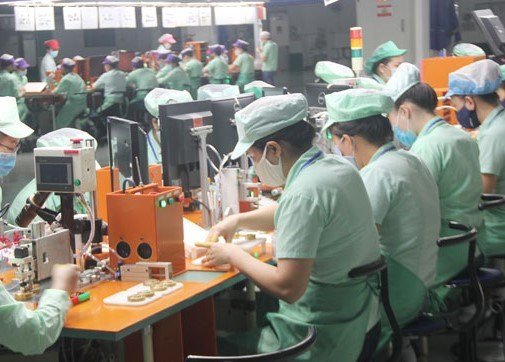
According to economists, this result reflects a recovery in production and business activities, an improvement in import–export performance and the effectiveness of revenue management measures, including efforts to prevent revenue losses, combat transfer pricing, and expand the tax base implemented from the beginning of the year.
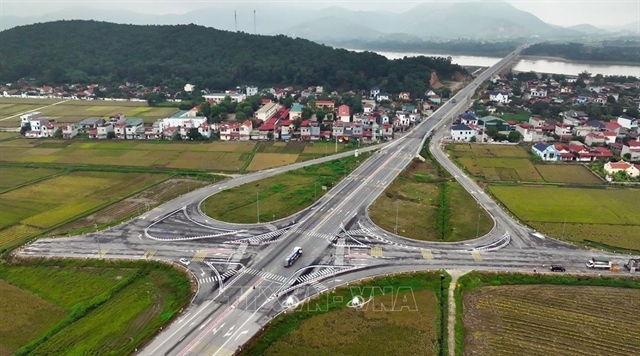
On the expenditure side, the 2025 budget was restructured to prioritise development investment and ensure social security. Public investment was identified as one of the drivers of growth as private and foreign investment remained cautious. The 2025 public investment plan was allocated at a high level, focusing on key transport infrastructure projects, inter-regional projects, energy transition and digital infrastructure.
According to the Ministry of Finance, public investment disbursement from the beginning of the year to December 18 reached VNĐ603.6 trillion, equivalent to 66.1 per cent of the plan assigned by the Prime Minister. Tightened disbursement discipline, clearer accountability for agency heads, and efforts to address bottlenecks related to site clearance, investment procedures and bidding have helped ensure that budget capital is used more effectively.
Minister of Finance Nguyễn Văn Thắng said that public investment capital has been concentrated on nationally important projects. Major infrastructure projects such as the North–South Expressway (Phase 2), Long Thành International Airport, Ring Road 4 in the Hà Nội Capital Region and Ring Road 3 in HCM City have seen accelerated progress, contributing to development space in the medium and long terms.
Along with public investment, recurrent expenditure continued to be tightly controlled in line with savings requirements and improved budget efficiency. In 2025, a large expenditure item was recorded for the restructuring and streamlining of the State apparatus.
Under resolutions from the Party Central Committee, as of September 14, the State budget had disbursed VNĐ104.5 trillion to nearly 91,000 beneficiaries, including more than 28,000 from central agencies and over 62,900 from localities.
Although this spending placed pressure on the short-term budget balance, it was considered necessary to reduce recurrent expenditure in the long run, improve governance effectiveness, and enhance the quality of public services. In many localities, the post-restructuring apparatus has operated with fewer intermediary layers. Budget deficit and public debt have remained within safe thresholds.
In tax and fee administration, policies in 2025 continued to be implemented flexibly and with clear priorities, balancing revenue assurance with economic support. Deputy Director of the Department of Taxation Đặng Ngọc Minh said that a range of fiscal measures had been introduced to stimulate market demand, with tax exemptions, reductions and extensions playing a key role.
The extension of the 2 per cent value-added tax reduction for many goods and services, lowering the rate from 10 per cent to 8 per cent, helped reduce costs, stimulate consumption and support business cash flow, despite reducing budget revenue by an estimated hundreds of trillions of đồng.
In addition, policies extending tax and land rent payment deadlines and reducing certain fees and charges continued to be implemented, particularly for small- and medium-sized enterprises.
According to Vietnam Association of Tax Consultants Chairwoman Nguyễn Thị Cúc, the total value of tax, fee and land rent exemptions, reductions and extensions in the first 11 months of 2025, was estimated at VNĐ239.1 trillion. These policies were issued in a timely manner and provided support for businesses and households.
Beyond short-term support measures, 2025 also recorded progress in restructuring revenue policy toward sustainability.
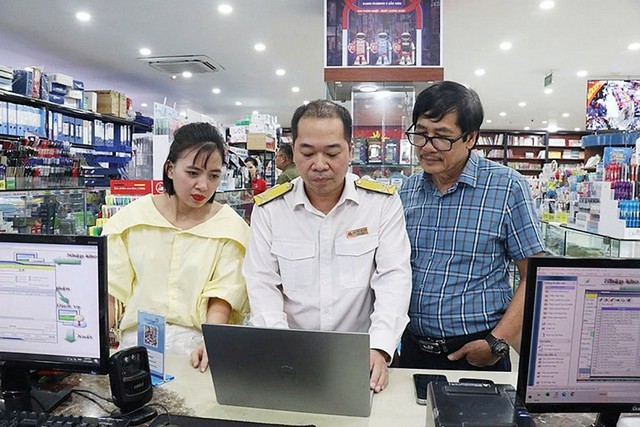
Stronger tax administration of the digital economy, e-commerce and cross-border business activities, expanded use of e-invoices and increased application of information technology in tax management helped offset part of the revenue losses resulting from support policies.
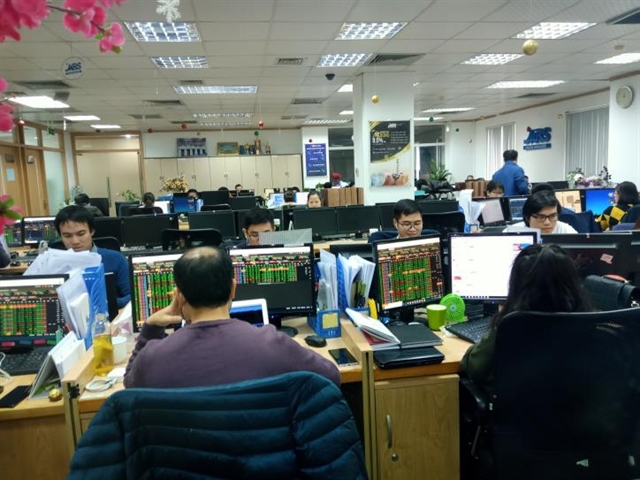
Another notable development was movement in the capital market, particularly the stock market, aimed at reducing pressure on the State budget and the banking credit system.
Measures to improve the legal framework, enhance transparency and upgrade trading infrastructure were implemented under the supervision of the State Securities Commission. Việt Nam continued to address outstanding criteria related to stock market upgrading in line with international standards.
However, Deputy Minister Đỗ Thành Trung noted that pressures on macroeconomic management remained high, while growth continued to rely heavily on credit, particularly in the real estate and gold markets.
The year 2026 has been identified as a pivotal year. Estimated balanced State budget revenue for 2026 is VNĐ2.53 quadrillion ($103.2 billion), with domestic revenue accounting for the largest share. Fiscal policy is expected to continue playing a stabilising role while supporting growth and sustainable development in the next phase. VNS
Economy
.jpg) Economy
Economy
 Economy
 Economy
 Economy
 Economy
 Economy
 Economy
 Economy
 Economy
 Economy
 Economy
 Economy
 Economy
 Economy