 Economy



Vietnamese scientist wins ASEAN-US Science Prize for Women
1.
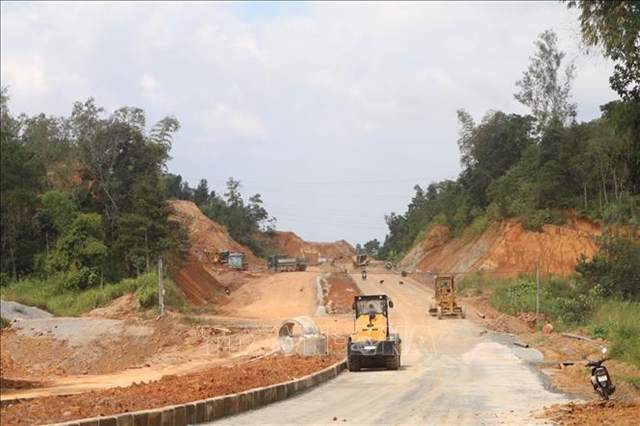 |
| Construction work under way on a public infrastructure project in Cao Bằng City. — VNA/VNS Photo Chu Hiệu |
HÀ NỘI — Việt Nam has disbursed 68.1 per cent of its public investment budget as of December 18, with mounting pressure on ministries and localities to meet the Prime Minister's 100 per cent year-end disbursement target as time runs short.
The Ministry of Finance reported VNĐ603.6 trillion (US$23 billion) has been deployed as of December 11. Disbursement accelerated in the following week, adding VNĐ25.9 trillion by December 18. Excluding supplementary allocations after September 30 and funds under Resolution 57-NQ/TW totalling VNĐ27.4 trillion, the disbursement rate has reached 68.1 per cent of the PM's assigned plan.
This shortfall threatens the Government's growth acceleration plans, as a substantial amount of capital still requires deployment before the January 31, 2026 fiscal deadline. Despite the recent acceleration, the gap between current performance and the full-year target remains substantial.
Only 12 central ministries and 18 localities have met or exceeded the national average disbursement rate, while 20 ministries and 11 provinces lag behind. Repeat underperformers including Tuyên Quang, Sơn La, Cần Thơ, Quảng Trị, Cao Bằng and Đà Nẵng have drawn repeated criticism from the Prime Minister.
Provincial leaders have escalated their response.
Chairman of Cao Bằng Provincial People's Committee Lê Hải Hòa issued two urgent directives within one week, with his December 20 order designating investment disbursement as "the most urgent central political task" through December 31.
The directive holds agency heads personally accountable, stating: "No excuses, buck-passing or hiding behind administrative procedures will be accepted."
Quảng Trị authorities similarly instructed departments and project owners to treat disbursement as a top political priority to create momentum for economic growth.
HCM City, Đà Nẵng and Quảng Ninh are also mobilising to accelerate spending as the deadline approaches.
The Ministry of Finance urged ministries and localities to resolve bottlenecks related to procedures, land clearance, materials and implementation capacity while strengthening leadership accountability to ensure efficient capital use and support macroeconomic stability.
In a report, the Ministry of Construction identified causes ranging from lower bidding prices and VAT reductions to poor budget management and slow implementation. With several projects at risk of missing year-end completion, the ministry has ordered faster site clearance for railway projects and requested action plans for unspent funds.
The recent simultaneous ground-breaking and inauguration of 234 key projects worth over VNĐ3.4 quadrillion nationwide may provide additional impetus. However, the year-end scramble highlights persistent challenges in project preparation and execution.
Disbursement pressure will intensify in 2026, given larger planned allocations, underscoring the need for improved front-loading to avoid the recurring pattern of "relaxed at year-start, stressed at year-end," according to Government assessments. — VNS
Economy
 Economy
 Economy
 Economy
 Economy
 Economy
 Economy
 Economy
 Economy
 Economy
 Economy
 Economy
 Economy
 Economy
 Economy