 Brandinfo
Japan, Malaysia ink deal on counter-drone system
1.
In 2025, Việt Nam’s economic growth reached approximately 8 per cent, placing it among the world's fastest-growing economies. The country’s GDP was estimated at US$510 billion, ranking 32nd globally, while GDP per capita reached US$5,000, officially positioning Việt Nam among the upper-middle-income countries. These indicators reflect a rapidly growing economy that is increasingly integrated into global value chains.
The year 2026 has been identified as a pivotal milestone as Việt Nam enters a new development phase, shifting its focus towards improving the quality, efficiency, and sustainability of growth. Macroeconomic stability, green growth, the circular economy, and the strengthening of domestic capabilities continue to be prioritised in the national development strategy.
In this context, the FDI sector continues to play a crucial role, while also being held to higher expectations. FDI enterprises that established their presence at the outset and grew alongside Việt Nam’s opening and integration have become exemplary reference cases for the nation’s development journey.
With 30 years of development, Unilever Vietnam exemplifies how an FDI enterprise has adapted, invested for the long term, and accompanied the Vietnamese economy from the early days of market opening to the threshold of a new development era.
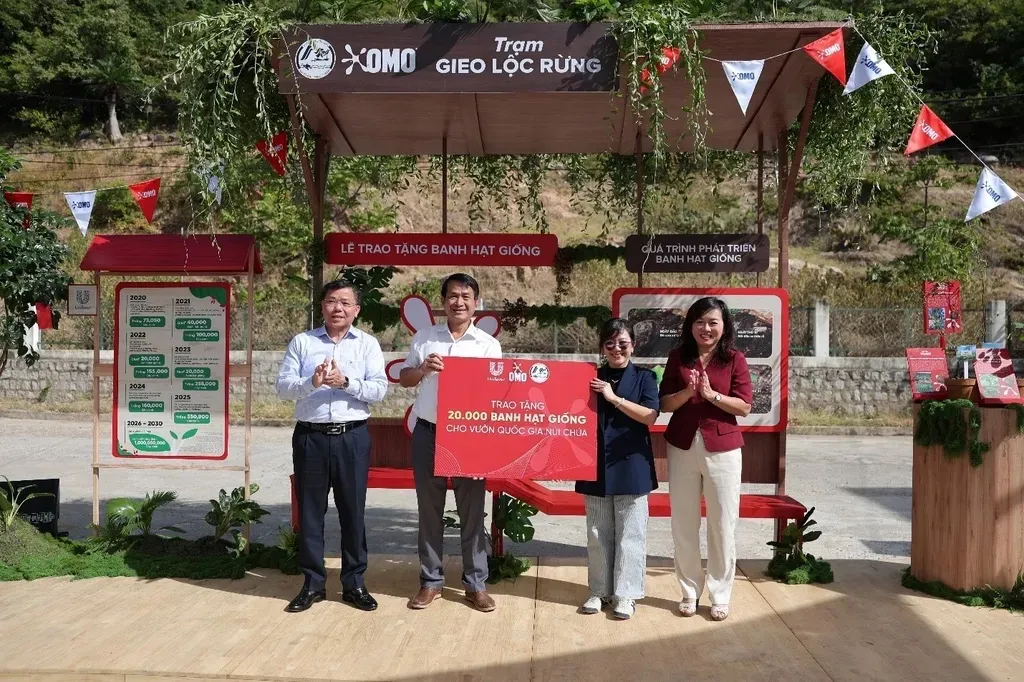 |
| 20,000 seed balls were presented to Núi Chùa – Phước Bình National Park in Khánh Hòa Province, marking the beginning of OMO’s tree-planting commitmen |
From shaping the economy to delivering tangible social contributions
In the mid-1990s, as Việt Nam entered the initial stage of its opening and integration process, the consumer economy remained in its infancy. In a market where modern commercial infrastructure, distribution systems, and supply chains were only beginning to take shape, and consumption habits reflected the richness and diversity of local cultures across regions, the presence of FDI enterprises not only brought capital inflows but also laid the foundational building blocks for the formation of an organised consumer market.
Entering the Vietnamese market in 1995, Unilever became part of this formative stage. The journey of Unilever Vietnam reflects how FDI enterprises can grow by learning from local communities, partnering closely with local stakeholders, and contributing to the evolution of Việt Nam’s business environment in the early years of integration.
Beyond these strategic pillars, initiatives implemented by Unilever’s brands in areas such as health, hygiene, child education, women’s empowerment, and rural livelihood support demonstrate how business-driven programmes can help address social issues closely linked to Việt Nam’s development journey. These efforts reflect not only corporate responsibility but also the company’s long-standing partnership with local communities in fostering positive and inclusive change.
In the environmental pillar, the brand OMO has played a prominent role through its long-term forest restoration efforts. Building on the completion of one million trees planted nationwide during 2021- 2025, OMO has launched a new commitment to plant an additional one million trees in the 2026-2030 period. The programme began at Núi Chùa – Phước Bình National Park, where OMO donated 20,000 seed balls of rare native tree species to support forest regeneration in challenging terrain. By combining community participation with innovative approaches such as drone-assisted seed dispersal, the initiative contributes to biodiversity conservation while raising public awareness of forest protection and climate resilience.
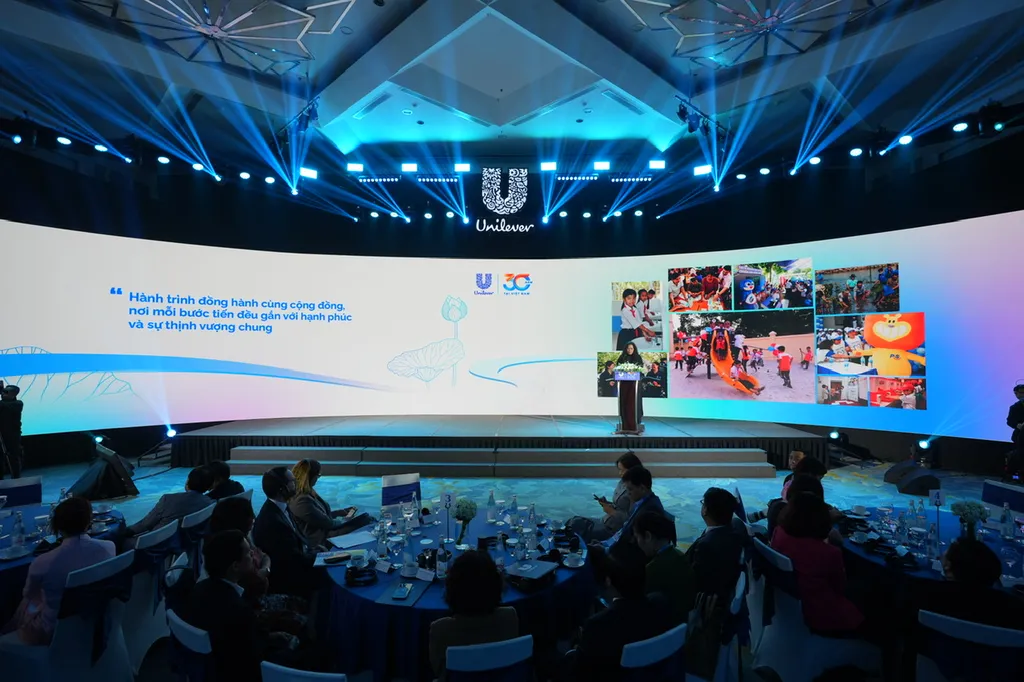 |
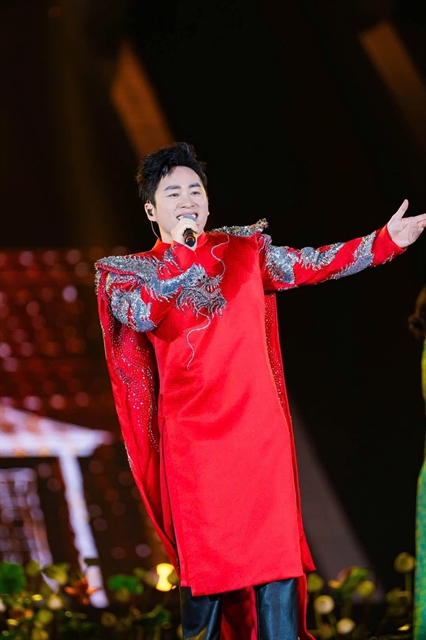
| 30th anniversary celebration of Unilever Vietnam |
In parallel, Unilever Vietnam has partnered with the Ministry of Education and Training to implement the "Green - Clean - Healthy School" programme, focusing on health, hygiene, and environmental education for children. By 2025, after five years of implementation, the "Green - Clean - Healthy School" programme had reached more than one million primary school students across 10 provinces, equipping them with essential hygiene knowledge and habits through digital learning materials, teacher training, and improvements to school sanitation facilities. As a public-private partnership, the programme supports the broader goal of building healthier, more sustainable learning environments for future generations.
When sustainable development becomes a national growth strategy
As Việt Nam moves into a new development phase, sustainable development has been identified as a strategic pillar of growth, with the commitment to achieve net-zero emissions by 2050 serving as a clear demonstration of this determination.
Unilever Vietnam has taken significant steps to eliminate emissions from its direct operations and shift to renewable energy, thus achieving internal net-zero status. The company is also extending its green transition roadmap throughout its supply chain. Projects like the “Biomass Boiler Steam Supply” and “Hole in the Wall” have helped reduce emissions and optimise logistics, thereby eliminating thousands of truck trips and significantly reducing the use of packaging materials each year.
In parallel, Unilever Vietnam has actively implemented programmes related to the circular plastic economy, emissions reduction in operations, the development of green supply chains, and increased localisation.
Accompanying Việt Nam into a new era
As Việt Nam continues to deepen its integration into global supply chains and raises expectations for growth quality, priorities such as digital transformation, the circular economy, localisation, and supply chain capability enhancement will continue to shape the role of FDI enterprises.
Unilever Vietnam remains one of the exemplary FDI enterprises closely associated with the country’s economic development. Entering a new era for the nation, the company continues to reaffirm its long-term commitment to accompany Việt Nam, guided by its mission: “Brighten everyday life for all, as Việt Nam is home.”
Speaking about Unilever Vietnam’s vision for sustainable development within Việt Nam’s FMCG sector, Lê Thị Hồng Nhi, Head of Communications, Corporate Affairs and Sustainability, shared: “30 years in Việt Nam is more than a business milestone for Unilever, it is a shared journey with millions of consumers, partners, and employees. One of our purposes is to help uplift livelihoods, strengthen community health and wellbeing, and play our part in tackling the environmental challenges that shape our collective future. I believe that when we unite - government, partners, and stakeholders across the value chain - we can achieve a positive, longterm impact for both communities and the environment.”
Brandinfo
 Brandinfo
 Brandinfo
 Brandinfo
 Brandinfo
 Brandinfo
 Brandinfo
 Brandinfo
 Brandinfo
 Brandinfo
 Brandinfo
 Brandinfo
 Brandinfo
 Brandinfo
 Brandinfo