 Sci-Tech

HKSTP Partners with Leading Science and Technology Company Merck to Open a New Chapter in I&T Collaboration
1.
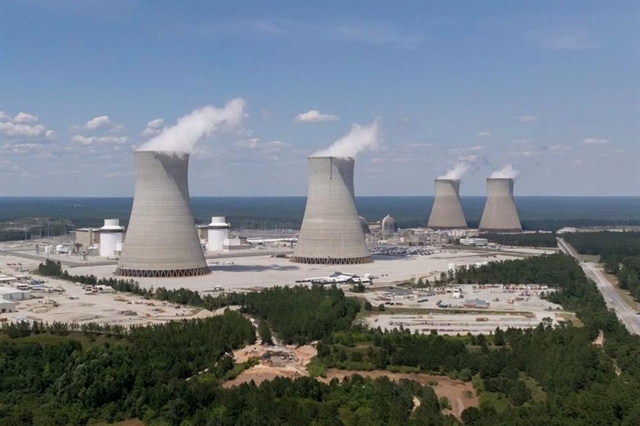 |
| Việt Nam aims for nuclear power to account for 6–8 per cent of national electricity generation by 2050. VNA/VNS Photo |
HÀ NỘI — The Ministry of Education and Training has issued a decision on standards for master's and doctoral training programmes in nuclear power fields.
Accordingly, a list of 22 nuclear power-related majors at the master's and doctoral levels, comprising seven core majors and 15 supporting or interdisciplinary majors, is identified in the decision.
The core majors include atomic and nuclear physics; nuclear engineering; engineering physics; thermal engineering; energy engineering; electrical engineering; and control and automation engineering.
The supporting and interdisciplinary disciplines cover a wide range of fields, including mechanical engineering, mechatronics, environmental engineering, materials science, construction engineering, chemistry, geology and energy management.
Computer Science, Information Technology, Computer Engineering, Artificial Intelligence and Data Science are also included in this category.
According to the Ministry of Education and Training, the classification is based on the extent to which each training field is directly related to the physical processes, key technological systems, and operational and safety functions of a nuclear power plant.
Graduates will receive degrees in their respective disciplines, while their degree supplements may include a note stating “Nuclear Power” or an equivalent term.
The training programme standards set out three specialised orientations of nuclear power technology and energy systems; nuclear safety, security and management; and digital nuclear engineering and smart Infrastructure.
Accordingly, training programmes will not only focus on traditional areas such as reactor physics and technology, thermal engineering, energy systems, electrical engineering, control and automation, and nuclear safety and security, but will also incorporate emerging technologies.
Training methods are required to integrate digital tools, simulation, data and artificial intelligence appropriate to each specialisation, while placing greater emphasis on practical training, experiments, simulation and the resolution of professional problems.
For the digital nuclear engineering and smart infrastructure orientation, practical training will also cover nuclear power plant-specific data, AI and data analytics, digital instrumentation and control (Digital I&C), digital twins and industrial control system cybersecurity. Inspection and intelligent robotics will be incorporated as appropriate to the configuration of each specialised programme.
The organisation of training will also be tailored to the objectives of each programme.
For application-oriented master's programmes, training will focus on problems, projects and professional situations associated with simulation, practical work and the resolution of technical, technological and occupational challenges.
Research-oriented master's and doctoral programmes will focus on developing independent research capacity, while doctoral training must be linked to research groups and scientific and technological tasks.
To meet the practical training requirements of the nuclear power sector, the Ministry of Education and Training has also set standards for facilities, technology and learning resources, as well as requirements for teaching staff and supporting personnel.
Training institutions are encouraged to strengthen cooperation with the International Atomic Energy Agency (IAEA), research institutions, regulatory agencies, businesses, professional organisations and reputable international organisations in training and research.
According to the ministry, the issuance of the training programme standards is intended to ensure consistency in core requirements while allowing training institutions to exercise autonomy in designing and developing programmes that are appropriate to their research orientations, practical conditions and the country's human resource development needs. VNS
Sci-Tech
 Sci-Tech
 Sci-Tech
 Sci-Tech
 Sci-Tech
 Sci-Tech
 Sci-Tech
 Sci-Tech
 Sci-Tech
 Sci-Tech
 Sci-Tech
 Sci-Tech
 Sci-Tech
 Sci-Tech
 Sci-Tech