 World
World

AIMCONNECT 2026 Held in Singapore, Bringing Global Automotive Leaders Together to Explore the Future of AI, Trust and Connected Mobility
1.
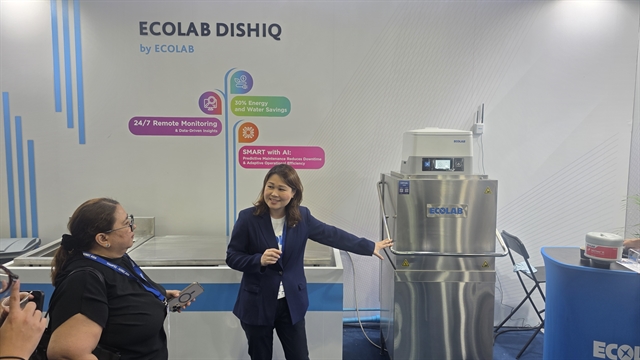 |
| An exhibitor explains her company's new product model, which saves water and applies AI. — VNS Photo Ly Ly Cao |
By Ly Ly Cao
BANGKOK — Bangkok is reinforcing its role as a regional hub for the hospitality and food service industry as THAIFEX – HOREC ASIA 2026 opens at the IMPACT Exhibition and Convention Centre, bringing together suppliers, buyers and industry leaders from across Asia, including a growing number of hospitality professionals from Vietnam.
The three-day exhibition, held at Challenger Halls 1–2 in Muang Thong Thani, showcases solutions and technologies for hotels, restaurants, cafés and catering businesses. Organisers say the event has continued to expand as the HORECA sector across Southeast Asia seeks new ways to improve operational efficiency, sustainability and service quality.
Opening the event, Thailand's Prime Minister Anutin Charnvirakul emphasised the exhibition's role as a regional meeting point for industry stakeholders.
"THAIFEX – HOREC ASIA serves as an international trade platform that enables entrepreneurs, investors and buyers from across the globe to connect, exchange knowledge, and turn opportunities into tangible business outcomes, while also shaping the future direction of the HoReCa industry together," he said.
More than 500 hosted buyers from across the region have been invited to the show this year. Particular attention has been given to emerging markets such as Việt Nam, reflecting the country's rapid growth in tourism and food service.
"We invited 20 per cent more buyers from Việt Nam this year," said Wendy Lim, General Manager at Koelnmesse Pte Ltd, the event organiser involved in the exhibition's organisation. "This is something we deliberately did because we want to invite buyers that matter for our exhibitors who are here."
Lim noted that Việt Nam remains an important visitor market for the exhibition.
"Việt Nam is more of a market that is relevant for buyers and visitors to come. Here they can meet international brands that they don't easily meet in Vietnam and see what the competition is doing and what the trends are," she said.
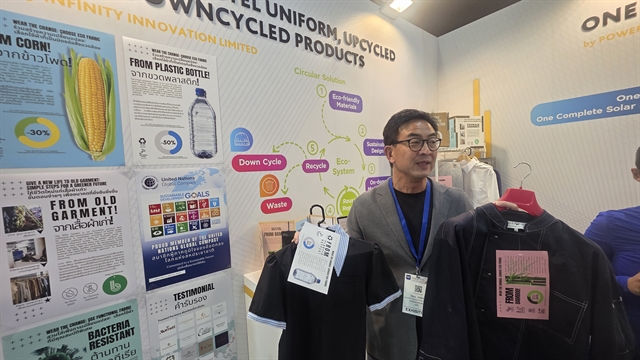 |
| Uniforms made from bamboo, corn husk or other recycle materials. — VNS Photo Ly Ly Cao |
The exhibition has increasingly placed sustainability and environmental responsibility at the centre of its agenda. Many exhibitors are presenting technologies designed to help hospitality operators reduce energy consumption, minimise waste and improve resource efficiency in kitchens and service operations.
"In the last three years of the show, sustainable trends have really been at the top," said Wendy Lim. "Many buyers are particularly interested in sustainable hospitality products and solutions."
This year, the organisers also introduced a new initiative known as the GM Sustainability Network, a closed-door workshop that brings together hotel general managers, food and beverage directors and sustainability officers with selected exhibitors offering environmentally responsible solutions.
"We have around 35 GMs, F&B directors and sustainability officers coming specifically for this programme," said Project Director, THAIFEX - HOREC Asia, Koelnmesse Pte Ltd. "They have sustainability targets and KPIs to meet, so they are looking for suppliers that can help them reach those goals."
Across the exhibition floor, companies are showcasing technologies such as energy-efficient kitchen equipment, automated cooking systems and waste-reduction solutions. Many of these innovations aim to address a challenge faced by hospitality businesses globally: maintaining consistent quality while dealing with labour shortages and rising operational costs.
A lot of hospitality businesses are struggling with manpower. Suppliers now offer equipment that helps maintain consistent quality even when staff experience levels vary.
Alongside technological innovation, sustainability is also being approached through recycling and circular economy practices. Some exhibitors are presenting biodegradable packaging, waste-sorting systems and water-saving cleaning technologies designed for hotels and restaurants aiming to reduce their environmental footprint.
The exhibition has drawn interest from Vietnamese hospitality groups looking to modernise operations and adapt to emerging consumer preferences.
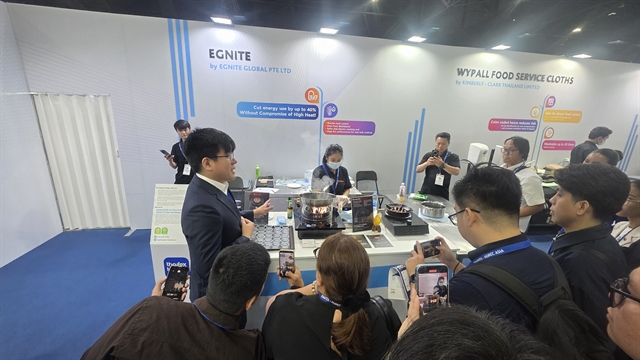 |
| Advanced electric fire stove for high-performance cooking, enhancing safety and reducing emissions. — VNS Photo Ly Ly Cao |
According to Chử Hồng Minh, chairman of the Vietnam Restaurant Association and CEO of the Vietnam Food & Beverage Ecosystem, Vietnamese businesses attending the event are particularly focused on technology and evolving dining trends.
"At this event, Việt Nam's restaurant and culinary sector is looking to connect with different types of partners and suppliers," Minh told Việt Nam News and Law's reporter.
He added that two major needs are becoming increasingly clear for Vietnamese enterprises.
“First is access to new technologies and AI solutions, which are now strongly impacting many industries, especially the restaurant and food service sector. The second is the growing trend of wellness and healthy cuisine," Minh said.
According to Minh, consumer demand in Vietnam for food that supports health and well-being is accelerating rapidly.
"Healthy food and wellness cuisine will be a very strong trend in Việt Nam," he said, adding that there is increasing demand for food that is good for health, even food that can contribute to healing and well-being.
Beyond sourcing equipment and technologies, Minh said Vietnamese businesses also see the exhibition as an opportunity to learn from Thailand's long-term strategy in developing its food and hospitality sectors.
"Thailand has built very clear strategies over the years," he said. "They have positioned themselves as a global food hub and promoted the country as a world-class culinary destination. There are many lessons that Việt Nam's hospitality industry can learn from how Thailand has developed these strategies."
He added that programmes such as the THAIFEX - HOREC Academy sessions and experiential zones provide useful insights into emerging market trends and operational solutions.
"These activities help Vietnamese businesses update their knowledge about the market and hopefully identify products or services that can support their business development back in Việt Nam," Minh said. — BIZHUB/VNS
World
 World
World
 World
World
 World
World
 World
World
 World
World
 World
World
 World
World
 World
World
 World
World
 World
World
 World
World
 World
World
.jpeg) World
World
 World
World