 Travel

Young people’s mental health: We need to listen – and act
1.
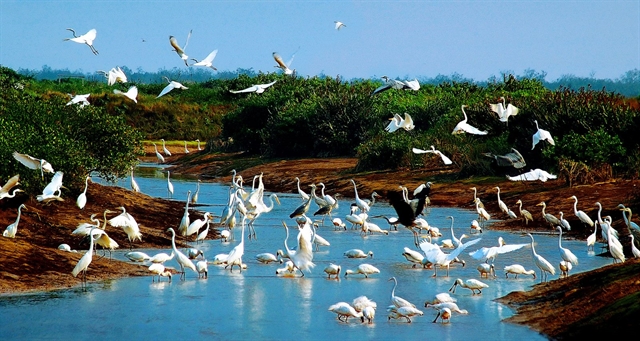 |
| Xuân Thủy National Park is home to many rare waterbird species. — Photo sodulich.ninhbinh.gov.vn |
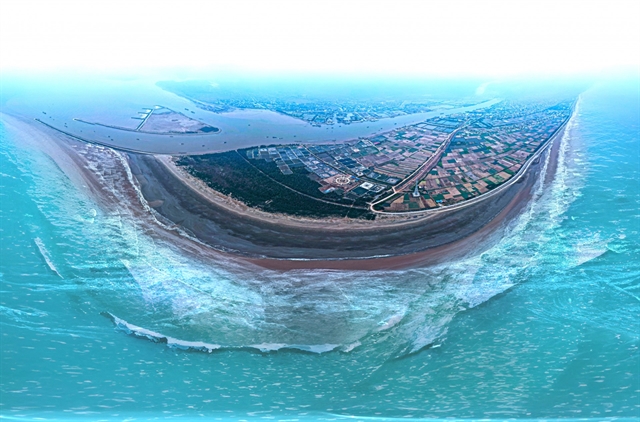
NINH BÌNH At the mouth of the Red River, where waterways, mudflats, and the sea meet, Xuân Thủy National Park in Ninh Bình Province offers visitors a chance to explore rich wetlands and rural communities.
Covering more than 7,000ha in Giao Minh, Giao Hòa and Giao Phúc communes, the park is a typical coastal estuary. Sediment deposition and erosion in the Red River Delta have shaped its landscape, creating extensive tidal flats, mangroves, sandbanks and waterways.
Ninh Bình provincial authorities recently recognised Xuân Thủy National Park as a tourism site. The recognition is expected to help standardise visitor services and provide a basis for developing ecotourism, nature experiences, birdwatching and environmental education.
The park has long been recognised for its ecological importance. In 1989, its wetlands became Việt Nam’s first Ramsar site, making the country the 50th member of the Ramsar Convention on Wetlands of International Importance. It was later recognised as an ASEAN Heritage Park and, in 2004, became part of the Red River Delta coastal biosphere reserve recognised by UNESCO.
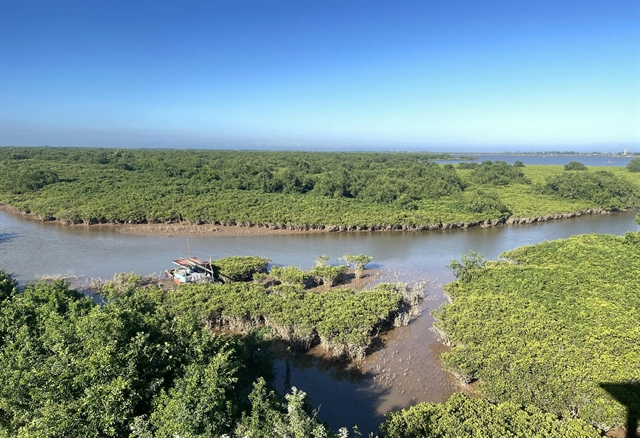 |
| Xuân Thủy National Park has recently been recognised by the Ninh Bình provincial authorities as a tourism site. — Photo baophapluat.vn |
A stopover for migratory birds
The wetlands of Xuân Thủy comprise several different habitats, including mangrove-covered tidal flats, open mudflats, shrimp ponds, sandy areas and estuarine waters, as well as sandbanks and tidal channels.
The variety of habitats supports a rich range of plant and animal life. Records show more than 200 species of higher plants, including 14 major mangrove species. The park is also home to 112 species of phytoplankton, 110 species of zooplankton, 385 species of invertebrates, 155 fish species and 427 insect species.
Birds are the park’s most distinctive attraction.
Surveys have recorded 222 bird species belonging to 42 families and 12 orders, including 166 migratory species. Xuân Thủy is an important stopover and wintering site for waterbirds along the East Asian-Australasian Flyway.
Migratory birds arrive here in different seasons. Some travel south from northern regions to escape the cold, while others move north during warmer months. From October to April, large numbers of birds gather in the park, making this the best period for visitors hoping to see them.
During the peak season, birds can be seen feeding on the mudflats and in shallow waters, or resting among the mangroves. The scene changes with the tide and the movement of the flocks, giving visitors a different view of the wetlands at different times of day.
Among the rare species found here is the black-faced spoonbill, a waterbird known for its distinctive spoon-shaped bill. It is one of the species receiving particular conservation attention at Xuân Thủy.
Phan Văn Trường, an official from the park’s management board, said around 100 migratory bird species use the area as a stopover each year. The park is also home to a significant proportion of the world’s black-faced spoonbill population.
The bird’s distinctive image has become closely associated with Xuân Thủy National Park.
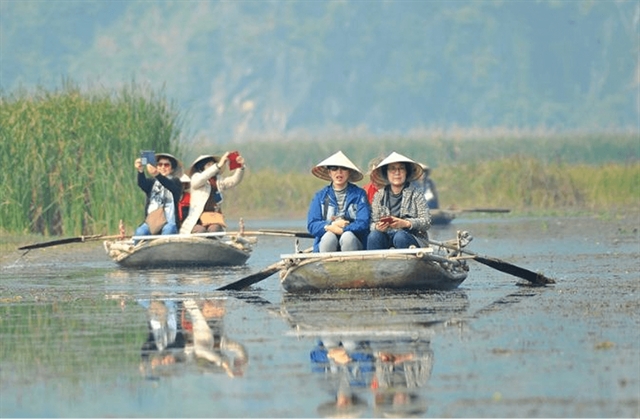 |
| Tourists discover Xuân Thủy National Park. — Photo ninhbinh360.com |
From wetlands to village life
A boat trip is one of the best ways to explore the park. Travelling along the waterways, visitors can observe mangrove forests, mudflats and open stretches of water while looking for birds and other wildlife. Trips around sunset offer another perspective on the wetlands as the light changes across the water and vegetation.
The park also organises field trips, birdwatching tours and countryside excursions.
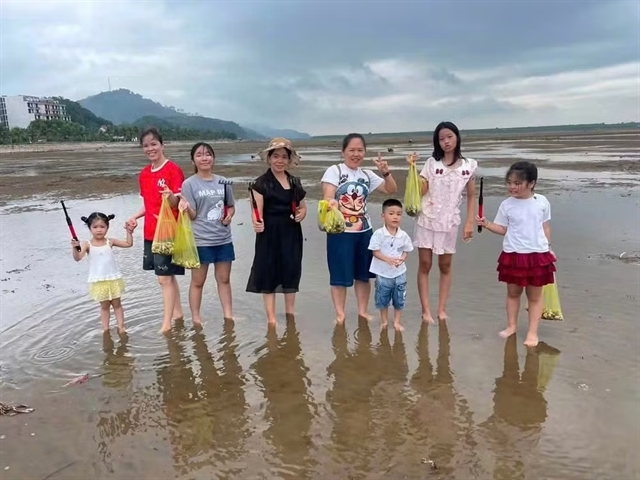
Visitors can catch clams on the mudflats just like the locals, especially around Ramsar.
For those wanting to spend more time in nature, camping is also possible. Overnight stays require advance registration with the park’s management board. Visitors must arrange or bring their own equipment.
The area around the park is also worth exploring. Over generations, residents have built villages on land reclaimed along the Red River Delta. Traditional houses, pagodas, and Catholic churches can be found among the villages, reflecting the area's history and cultural diversity.
Local festivals offer another way to experience community life. Visitors may encounter traditional chèo (a type of Vietnamese traditional opera) singing and chầu văn (an ancient form of Vietnamese performance art) performances, lion dances and folk competitions such as boat racing and wrestling.
Food is an important part of the experience, too. Local specialties include jellyfish salad and Hoành Nha crab paste. Visitors can also take home Sa Châu fish sauce and other locally made products.
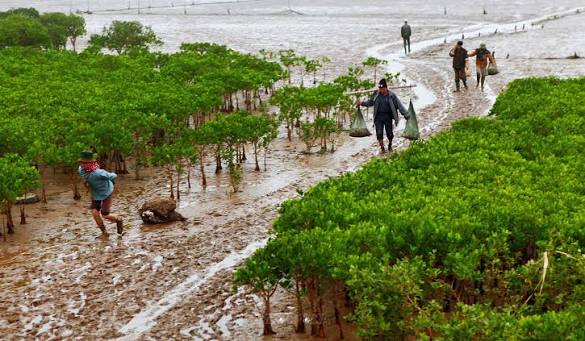 |
| Local residents harvest aquatic and marine products beneath the mangrove canopy. — VNA/VNS Photo |
For travellers looking beyond the better-known attractions of the Red River Delta, Xuân Thủy offers an opportunity to experience a landscape where nature and local life remain closely connected. The wetlands provide food and shelter for migratory birds, while the surrounding waterways and mudflats continue to support the communities that have lived alongside them for generations. VNS
Travel
 Travel
 Travel
 Travel
 Travel
 Travel
 Travel
 Travel
 Travel
 Travel
 Travel
 Travel
 Travel
 Travel
 Travel