 Features

LANDMARK Launches ‘Destination CENTRAL’: A District-Wide Invitation to Explore the Dynamism, Luxury, and Soul of Central
1.
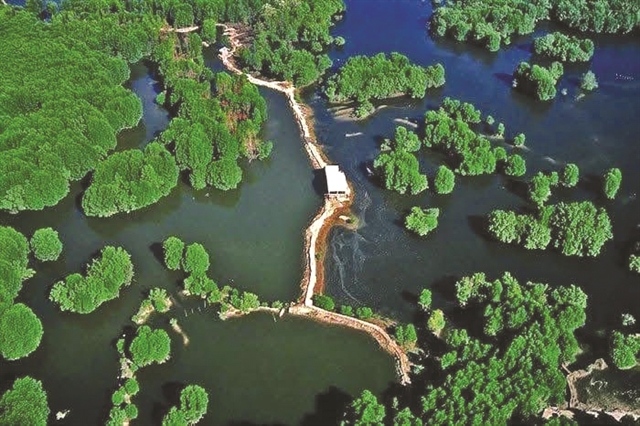 |
| A panoramic aerial view of Cần Giờ’s mangrove biosphere reserve, where dense forests and winding waterways shape a distinctive ecological landscape. — Photo hochiminhcity.gov.vn |
HCM CITY —Just over 50 kilometres beyond the restless pulse of HCM City, the landscape exhales. Mangrove forests stretch to the horizon, tidal rivers slip through dense green canopies, and in Cần Giờ, life still moves to the quiet, enduring rhythm of the sea.
Cần Giờ Ward, long known as the city’s ecological lung, is increasingly emerging as a promising destination for community-based tourism, offering both economic opportunities for local residents and a sustainable pathway for long-term development.
Recognised by UNESCO as a biosphere reserve, Cần Giờ possesses a unique ecosystem that distinguishes it from many coastal districts in Việt Nam.
Its vast mangrove forests, painstakingly restored after wartime devastation, now support a rich diversity of wildlife, including monkeys, crocodiles, migratory birds and aquatic species.
However, beyond its ecological significance, it is the human dimension — the lives and traditions of local communities — that holds the key to unlocking a more inclusive tourism future.
Community-based tourism, which places local people at the centre of tourism activities, has gained global momentum as travellers increasingly seek authentic and meaningful experiences.
In Cần Giờ, this model aligns naturally with the district’s existing socio-economic structure. Rather than relying on large-scale resorts or mass tourism infrastructure, the area offers intimate encounters with everyday life, from early morning fishing trips to clam harvesting and home-style seafood cooking.
Local authorities have begun to recognise this potential. In recent years, eco-tourism activities have been promoted in areas such as Vàm Sát and Lâm Viên Cần Giờ.
Yet much of the tourism value chain remains controlled by external operators, leaving local households with only limited participation.
Experts suggest that a shift towards a community-centred approach could help retain more economic value within the district while safeguarding its cultural and environmental assets.
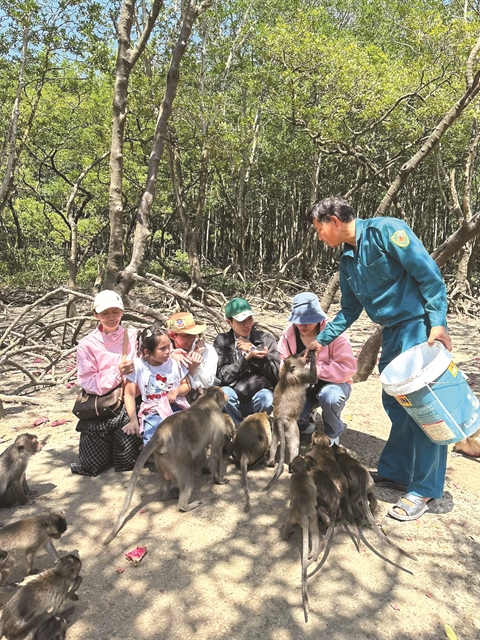 |
| Visitors encounter wild monkeys in the mangrove forests of Cần Giờ, where nature-based tourism offers both excitement and insight into the area’s unique ecosystem. — VNS Photo Văn Châu |
Local livelihoods
For many local residents, tourism remains a supplementary source of income.
Nguyễn Văn Hải, a fisherman in Long Hoà Commune, occasionally takes visitors on short boat trips through the mangroves.
“They are very interested in how we live and work here. If there were more organised programmes, we could earn extra income without abandoning our traditional jobs,” he said.
Another local, Trần Thị Mai, has already begun to benefit from tourism. In addition to selling seafood, she now offers home-cooked meals and small cooking experiences for visitors.
“Before, I earned around VNĐ200,000 (US$8) a day. Now, on busy weekends, I can earn up to VNĐ800,000 ($32),” she said.
Mai added that interacting with visitors boosted her confidence and encouraged her to preserve and share local culinary traditions.
Such stories reflect a broader opportunity. By developing homestays, guided tours, culinary experiences and small-scale services, local communities could diversify their income streams while maintaining traditional livelihoods.
However, realising this potential requires overcoming several challenges. Infrastructure remains a major constraint.
Although Cần Giờ is accessible by road and ferry, transport connections are still less convenient than those to other suburban districts.
Limited public transport and relatively underdeveloped accommodation facilities may discourage longer stays, which are essential for community-based tourism to thrive.
Environmental sustainability is another critical concern. The mangrove ecosystem is highly sensitive, and unregulated tourism could lead to pollution and habitat degradation.
Waste management, in particular, is becoming an increasingly urgent issue as visitor numbers rise.
Without effective measures, the natural assets that underpin tourism could be compromised.
To address these challenges, experts have called for a more integrated development strategy that balances economic growth with environmental protection.
This includes investing in eco-friendly infrastructure, strengthening environmental regulations and providing targeted training programmes for local residents.
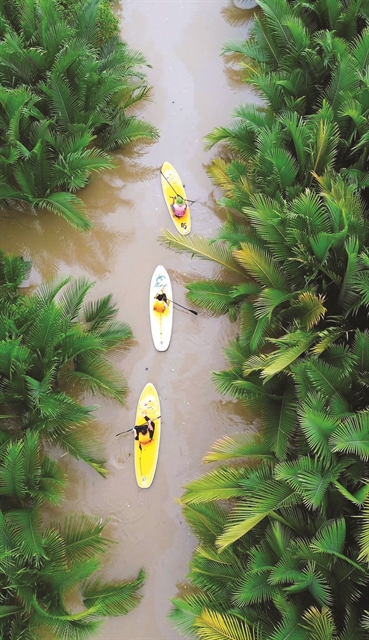 |
| Tourists paddle through narrow waterways surrounded by mangroves, experiencing the tranquillity and biodiversity of Cần Giờ’s ecosystem. — VNS Photo Văn Châu |
Skills in hospitality, communication and tourism management will be essential for enabling communities to participate more actively in the sector.
Technology also presents new opportunities. Digital platforms allow local service providers to connect directly with visitors, reducing reliance on intermediaries.
Young people in Cần Giờ have begun to promote local experiences through social media, suggesting a growing awareness of tourism’s potential and a willingness to innovate.
Experiences that matter
Food tourism is emerging as a particularly strong pillar for development. Known for its fresh seafood, Cần Giờ offers a culinary identity rooted in simplicity and freshness.
By combining meals with storytelling and hands-on experiences, local residents can transform everyday dishes into memorable cultural encounters that appeal to both domestic and international travellers.
Nguyễn Hoàng Phúc, a visitor from Bình Dương Ward, shared his experience of kayaking through the mangrove forests.
“Paddling through narrow waterways surrounded by dense mangroves was incredibly peaceful. You can hear birds and the sound of water, and nothing else. It feels completely different from the city,” he said.
Phúc added that the experience was both relaxing and educational. “Local guides explained how the mangrove forest protects the coastline and supports biodiversity. It made me appreciate the environment more. If local people organise these tours, it could both create income and raise awareness about conservation,” he noted.
Meanwhile, Vũ Thị Hạnh, travelling with her family from Đồng Nai Province, highlighted hands-on activities such as crab catching.
“My children were very excited to try catching small crabs in the mud with local guides. It was fun, a bit messy, but very memorable,” she said.
Hạnh emphasised the educational value of such experiences.
“It is not just sightseeing. Children can learn about nature and local life in a very direct way. We even cooked the crabs afterwards, which made the experience more meaningful. This type of tourism is ideal for families,” she added.
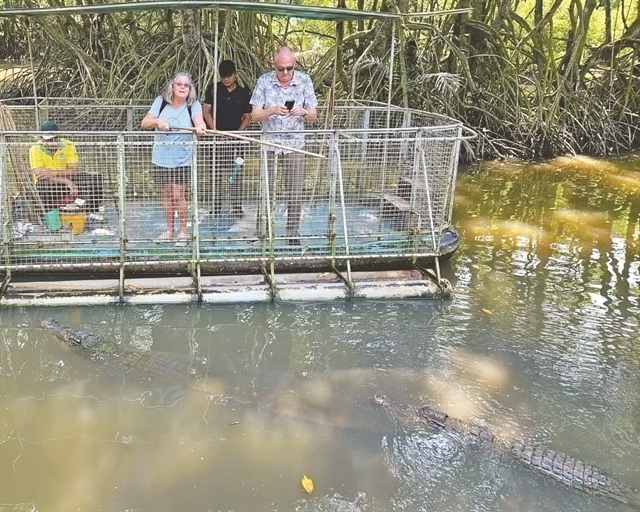 |
| Tourists feed crocodiles at a conservation site in Cần Giờ, offering a close-up encounter with the district’s wildlife. — Photo thanhnien.vn |
Importantly, community-based tourism can also contribute to cultural preservation. As urbanisation continues to reshape HCM City, Cần Giờ remains one of the few areas where traditional ways of life are still visible.
Tourism, if properly managed, can help sustain these traditions by creating economic incentives for their continuation.
At the policy level, stronger coordination between authorities, businesses and communities will be essential.
Financial support mechanisms, training initiatives and public-private partnerships could help scale up community-based tourism while ensuring that development remains inclusive.
Experiences from other regions in Việt Nam demonstrate that when local people are empowered, tourism can become a powerful driver of sustainable growth.
Looking ahead, the future of Cần Giờ depends on the choices made today. While mass tourism may bring short-term economic gains, it also carries significant risks for the district’s fragile ecosystem.
A community-centred approach, by contrast, offers a more balanced and sustainable path that prioritises both people and nature.
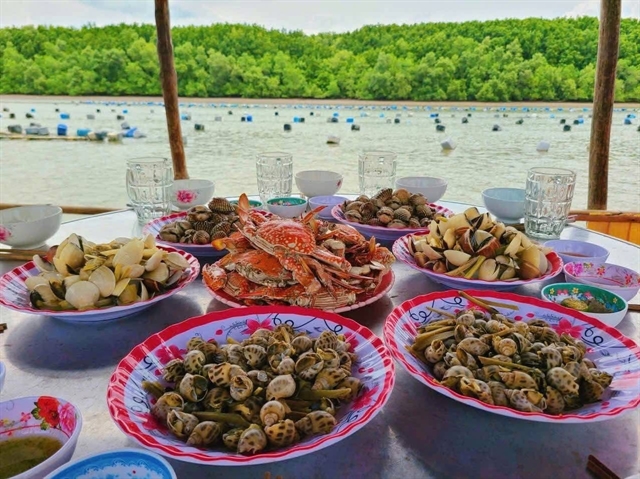 |
| Fresh seafood, including crabs, shrimp and clams, highlights Cần Giờ’s coastal cuisine and livelihoods. — VNS Photo Văn Châu |
Voices from visitors
For many travellers, cuisine is only one part of a broader and more immersive experience in Cần Giờ.
Nguyễn Thị Lan from Hà Nội said the district’s seafood left a strong impression, but what stayed with her most was the overall atmosphere.
“Grilled scallops with spring onions, steamed crabs and salt roasted shrimp are must-try dishes,” she said.
“But beyond the food, I really enjoyed the quiet environment and the feeling of being close to nature.”
Lan noted that prices were reasonable, with a meal for three costing around VNĐ450,000 (US$18).
However, she said that value went beyond cost. “What makes it special is seeing how the seafood is sourced and prepared locally. It feels authentic and not commercialised. I think that is something many travellers are looking for now,” she added.
Trần Minh Đức from Đà Nẵng shared a similar perspective, highlighting both food and activities.
“The flavours are simple but reflect the coastal lifestyle. I also joined a short boat trip through the mangroves, which was very relaxing,” he said.
Đức added that the destination still retained a sense of rawness that could be its greatest strength.
“Cần Giờ is not crowded like other tourist places. That is why it feels more genuine. If it is developed carefully, it can become a very attractive destination for people who want to escape the city,” he noted.
Overall, visitors agree that Cần Giờ’s greatest appeal lies not in luxury or entertainment, but in its authenticity.
With careful planning and community involvement, many believe the district can develop into a distinctive destination that offers both relaxation and meaningful cultural experiences.
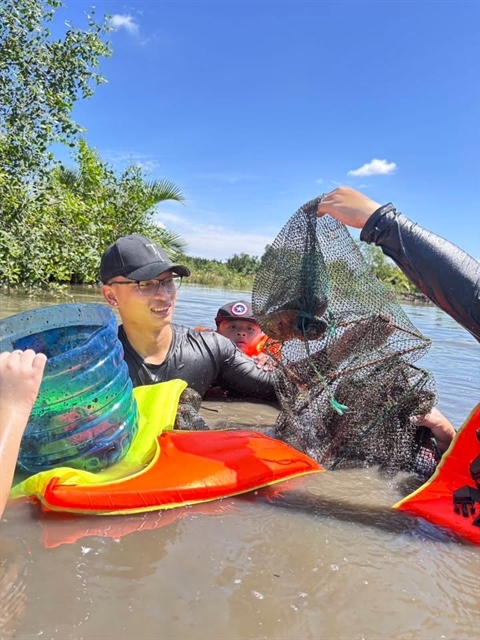 |
| Visitors take part in hands-on activities such as catching crabs and fish, offering a closer look at local life. — VNS Photo Văn Châu |
Getting there and staying
Accessibility plays a key role in shaping visitor experiences in Cần Giờ. Located about 50 kilometres from the centre of HCM City, the ward can be reached by road, including a ferry crossing at Bình Khánh Port, with travel time typically ranging from one and a half to two hours depending on traffic conditions.
Visitors can travel by motorbike or car for greater flexibility, while buses offer a more economical option at around VNĐ35,000 ($1.4) per trip, although journeys may take longer.
Accommodation remains relatively modest but shows strong potential for community-based tourism development.
Homestays and small guesthouses are the most common options, offering simple but comfortable facilities and opportunities for closer interaction with local residents.
Prices typically range from VNĐ500,000 ($20) to VNĐ700,000 ($28) per night.
In the end, what draws people back is not comfort or scale, but the feeling of a place still in rhythm with the sea — where, just beyond the city, life unfolds at its own unhurried pace. — VNS
Features
 Features
 Features
 Features
 Features
 Features
 Features
 Features
 Features
 Features
 Features
 Features
 Features
 Features
 Features