 Sunday/Weekend

Việt Nam-EFTA agreement opens new opportunities for Norwegian salmon
1.
 |
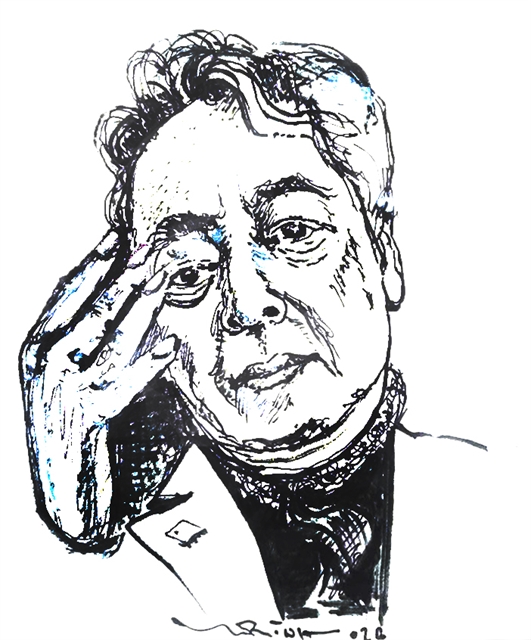
| VietnamPlus editor-in-chief Trần Tiến Duẩn. — Photo courtesy of Trần Tiến Duẩn |
Artificial intelligence is transforming journalism at unprecedented speed, generating stories, analysing data and producing multimedia content in seconds. As newsrooms race to adapt, a fundamental question is emerging: what remains uniquely human in journalism when machines can do so much? VietnamPlus Editor-in-Chief Trần Tiến Duẩn shares his views with Việt Nam News reporter Minh Hằng on the opportunities, disruptions and future of the profession.
How is AI changing journalism today?
AI is reshaping journalism rapidly and at scale. It is changing how content is produced and redrawing boundaries within newsrooms. In the past, differences among journalists were mostly about experience and writing skills. Now there is a new divide between those who adapt to technology and those who are slow to update their digital skills. AI allows skilled, tech-savvy reporters to work much faster and across a broader range of tasks.
One reporter can now do work that once required a team. With AI assistants, journalists can search for data, retrieve documents, aggregate sources, synthesise information, analyse trends, suggest headlines and angles, and build outlines.
They can also use AI to help produce multimedia content such as graphics, audio and video, and to optimise content for multiple digital platforms.
Tasks that once took hours or days are now compressed. Workflows are simplified and accelerated.
On the other hand, AI puts traditionalists at a disadvantage. Those who focus solely on conventional writing, delay adopting new tools or resist changing processes will face increasing challenges. As AI raises both the speed and the baseline quality of content, basic skills alone are no longer enough to compete. AI can generate routine, formulaic material at high speed. Repetitive or superficial tasks are increasingly being replaced by technology. This is the most significant impact AI is having on the industry.
When AI can produce information so quickly, what core values must professional journalism preserve, and what gives humans an edge over AI?
Journalism is entering a period of profound restructuring. Value is shifting from daily output to depth and quality. Beats that require expertise — economics, technology, social affairs and the environment — will depend on journalists with genuine, in-depth knowledge. AI can produce text quickly, but it struggles to replace people who can verify facts, scrutinise sources, analyse a field in depth, maintain an independent perspective and build their own source networks. Audiences still need experts who can explain complex issues, identify the essence of a problem and clarify what is really happening.
To compete, journalists should not focus on areas where machines already excel: processing large datasets at speed, detecting patterns, synthesising and summarising information, automating repetitive tasks and increasingly translating and generating images and video.
The human advantage lies in verification, context, judgement, depth, originality and human-centred storytelling. AI also cannot go to the scene. On-the-ground reporting remains a human responsibility. Investigative instincts, fieldwork, creativity and narrative skills are still difficult to replicate.
 |
| BEAUTIFUL GAME: An AI-generated image of the FIFA World Cup 'Temple of Legends'. Photo vietnamplus.vn. |
To stand out from the flood of social and AI-generated content, what forms do you prioritise, and is the shift towards storytelling over bare facts now inevitable?
We prioritise in-depth, creative and multidimensional journalism. This has been VietnamPlus’s approach from the beginning: to be authoritative and credible, but not dry; a mainstream, trusted source that still appeals to a broad range of readers, including younger audiences.
Reporting and feature writing, reportage, investigations, reflective pieces, interviews and profiles are standard newsroom functions.
Storytelling is the method used to present them. We favour deep, creative narratives and amplify them with multimedia to increase impact and reach. We match format to purpose. A short news item should be simple and fast. We do not overload it with photos, videos, or infographics. The goal is speed, clarity and timely delivery, with a clean structure and a clear message so readers can absorb it quickly.
By contrast, our features, interactives and thematic series are richly integrated with multimedia such as photos, video, graphics and data visualisations to create a stronger impact and better reader engagement.
What does a story need today to keep readers to the end?
First, it needs a compelling story or a meaningful issue that genuinely interests the audience. Without that core, other elements are merely cosmetic. Design, formats and effects cannot compensate for a weak idea. Weight and depth come from substance.
Where have you applied AI in your workflow, and what can AI support versus what is hard to replace?
We use AI in field operations, reporters’ daily work, translation, editing and newsroom management. AI supports the rapid processing of large datasets, pattern detection and analysis, synthesis and summarisation, and the automation of repetitive tasks across the workflow. It can draft copy, identify angles and accelerate production processes. However, AI finds it difficult to replace investigative judgement, on-the-ground newsgathering, creative thinking and storytelling. These depend on context, trust, independence and experience.
Which journalism models are most likely to retain readers and develop sustainably over the next five to 10 years?
We can expect significant change within the next three to five years. AI will evolve from a supporting tool into a core layer of production, handling data searches and analysis, drafting copy, creating rough cuts of video and graphics, and guiding distribution by audience segment, thereby automating routine, technical and data-intensive tasks.
As commodity content declines, newsrooms will become leaner and more digital, with smaller, higher-calibre teams supported by AI. Reporters will become deeper specialists while also becoming more versatile, carrying out tasks that once required an entire team.
In my view, a sustainable path is the media-tech model: upgrading technology, completing the digital newsroom, producing and distributing multimedia content across platforms, using sticky formats such as quizzes, polls and gamification, personalising user experiences and automating processes where doing so adds value. — VNS
Sunday/Weekend
 Sunday/Weekend
 Sunday/Weekend
 Sunday/Weekend
 Sunday/Weekend
 Sunday/Weekend
 Sunday/Weekend
 Sunday/Weekend
 Sunday/Weekend
 Sunday/Weekend
 Sunday/Weekend
 Sunday/Weekend
 Sunday/Weekend
 Sunday/Weekend
 Sunday/Weekend