 Features
Phan Thiết Airport set for construction in late April
1.
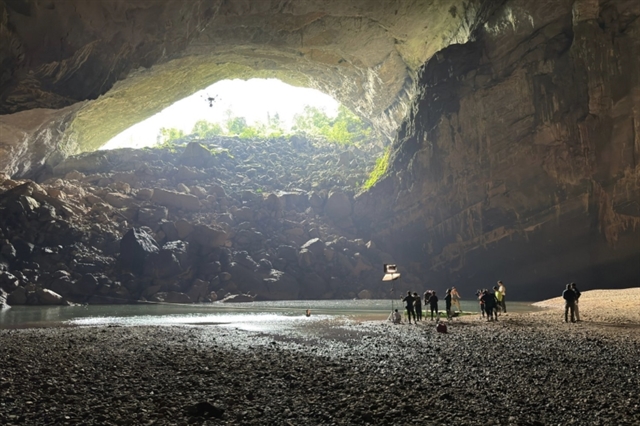 |
| The crew of film 'Silaa' shoots scenes at Hang Én Cave in Quảng Trị Province. — Photo vneconomy.vn |
Cinema is increasingly emerging as a powerful yet understated ambassador for Việt Nam’s tourism industry, as international and domestic film productions transform the country’s diverse landscapes into compelling visual narratives that resonate with global audiences.
The Management Board of the Hạ Long Bay-Yên Tử World Heritage Site in Quảng Ninh Province has confirmed that an Indian film crew filmed scenes in Hạ Long Bay and Tuần Châu from January 12 to 14.
The 94-member crew includes Bollywood actress Sadia Khateeb and director Omung Kumar Bhandula, marking another high-profile international production choosing Việt Nam as a filming destination.
The action-romance film Silaa is also scheduled to be shot in Hà Nội, HCM City, Hải Phòng, Đà Nẵng, Cao Bằng, Ninh Bình and Quảng Trị. The project has been introduced as a Bollywood production with a budget of around US$4 million, underscoring the growing appeal of Việt Nam to foreign filmmakers.
Captain Rahul Bali, producer and project manager of Silaa, said one of the film’s primary objectives is to promote tourism exchanges between India and Việt Nam. He noted that Indian audiences often seek real-life travel experiences inspired by films, and expressed confidence that Việt Nam could see a sharp rise in Indian visitors following the movie’s release.
During filming in Ninh Bình in November 2025, actress Niharica Raizada shared her excitement at experiencing a boat trip through lotus-filled wetlands for the first time. She visited the Tràng An Scenic Landscape Complex and travelled by boat to Tam Chúc Pagoda.
Describing her impressions, she said Việt Nam resembled a living painting, adding that the image she remembered most vividly was that of local women rowing boats by hand and engaging in friendly conversation, despite language barriers.
Screen to journey
Hạ Long Bay has long been a favourite backdrop for international filmmakers. The natural heritage site has appeared in numerous well-known productions such as Indochine (1992), The Vertical Ray of the Sun (2000), Top Gear: Vietnam Special (2008), Pan (2015), Kong: Skull Island (2017) and the Spanish film Thi Mai, rumbo a Vietnam (2017).
Globally, the synergy between cinema and tourism has produced remarkable results. New Zealand’s Middle-earth from The Lord of the Rings, Dubrovnik’s King’s Landing from Game of Thrones, and the Harry Potter Studio Tour in the UK attract millions of visitors each year, demonstrating how on-screen storytelling can transform filming locations into iconic travel destinations.
Việt Nam possesses similar potential. Tràng An in Ninh Bình gained international recognition through Kong: Skull Island; Phú Yên captured audiences’ hearts in I See Yellow Flowers on the Green Grass; and Đà Lạt became a nostalgic destination after Go-Go Sisters. These places evolved into dream check-in spots for millions of viewers once the films were released.
Lưu Thị Ngọc Mai, deputy director of the Việt Nam Cinema Centre for Culture, Sports and Tourism under the Ministry of Culture, Sports and Tourism, said a successful film could change the fate of an entire locality.
She stressed that in an era dominated by images and emotions, cinema would not merely be the art of visual storytelling, but a silent yet immensely powerful tourism ambassador.
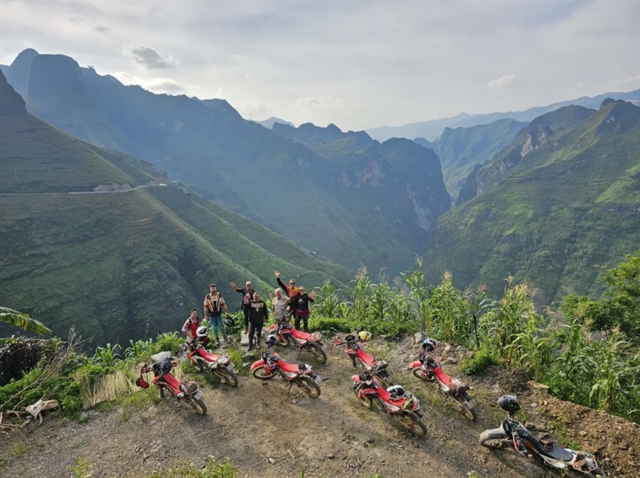 |
| Many of Việt Nam’s scenic landscapes have become known to international tourists through cinematic productions. — Photo vneconomy.vn |
Local landscapes rise
From a local perspective, Nguyễn Quốc Trung, director of the Cao Bằng Department of Culture, Sports and Tourism, noted that as Việt Nam’s film industry grows more dynamic, demand for new, unique and pristine filming locations was increasing.
This would present a golden opportunity for provinces with distinctive landscapes and cultural identities, such as Cao Bằng, to position themselves as attractive destinations for film crews.
A vivid example is director Victor Vũ’s blockbuster Detective Kiên: The Headless Horror, which features scenes shot at Cao Bằng’s Cò Là Waterfall, Vinh Quý Hill, God’s Eye Mountain, Khuổi Ky Village and Cô Muông Village.
The film’s mysterious atmosphere, shaped by these untouched locations, helped it reach around VNĐ200 billion in box office revenue within just two weeks of release.
Vũ said he wanted to introduce audiences to regions that had rarely appeared on Việt Nam’s big screen. He added that as the country has countless breathtaking landscapes that remain underexplored in cinema, helping to spread their beauty through film was something he would deeply value.
Similarly, the film Đèn Âm Hồn (The Soul Lamp) by director Hoàng Nam, featuring scenes shot at Cò Là Waterfall, God’s Eye Mountain and ancient chestnut forests, ended its theatrical run with nearly VNĐ106 billion in revenue.
The television series Walking Through Brilliant Skies, filmed in Nguyên Bình and Thanh Long communes of Cao Bằng, also captivated viewers with its majestic scenery and vivid portrayals of Red Dao ethnic culture.
In recent years, numerous film crews, television programmes and promotional projects have chosen Cao Bằng as a filming location. According to Trung, the province’s scenic landscapes, traditional culture and revolutionary history have left a positive impression and helped spread its image to a wider audience.
Beyond the screen
Despite these advantages, many localities have yet to fully tap into their cinematic potential. As a result, this “gold mine” has not been effectively transformed into opportunities for economic gain, cultural industry development or sustainable tourism growth.
At an experience-sharing meeting among provinces on attracting film crews, held during the 24th Việt Nam Film Festival, Paul Abela, audiovisual attaché of the French Institute, shared insights into France’s film incentive policies.
He said France had dedicated units that assist foreign film crews with all enquiries, alongside cash rebate schemes of 20–30 per cent, and even up to 40 per cent, depending on eligibility criteria.
Drawing from this experience, Abela suggested that to attract international productions, Vietnamese localities must actively promote their filming strengths by providing high-quality images, bilingual information, clear contact points and comprehensive online resources, while ensuring adequate infrastructure and on-site support.
Nguyễn Trinh Hoan, director of HK Film Company, noted that Việt Nam currently lacked formal cost-rebate regulations for film crews. He proposed alternative benefit exchanges, such as having film casts produce tourism promotional clips, which could be more cost-effective than local authorities producing such content themselves.
Đặng Trần Cường, director of the culture ministry's Cinema Department said his department would serve as a bridge between domestic and international film crews and localities.
He affirmed that the department was committed to supporting productions through flexible solutions based on each locality’s resources, and that promotional publications on filming locations could be introduced to foreign filmmakers via diplomatic channels and international film exhibitions.
As cinema continues to spotlight Việt Nam’s landscapes and stories, its role as a silent tourism ambassador is becoming ever more evident, offering a compelling pathway to elevate the country’s image on the global stage. — VNS
Features
 Features
 Features
 Features
 Features
 Features
 Features
 Features
 Features
 Features
 Features
 Features
 Features
 Features
 Features