 Sports
Việt Nam, EU and Belgium seek deeper, practical cooperation
1.
 |
| Players compete in a V.League 1 2025–26 match between Hà Nội FC and Thanh Hóa. Domestic football continues to attract millions of viewers nationwide. — Photo nld.com.vn |
By Thanh Nga
From marathon races that fill hotels to billion-dollar broadcasting rights and booming sports tourism, sport is increasingly becoming big business – and Việt Nam is positioning itself to capture a share of the rapidly expanding global sports economy.
Globally, modern sports have evolved far beyond competition, generating revenue not only from ticket sales and broadcasting rights but also from an expanding ecosystem spanning tourism, media, technology, commerce and digital data.
Việt Nam, with its young population and rapidly growing demand for sports consumption, has a significant opportunity to develop its sports economy in a professional and sustainable direction.
Sports have already been positioned as a genuine industry in many countries. Several Asian economies have demonstrated that, with appropriate investment strategies, sports can become a powerful driver of economic growth.
Thailand generates more than US$260 million from hosting international sporting events linked to tourism and services. Singapore has transformed the Formula One Singapore Grand Prix into a strategic tool for national branding while simultaneously boosting tourism and high-end services. These models illustrate that sports are not only social activities but also important instruments for economic development and national branding.
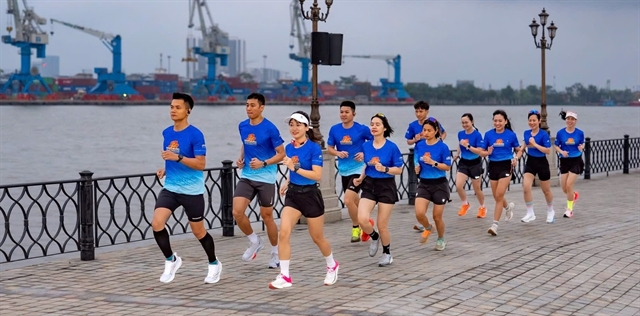
In Việt Nam, interest in sports is clearly increasing. Domestic leagues such as the V.League 1, along with international events like the SEA Games, attract millions of viewers. At the same time, community-based sports movements such as running, fitness and cycling are thriving, laying the foundation for a rapidly expanding sports consumer market.
Young market
Việt Nam holds a significant demographic advantage, with approximately 70 per cent of its population under the age of 35. This group has high levels of technological access, strong demand for entertainment and an increasing willingness to spend on sports-related products and services such as equipment, fashion, nutrition and live event experiences.
According to the Sports Authority of Việt Nam, by 2025, more than 38 per cent of the population have participated regularly in sports, while approximately 28.3 per cent of households met the criteria of a sports family. By 2035, the number of regular sports participants could reach around 45 million, equivalent to 45 per cent of the population.
This growth indicates that sports are not only socially significant but are also becoming a large-scale consumer market.
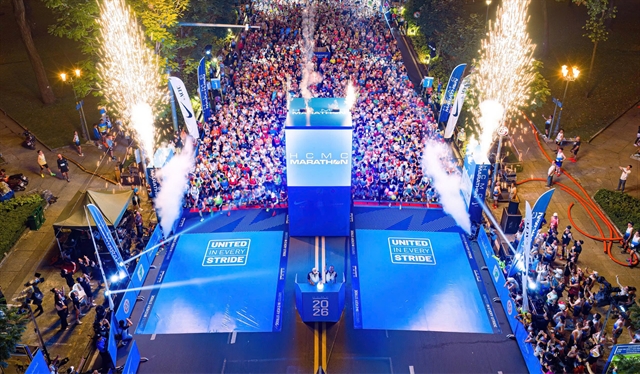 |
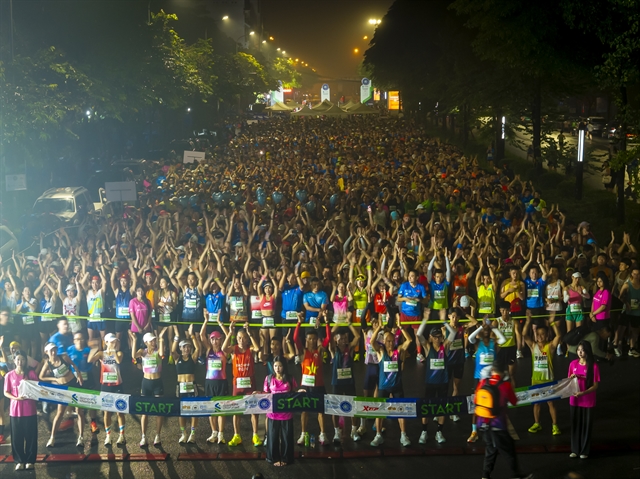
| Nearly 11,000 runners joined the HCM City Marathon 2026, including athletes from 75 countries and territories. — Photo courtesy of organising board |
One of the most prominent development models today is marathon racing combined with tourism. No longer limited to competition, these events have become intersections of sports, tourism and consumption.
The HCM City Marathon 2026 in January recorded nearly 11,000 participants, of whom approximately 26 per cent were international athletes from 75 countries and territories. This reflects Việt Nam’s growing attractiveness on the regional sports map.
Marathon events generate direct revenue from registration fees while also driving spending on tourism, accommodation, food and services, creating a strong ripple effect across the economy.
According to the Việt Nam Sports Economy 2026 report by Vietcontent, investment in the sports sector during the 2024-25 period is estimated to exceed $3 billion. With an annual growth rate of 8-15 per cent, Việt Nam’s sports economy could reach $8-10 billion by 2030 and $20-30 billion by 2040.
However, current revenue is still heavily dependent on sponsorships and broadcasting rights. High-value segments such as digital products, fan data and digital content remain underdeveloped. This highlights significant untapped potential while also emphasising the need for innovation in development models and improvements in the institutional framework.
Digital value
In the digital economy, intellectual property is becoming a key factor in expanding the economic value of sports. Assets such as club brands, athlete image rights, content copyrights, competition formats and fan data can all become major revenue sources if effectively exploited.
Trần Trọng Tuyên, deputy director of the HCM City Department of Science and Technology, argued that in the knowledge economy, intellectual property would not only be a protective tool but also a foundation for value creation, enabling businesses to expand growth potential beyond traditional models.
According to Lâm Quang Thành, former deputy director of the Sports Authority of Việt Nam, modern sports have become an interdisciplinary field closely linked with technology, media, commerce, tourism and education, thereby generating increasingly significant economic value.
Global data show that the sports industry was estimated to reach $507-600 billion by 2025 and could rise to $635 billion by 2029. When including sports tourism and related services, the total industry value may reach around $2.3 trillion.
In developed countries, sports contribute approximately 1.5-3 per cent of GDP, while in developing countries such as Việt Nam, the figure remains at only 0.5-1.5 per cent. This demonstrates substantial growth potential if digital transformation and intellectual property are effectively leveraged.
 |
| VTV holds the broadcasting rights for the 2026 World Cup, a key revenue source in modern sports economics. — Photo IT |
Future growth
To fully realise this potential, Việt Nam needs to improve its institutional framework, establish a transparent environment and encourage greater private sector participation across the sports value chain.
In addition, it is necessary to promote socialisation, reduce dependence on the State budget and encourage investment in event organisation, athlete development, sports technology and digital products.
Digital transformation is also a key factor in improving the efficiency of managing and utilising fan data. At the same time, greater emphasis on school physical education is essential to improve public health and develop future athlete talent pools.
According to Nguyễn Hồng Minh, deputy director of the Sports Authority of Việt Nam, sports not only enhance physical fitness and human resource quality but also have the potential to develop into a comprehensive service industry within the national development strategy.
Việt Nam’s sports economy is entering a critical transformation phase. From a primarily social sector, sports are gradually evolving into an economic industry capable of contributing directly to GDP, creating employment and enhancing national branding.
With a young population, rapidly growing demand and strong digitalisation trends, Việt Nam possesses the necessary conditions to develop its sports economy into a new growth engine. However, transforming this potential into reality requires close coordination between the State, businesses and society as a whole.
If properly developed, sports in Việt Nam will no longer be viewed merely as competition or entertainment, but as a powerful economic engine capable of driving tourism, consumption, employment and national branding in the digital era. — VNS
Sports
 Sports
.jpg) Sports
Sports
 Sports
 Sports
 Sports
 Sports
 Sports
 Sports
 Sports
 Sports
 Sports
 Sports
 Sports
 Sports