 Society

Việt Nam, EU and Belgium seek deeper, practical cooperation
1.
|
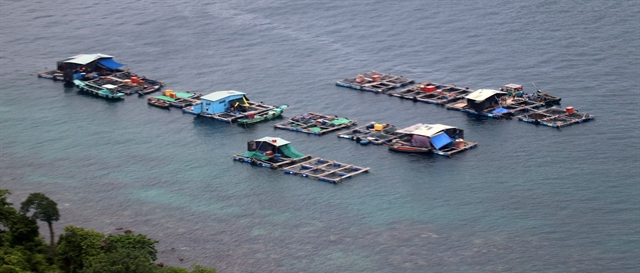
| Marine fish are farmed in floating cages off the coast of Phú Quốc Special Zone in An Giang Province. — VNA/VNS Photo Lê Huy Hải |
AN GIANG — The southern province of An Giang is stepping up efforts to improve aquatic seed quality to support sustainable fishery development, reduce disease risks and meet stricter export market standards.
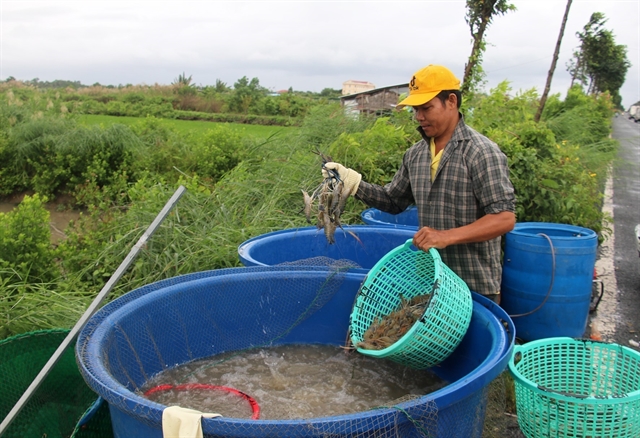
Nguyễn Thanh Mỹ, who has many years of experience in mixed farming of black tiger shrimp, white-leg shrimp, giant freshwater prawns and mud crabs in Vĩnh Bình Commune, said: “Seed quality plays a decisive role in farming success.”
According to Mỹ, the quality of seed stock in the province has gradually improved in recent years, with shrimp and crab survival rates after stocking reaching around 40–60 per cent. This has helped stabilise harvest output and maintain farmers’ incomes.
However, farmers still lack sufficient information to properly assess seed quality, he said.
“Farmers like us still have limited understanding of the quality of shrimp and crab seed, so we mainly rely on the reputation and brand of seed suppliers when making purchases for farming.”
Marine fish breeding farmers in the province are facing similar problems.
Tô Diễm Thúy, who breeds marine fish in floating cages in Kiên Hải Special Zone, said local farmers have mainly bought fingerlings through traders without clearly knowing the origin of the stock.
According to Thúy, farmers usually make buying decisions based on experience or word-of-mouth information from other farmers. However, unstable fish seed quality has reduced farming efficiency in recent years.
“I hope An Giang will develop local hatcheries or that competent agencies will work with reputable suppliers to inspect quality,” she said.
To meet growing demand for high-quality seed stock, many aquatic seed producers in the province have invested in modern production technologies to improve aquatic seed quality.
Phan Hồng Nhiên, director of the An Giang branch of the Cà Mau Province-based Dương Hùng Aquatic Breeding Co Ltd, said the company currently supplies around 900 million black tiger shrimp seeds to more than 9,000 households in An Giang.
The company applies high technology in production and quarantine procedures, while using 100 per cent wild broodstock to ensure seed quality, she said.
Its two-stage nursery process helps shrimp gradually adapt to local water conditions, salinity and temperatures, reducing losses and improving commercial farming efficiency, she said.
|
| Giant river prawns are raised under the rice-shrimp farming model in An Giang Province’s An Minh Commune. — VNA/VNS Photo Lê Huy Hải |
The province now has more than 900 hatcheries and nursery facilities producing shrimp, mud crab, tra fish and other freshwater fish seed, according to its Department of Agriculture and Environment.
These facilities are gradually upgrading infrastructure and applying advanced technologies to improve seed quality and meet demand for key farming species.
Gia Lai plans to produce and nurse around 81 billion aquatic seed stock this year, up 1.3 per cent from last year.
Of this total, brackish-water shrimp seed is expected to exceed 17 billion, while tra fish seed will reach nearly 2 billion.
Aquatic seed production and trading activities have generally met seasonal farming demand, helping stabilise production and support aquaculture development.
However, aquatic seed production still faces major challenges.
Most seed-producing facilities operate on a small scale, with uneven seed quality and limited control over imported shrimp seed.
The seed supply of marine species relies heavily on natural exploitation and outside sources.
Disease outbreaks, climate fluctuations, environmental changes and rising input costs continue to reduce production efficiency.
Lê Hữu Toàn, director of the provincial agriculture department, said the department would continue promoting science and technology applications in aquatic seed production, strengthen inspections of seed production and trading facilities, and tighten management of imported seed stock.
It will strictly handle violations related to production and trading conditions and prevent the circulation of unverified or low-quality seed stock.
The department is encouraging businesses, co-operatives and hatcheries to expand production, apply advanced production standards and improve competitiveness to gradually build a strong local brand for high-quality aquatic seed stock.
It is also strengthening production and consumption linkages between hatcheries, commercial farming facilities and seafood processing exporters, while encouraging digital transformation in seed production management, traceability and aquaculture environmental management.
They are also promoting the development of high-quality aquatic seed stock adapted to climate change, disease safety and low-emission production to meet increasingly strict domestic and export market requirements.
The province had more than 320,000ha under aquaculture last year, making it one of the largest aquaculture producers in the Cửu Long (Mekong) Delta. — VNS
Society
 Society
 Society
 Society
 Society
 Society
 Society
 Society
 Society
 Society
 Society
 Society
 Society
 Society
 Society