 Sports

AI and EV Boom Draws $690 Million in Advanced Materials Investment Plans to Thailand
1.
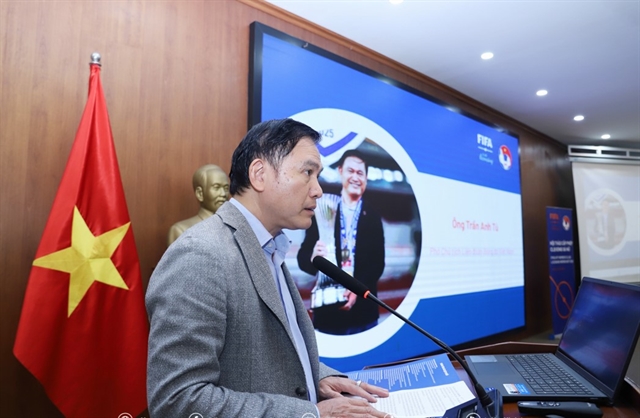 |
| Trần Anh Tú, Vice President of the VFF speaks at the workshop. — Photo courtesy of the VFF |
Football
HÀ NỘI — Việt Nam has taken another step towards professionalising women’s football as national and international officials gathered in the capital to launch a licensing roadmap aimed at strengthening governance, sustainability and long-term development of the domestic game.
The Việt Nam Football Federation, in partnership with FIFA, held the Women’s Football Club Licensing Workshop 2026 in Hà Nội on February 24–25 to begin implementing standards aligned with FIFA and Asian Football Confederation requirements.
Trần Anh Tú, Vice President of the Việt Nam Football Federation, described the event as an important milestone in improving operational standards and building a sustainable foundation for women’s football.
Licensing, he said, goes beyond meeting international benchmarks, helping strengthen management capacity, standardise operations and create greater stability for clubs that largely continue to operate under semi-professional conditions with significant limitations.
The federation considers licensing a practical development tool and plans to introduce it through a roadmap tailored to Việt Nam’s specific circumstances. Priorities include establishing a feasible licensing system, improving governance and youth training, and enhancing transparency, professionalism and the overall appeal of the women’s national championship.
Tú affirmed that the federation would accompany clubs throughout the licensing process and called for unity and proactive engagement across the football system to create a solid platform for the long-term advancement of Vietnamese women’s football.
Simon Toselli, FIFA’s women’s football technical expert, said the workshop aimed to professionalise national women’s leagues and raise club operational standards, noting that the federation has developed a women’s football strategy with a clear vision in which club licensing plays a central role.
“This is a developmental tool aimed at supporting clubs in improving quality in professional areas, facilities, management, legal aspects, and finance,” Toselli said.
Toselli stressed that the licensing framework is designed to support clubs in sustainable development rather than penalise them.
“The participation of your clubs today is especially important, because clubs are the foundation of football development,” he added.
During the workshop, delegates received updates on current club licensing activities in Việt Nam and the strategic direction for women’s football development, alongside detailed criteria relating to facilities, finance and legal compliance.
FIFA technical experts also shared international experience drawn from licensing programmes worldwide. Organisers expect the Hà Nội workshop to help improve governance and organisation, raise the quality of the domestic league and reinforce the long-term development framework for women’s football in Việt Nam. — VNS
Sports
.jpg) Sports
Sports
 Sports
 Sports
 Sports
 Sports
 Sports
.jpg) Sports
Sports
 Sports
 Sports
 Sports
 Sports
 Sports
 Sports
 Sports