 Society
Doctor warns: do not entrust your eyes to an optical shop
1.
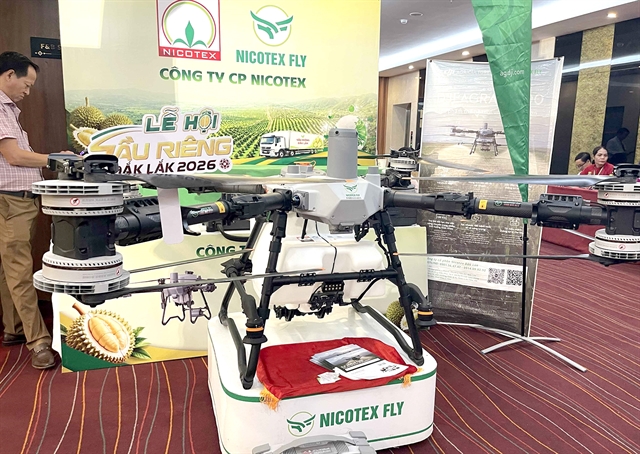 |
| Drones used in high-tech farming are displayed in Đắk Lắk Province. — VNA/VNS Photo Kha Phạm |
ĐẮK LẮK — Đắk Lắk is seeking to turn scientific research into economic growth, but weak links between universities, businesses and the market continue to hamper efforts to commercialise new technologies.
Đắk Lắk has more than 4,500 science and technology professionals. Its research institutions have developed valuable crop varieties and carried out hundreds of scientific projects. Yet the province's innovation performance remains modest, highlighting a persistent gap between research capacity and commercial results.
The Provincial Innovation Index (PII), published by the Ministry of Science and Technology, placed Đắk Lắk 24th among 34 provinces and cities in 2025, with a score of 34.80 points. Its score fell to 33.66 in 2026, leaving it in the same position following the administrative merger with the neighbouring province of Phú Yên.
Bùi Thanh Toàn, director of the provincial Department of Science and Technology, said the ranking reflected structural weaknesses in the local knowledge economy.
“Đắk Lắk cannot be satisfied with 24th place. The PII is not a title to pursue for appearances, but a comprehensive diagnosis of the province's innovation capacity.”
The province scored 52.48 in institutions and policies and 46.69 in infrastructure and information technology. But its scores for business development and knowledge creation and technology outputs were much lower, at 21.74 and 19.95, respectively.
Lê Đăng Pha, director of the Đắk Lắk Innovation Centre, said the disparity reflected weaknesses in technology transfer and research commercialisation.
The workforce is also unevenly distributed, with nearly 33 per cent of highly qualified workers employed in the social sciences, education and public administration, compared with 10 per cent in information technology, digital transformation and cybersecurity.
Đắk Lắk has more than 20,000 businesses, including 3,168 established in 2025, and exports worth more than US$2.8 billion. But only 15 enterprises have been officially recognised as science and technology businesses.
Many small and medium-sized firms lack the resources to invest in research and development, prioritising immediate revenue over innovation. Access to support is also uneven, with much of the province's innovation infrastructure concentrated in Buôn Ma Thuột, more than 200 kilometres from the Tuy Hòa–Đông Hòa area.
Lê Bạt Sơn from Phú Yên University said the distance made it harder for businesses in the province's eastern region to access innovation services.
From lab to market
Hundreds of research projects are approved each year, alongside thousands of academic papers published in international journals. Yet only 25–30 per cent of research findings in Đắk Lắk are put into practical use or commercialised.
Lê Đức Niêm, an associate professor at Tây Nguyên University, said the university had undertaken 519 science and technology projects during 2021–25, with funding of around VNĐ83 billion (US$3.2 million), and published nearly 400 papers in journals indexed by Web of Science and Scopus.
However, it secured only one patent and two utility model patents during the five-year period.
“Producing academic papers is not the same as creating value for society,” he said, adding that researchers lacked funding to develop prototypes, test concepts and build minimum viable products.
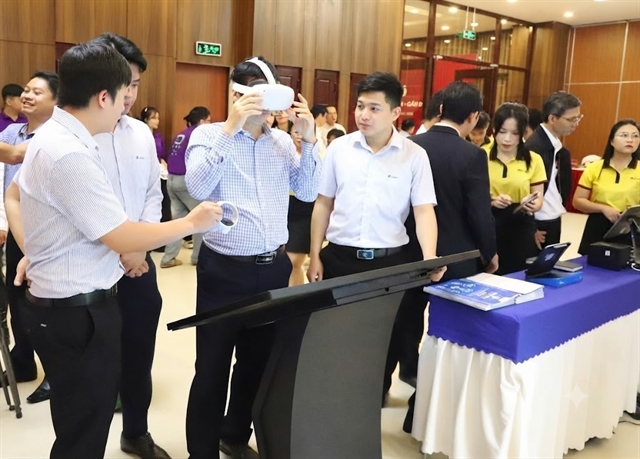 |
| Visitors try out virtual reality technology at an exhibition on digital transformation and innovation in Đắk Lắk Province. — VNA/VNS Photo Kha Phạm |
Even relatively small grants of VNĐ100–300 million can make a difference, but research teams need flexible funding to test products, assess market demand and register intellectual property.
Nguyễn Thị Bích Thủy from the Central Vietnam College of Industry and Trade said the lack of venture capital and a clear legal framework for early-stage public investment also hindered innovative start-ups.
Meanwhile, research institutions face difficulties protecting their intellectual property.
The Central Highlands Agriculture and Forestry Science Institute has preserved 136 Arabica and 78 Robusta coffee genetic resources, as well as hundreds of pepper and durian varieties.
Đào Thị Lan Hoa of the institute said cumbersome approval procedures and fragmented laboratory facilities remained obstacles. Counterfeit seedlings and fake social media accounts impersonating reputable suppliers also posed risks to farmers, who might not discover poor plant quality until three or four years after planting.
Đào Thế Anh, vice chairman of the Việt Nam Association of Rural Development Science, said weak cooperation among research institutes, universities, businesses, cooperatives and authorities was a key obstacle. Researchers often lacked knowledge of market needs, while cooperatives struggled to identify suitable technologies.
He called for professional intermediaries to connect research with demand and turn findings into commercial products.
Funding and shared labs
Đắk Lắk aims to raise its PII score to around 50 out of 100 and enter the national top 15 by 2030. It also targets the incubation of 90–120 innovative start-ups, more than 30 science and technology enterprises, and meaningful innovation activities in more than 40 per cent of businesses.
The province wants to raise the commercialisation rate of research from universities and institutes to at least 30 per cent.
To achieve this, the Department of Science and Technology is preparing proposals for new financial mechanisms and preferential policies for 2026–30.
Public funding would increasingly serve as seed capital to attract private investment rather than being allocated without clear commercial objectives. State-funded research projects would also have to identify intended users and secure business commitments to purchase their outputs.
Pha proposed establishing a regional innovation investment fund under a public-private partnership model, with initial capital of around VNĐ200 billion. The provincial administration would contribute 20 per cent, with businesses and major economic groups providing the remainder.
The proposed fund would invest VNĐ500 million to VNĐ3 billion in promising start-ups. Researchers could also receive at least 70 per cent of profits from licensing or transferring intellectual property generated by publicly funded research.
Additional innovation vouchers worth VNĐ50 million, VNĐ150 million and VNĐ300 million would help small businesses and cooperatives with branding, quality certification, digital transformation and technology acquisition.
The province also proposes four shared laboratories covering biotechnology and plant breeding, agricultural processing and medicinal plant extraction, food safety and residue testing, and precision farming. Sharing specialised equipment would reduce duplication of investment and improve access for businesses and researchers.
At least 40 per cent of the annual science and technology budget would be allocated to projects commissioned directly by businesses under another proposal.
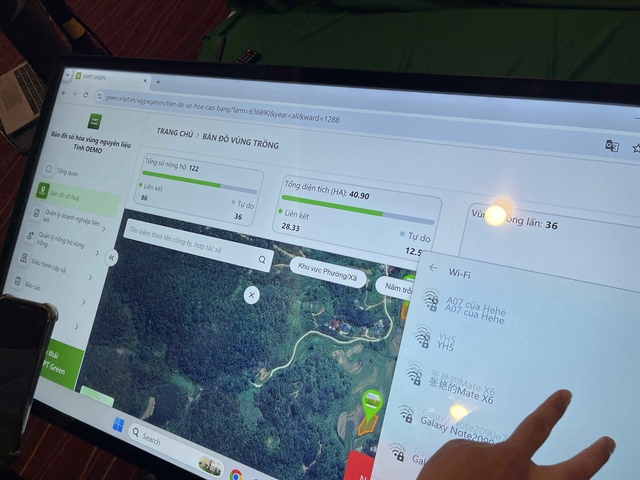 |
| A digital mapping system helps identify agricultural production areas and manage farms to support smart farming. — VNA/VNS Photo Kha Phạm |
An annual innovation challenge competition would invite companies to identify practical problems, such as converting coffee husks and durian peels into biomaterials, developing smart insect traps and improving cold storage and logistics for durian exports. The province would match funding on a one-to-one basis for successful proposals.
Đắk Lắk plans three regulatory sandboxes to test technologies in digital agriculture and forestry, smart aquaculture and carbon credit trading and green finance.
Sơn from Phú Yên University proposed an innovation sub-zone linking three incubators in the eastern region with a university living laboratory and the provincial science and technology exchange, bringing marine technology and logistics closer to the province’s innovation network.
The chairman of the Đắk Lắk People’s Committee, Đỗ Hữu Huy, said the administration would work with businesses, listen to their concerns and share risks.
He said technology adoption, artificial intelligence and digital transformation were key to boosting productivity and helping local businesses join global value chains.
The challenge is to turn research into practical gains for farms, factories and markets through stronger links between public institutions, academia and business. — VNS
Society
 Society
 Society
 Society
 Society
 Society
 Society
 Society
 Society
 Society
 Society
 Society
 Society
 Society
 Society