 Society
General Giang holds meetings with US, Australian, Japanese, and Philippine defence ministers
1.
|
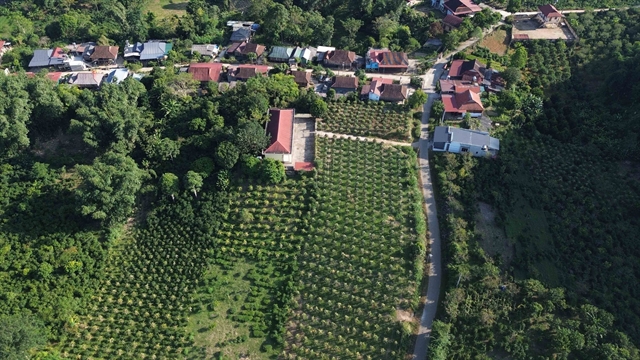
| Dragon fruit orchards in the resettlement area of Sai Chiên Village, Bình Thuận Commune, Sơn La Province. VNA/VNS Photo Nguyễn Cường |
SƠN LA — In late 2007, nearly two decades ago, hundreds of households in Mường Chiên Commune, formerly part of Quỳnh Nhai District in Sơn La Province, gave up their land and ancestral homes to make way for the Sơn La Hydropower Plant, a key national project. They moved to new resettlement sites in what is now Bình Thuận Commune.
In the early days, everything from living conditions to farming practices was unfamiliar. Many households worried about adapting to different soil conditions and finding new ways to earn a living. With coordinated investment in infrastructure, support for agricultural production and the determination of local residents, however, the resettlement areas have gradually transformed.
“We faced many difficulties and uncertainties when we first arrived at the new resettlement site and had to adapt to a different living environment,” said Lò Văn Lự of Bình Mộc Village in Bình Thuận Commune.
“Over time, we grew accustomed to and attached to our new home. Today, our lives are stable, and we can focus on working, producing and developing our household economies.”
Beyond better housing, residents have learned to adapt to local natural conditions and change their approach to farming to suit their new circumstances. In particular, many households have boldly restructured agricultural production on the land allocated to them following resettlement, introducing higher-value crops such as tea and coffee.
Hoàng Văn Đẹn of Sai Chiên Village in Bình Thuận Commune said his family had gradually reorganised production on the 1.2ha of farmland allocated to them after resettlement, combining tea and coffee cultivation with livestock farming to generate a stable income.
Coffee alone now brings in around VNĐ200 million (US$7,700) a year, while tea generates approximately VNĐ100 million ($3,900). Including livestock farming, the family's total annual revenue reaches about VNĐ350 million ($13,500).
“Our coffee plants, tea hills and pig herd are the fruits of nearly 20 years of hard work on this new land,” he said.
|
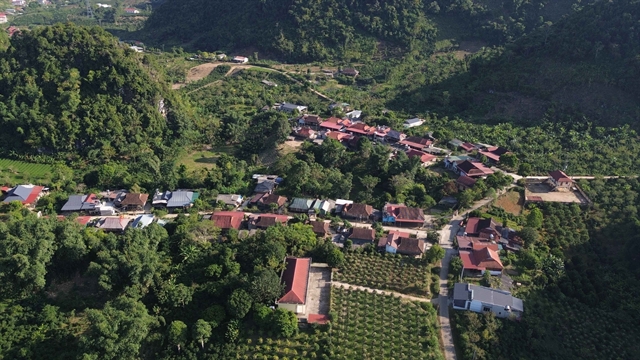
| A view of the resettlement area in Sai Chiên Village, Bình Thuận Commune, Sơn La Province. VNA/VNS Photo Nguyễn Cường |
Beyond tea and coffee, many households have explored new ways to improve agricultural productivity. By learning from others, monitoring market trends and switching crops, farmers have established dragon fruit orchards in the resettlement areas, creating an additional source of income for local families.
Hoàng Văn Thắng, also from Sai Chiên Village, was among the first residents in the resettlement area to diversify his crops. He now maintains hundreds of dragon fruit trellises alongside more than one hectare of coffee. After expenses, his family's farming model generates an annual income of around VNĐ450 million ($17,400).
The model demonstrates not only the economic benefits of crop diversification, but also a broader shift in the way resettled residents approach agricultural production. Traditional crops are increasingly giving way to higher-value alternatives that are better suited to local conditions and current market demand.
The changes across Bình Thuận Commune's resettlement areas are not the result of a few individual success stories. They reflect nearly two decades of efforts supported by Party and State policies on resettlement, infrastructure investment, agricultural production assistance and improvements to people's living conditions.
According to Bình Thuận Commune authorities, the locality will continue working with provincial departments and relevant agencies to mobilise resources for infrastructure development and improve the quality of public facilities serving residents in resettlement areas.
At the same time, the commune will focus on supporting market-oriented agricultural production, promoting the application of science and technology, and expanding successful economic models linked to key products such as coffee, tea and fruit. It will also encourage the development of cooperatives and strengthen links between producers and markets to help raise household incomes.
Nearly 20 years after moving to their new homes, the resettlement areas in Bình Thuận Commune have gradually taken on a new look. Rice fields, tea hills, coffee plantations and dragon fruit orchards now form the foundation of more stable and prosperous livelihoods.
On this new land, each successive harvest brings not only the rewards of hard work, but also a testament to the resettlement programme's role in helping communities establish new roots, develop their livelihoods and build a more prosperous future in their new homeland. — VNS
Society
 Society
 Society
 Society
 Society
 Society
 Society
 Society
 Society
 Society
 Society
 Society
 Society
 Society
 Society