 Society

Howard Limbert: Finding a home in Việt Nam's cave kingdom
1.
|
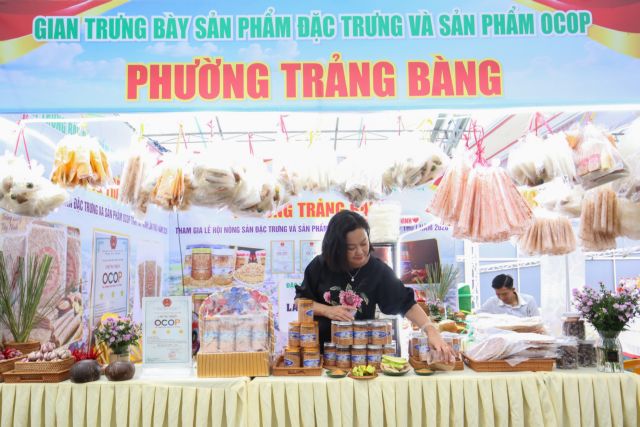
| A stall displays speciality products and products recognised under the country’s “One Commune-One Product” programme in Trảng Bàng Ward, Tây Ninh Province. — VNA/VNS Photo |
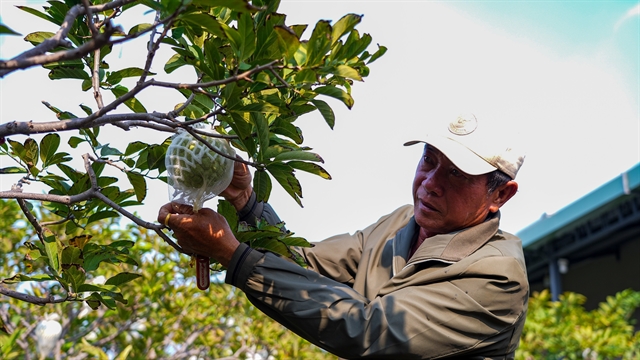
TÂY NINH — At the foot of Bà Đen Mountain in Tây Ninh Province, the Minh Trung Agricultural Services Co-operative has turned custard apple, a local fruit speciality, into a four-star product under the country’s “One Commune-One Product” (OCOP) programme.
The co-operative, based in Tân Phú Commune, has established a 100-hectare custard apple growing area that follows Vietnamese good agricultural practices (VietGAP) standards.
It manages production records through the FaceFarm electronic logbook system and uses QR codes to enable consumers to trace product origins.
In 2023, its custard apples were recognised as a four-star OCOP product.
Lê Minh Trung, the co-operative’s chairman, said: “All custard apples sold on the market carry traceability codes, giving consumers greater confidence when buying the fruit.”
The co-operative is also building its brand and expanding sales channels.
By promoting its products on TikTok and Facebook, using livestreams and offering online shopping baskets, it has reached customers in more localities.
The co-operative is one typical example of how OCOP product producers in the southern province develop their products and markets.
|
| A member of the Minh Trung Agricultural Services Co-operative in Tân Hưng Commune applies organic farming techniques to grow custard apples. — VNA/VNS Photo |
Other OCOP products tell different stories about Tây Ninh’s speciality products.
Sun-dried rice paper from the Trảng Bàng area, for example, is closely associated with the province’s traditional food culture as the craft dates back to the 18th century.
Many rice paper products from Trảng Bàng have gained three-star and four-star OCOP ratings.
Their recognition provides a route to strengthen local brands and expand markets for products rooted in traditional food culture.
Linking with tourism
Beyond food products, Tây Ninh is also drawing on traditional crafts to create OCOP goods that carry cultural stories.
In Long Hoa Ward, incense-making continues in a century-old craft village, where the trade has been maintained across generations.
In recent years, incense-producing establishments have invested in machinery, improved product quality, refined packaging and expanded sales. Many of them have participated in the OCOP programme.
Vạn Linh Hương incense-producing establishment in the ward has three products rated four-star OCOP.
It also promotes its products through its fan page, TikTok and other social media platforms.
Thạch Thị Nhi, who has worked at the establishment for nearly 10 years, said: “The establishment’s stable operations have provided me with regular employment and income to support my family.”
She hopes traditional crafts such as incense-making will continue to be preserved and developed, allowing workers to remain in the trade over the long term, she said.
The province is seeking to take the OCOP concept beyond product sales by connecting specialities with visitor experiences.
At Chavi Garden in Thạnh Lợi Commune, visitors can tour lemon orchards and take part in activities related to lemon-based products, from food processing to personal care products.
Hoàng Nhật Tiến, a visitor from the central province of Quảng Ngãi, said he is particularly impressed by the experiences built around lemon cultivation.
“Visiting the growing area, learning about production processes and trying related services made the trip engaging,” he said.
Chavi Garden’s instant lemon powder has received a three-star OCOP rating and is exported to Norway, Cambodia, China, the US, Japan and the Republic of Korea.
The province has 420 OCOP products. Of them, 187 products from 99 producers are participating in the development of gifts and souvenirs for tourists.
|
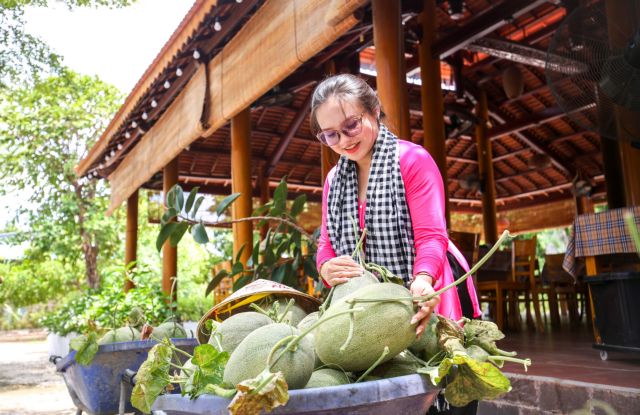
| A high-tech farming model combined with experiential tourism at BaDen Farm in Bình Minh Ward produces three-star OCOP honeydew melons, helping promote OCOP products and develop the rural economy in Tây Ninh Province. — VNA/VNS Photo |
Linking products with tourist destinations, craft villages and growing areas offers a way to present not only local flavours but also the stories of the people and places behind them.
However, challenges remain. Some destinations lack facilities to accommodate large tour groups, while transport infrastructure in certain areas is limited.
Many products are still sold mainly through trade fairs or product-display shops, even as visitors increasingly seek hands-on experiences at production sites.
Trương Tấn Đạt, deputy director of the provincial Department of Agriculture and Environment, said Tây Ninh has potential to develop agricultural, experiential and community-based tourism based on its farming strengths, traditional crafts, ecological landscapes and cultural values.
However, preserving traditional crafts, developing OCOP products for tourism, strengthening links with travel businesses and mobilising investment resources remain key issues requiring further attention in the coming years, he said.
Digital transformation
The province’s OCOP development plan for 2026-30 places greater emphasis on technology, digital transformation and links with rural tourism.
The province aims to develop 213 additional products rated three stars or higher during the period, including 73 products in 2026.
The plan also targets co-operatives accounting for at least 10 per cent of OCOP producers, around 30 per cent of producers developing value chains based on circular-economy principles and green OCOP practices.
It also aims to have half of traditional craft villages produce OCOP products.
The province plans to put all OCOP products on e-commerce platforms or sell them modern distribution systems, while establishing two additional display, introduction and sales points linked to tourist destinations.
Digital transformation is expected to cover the entire OCOP process, from preparing applications and managing data to product assessment, classification, traceability and online promotion.

|
| Workers at Tân Nhiên Company Limited in Long Hoa Ward sort ultra-thin rice paper, which has been awarded a five-star OCOP rating. — VNA/VNS Photo |
The province also plans to develop distinctive raw-material areas, standardise production along value chains, apply science and technology, and improve the management capacity of OCOP producers.
These priorities align with the implementation of the Politburo’s Resolution No 57 on breakthroughs in science, technology, innovation, and national digital transformation, issued in December 2024.
Nguyễn Minh Lâm, deputy chairman of the Provincial People’s Committee, has stressed the need to develop OCOP products in line with market demand, expand deeper processing, strengthen branding and improve links between businesses, co-operatives and farmers.
The province will also step up efforts to address difficulties related to land, capital, raw material supply areas, logistics and product distribution, he said.
“Removing these obstacles will help ensure stable product development and give producers more opportunities to improve their incomes by capitalising on local advantages,” he said. — VNS
Society
 Society
 Society
 Society
 Society
 Society
 Society
 Society
 Society
 Society
 Society
 Society
 Society
 Society
 Society