 Society
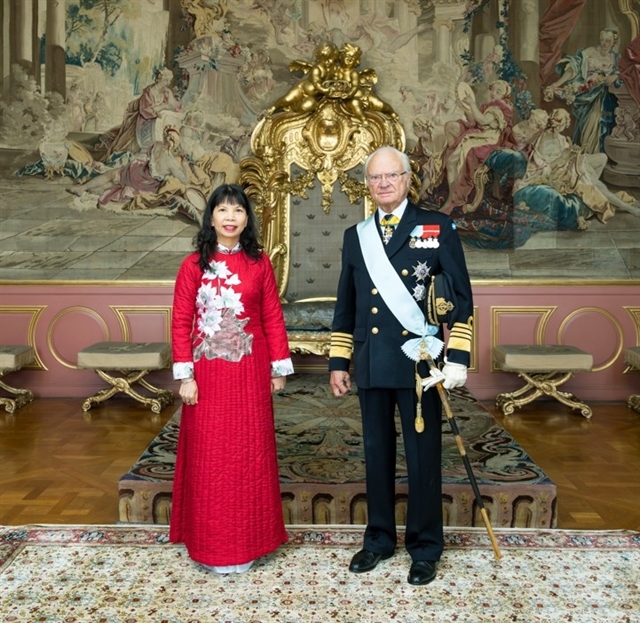
Ambassador pledges every effort to promote Việt Nam–Sweden ties
1.
|
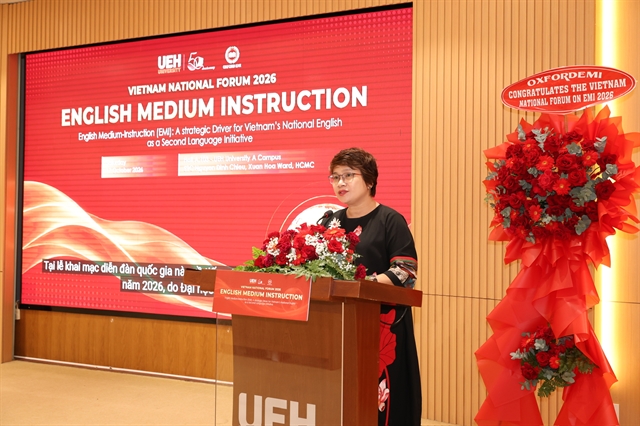
| Assoc. Prof. Nguyễn Thu Thuỷ, director general of the Department of International Cooperation under the Ministry of Education and Training, speaks at the National Forum on English-Medium Instruction held in HCM City on October 17. — VNS Photo |
HCM CITY — Policymakers, educational leaders, international experts, and educators discussed the important role of English-medium instruction, or EMI, in the future of Vietnamese education at the National Forum on English-Medium Instruction held in HCM City on October 17.
The forum themed "English Medium Instruction: A Strategic Driver for Việt Nam's National English as a Second Language Initiative," brought together 120 delegates, providing a platform for academic exchange, experience sharing, and stakeholder engagement in the development of EMI in Việt Nam.
In October 2025, the Government approved the national initiative to make English a second language in schools for the period 2025–2035, with a vision towards 2045.
This initiative represents more than a reform in English language education. It reflects Việt Nam's commitment to developing globally competent citizens, strengthening human resources, and enhancing international competitiveness.
The forum focused on discussing issues ranging from the orientation for EMI development to programme governance and development, enhancing lecturer capacity, supporting learners, ensuring quality, and applying technology and artificial intelligence in teaching.
The key topics included the role of EMI in Việt Nam’s foreign language policy and the internationalisation of higher education, global trends in EMI development, requirements for quality and sustainable development, support mechanisms for lecturers and learners.
Assoc. Prof. Nguyễn Thu Thuỷ, director general of the Department of International Cooperation under the Ministry of Education and Training, said: “While English serves as an active catalyst for knowledge transfer, scientific innovation, and global competitiveness, our overall objective is no longer just teaching English as a traditional foreign language subject as before.”
“Instead, we are building a comprehensive academy and communicative ecosystem where English is integrated into management and instruction across all educational levels,” Thuỷ said.
“This shift is vital to empowering our young workforce, enabling them to lead in the global knowledge economy and continuously step onto the world stage,” she said.
The forum critically examines the readiness of the teaching faculty in executing the English as second language strategy, she said.
Our goal is to cultivate educators who are not merely subject matter experts, but bilingual practitioners capable of naturally utilising English as a medium of instruction, she added.
Julie Dearden, director of Oxford EMI, said that EMI is closely linked with internationalisation in higher education.
University managers focus on competing in global rankings, addressing demographic crises, running joint degrees, and increasing revenue, Dearden said.
Teachers do EMI because they want to connect with the international community, make international partnerships, conduct joint research projects and publications, and work with international students and faculty, she said.
In the context of the policy of making English a second language in schools, the University of Economics HCM City (UEH) signed a cooperation agreement with Oxford EMI to organise and deliver training for its teaching staff to meet the standards for teaching in English with an international certificate in Việt Nam.
This cooperation aims to meet the requirement of standardising the criteria for lecturers who teach university courses in English.
Assoc. Prof. Bùi Quang Hùng, president of UEH, said: “For a university, developing EMI is not merely a solution for enhancing teaching capacity, but a strategy for internationalising training programmes, improving the quality of human resources, and strengthening the university’s competitiveness.”
“EMI needs to be implemented with focus, tied to learning outcomes, professional quality, and learners’ capacity for integration,” Hùng said.
It can be said that EMI is one of the important tools for a university to shift from a domestic training mindset to one of developing human resources with global competitiveness, he said. —VNS
Society
 Society
 Society
 Society
 Society
 Society
 Society
 Society
 Society
 Society
 Society
 Society
 Society
 Society