 Society

Lacquer painting exhibition brings 62 works to HCM City
1.
|
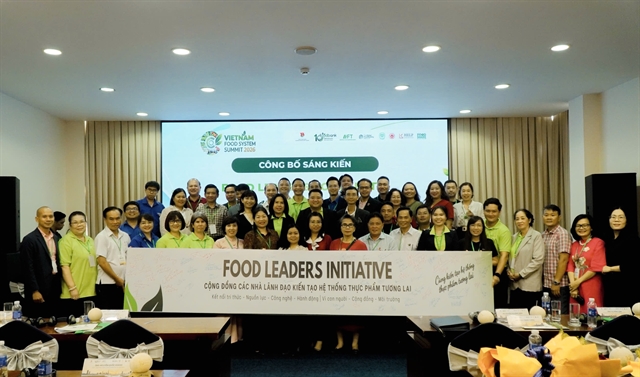
| Representatives from local Food Banks across 25 provinces and cities gather in HCM City on October 10 to mark a decade of expanding nationwide coverage and strengthening grassroots humanitarian infrastructure. — VNS Photos Nguyễn Diệp |
Nguyễn Diệp
HCM CITY — Marking a decade of community impact on October 10, Food Bank Vietnam unveiled a forward-looking national roadmap at the Vietnam Food System Summit 2026, successfully pivoting its core mission from emergency food relief toward circular economy solutions and long-term systemic food security.
Food Bank Vietnam has spent the past decade bridging the gap between excess food supply and vulnerable communities after being established in 2016 and joining The Global FoodBanking Network in 2019.
The organisation has rescued and distributed over 84 million kilogrammes of safe food, as well as providing more than 25 million meals to over 24 million people across the country, according to its 10-year summary report.
The network connected with more than 862 social welfare facilities and mobilised over 2,700 volunteers nationwide to deliver this aid, expanding its operational footprint to 25 local Food Banks across various provinces and cities.
It mobilised over 400 metric tonnes of emergency food and relief supplies in 2025 alone to support communities in central Việt Nam severely affected by natural disasters.
|
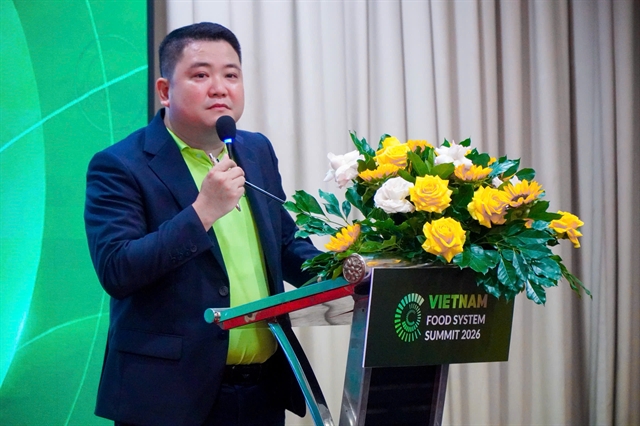
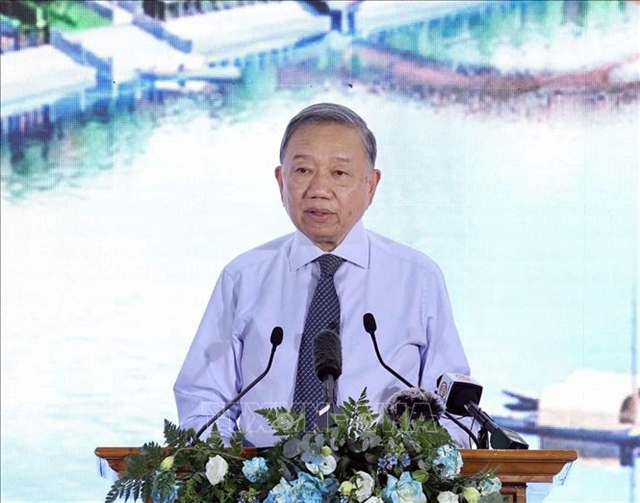
| Nguyễn Tuấn Khởi, founder and chairman of Food Bank Vietnam, speaks at the 10th-anniversary celebration in HCM City on October 10, outlining the network’s strategic vision for the upcoming decade. — VNS Photos Nguyễn Diệp |
Nguyễn Tuấn Khởi, founder and chairman of Food Bank Vietnam, said looking back on their 10-year journey, what they valued most was not just the millions of meals or tens of millions of kilos of food shared, but the trust, partnership, and shared responsibility of thousands of individuals, organisations, and businesses across the country.
"Entering a new decade, we aim to build a professional, transparent food banking system capable of creating sustainable value for the community."
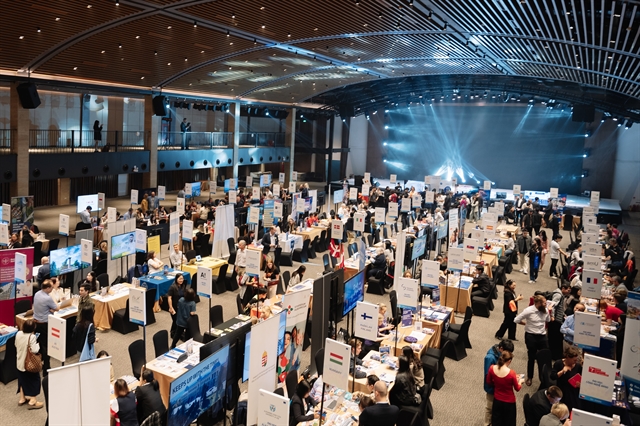
Government officials, international organisations, experts, co-operatives, and corporate leaders gathered at the summit to discuss strategies for a transparent, resilient, and sustainable food system in the country.
The event highlighted a paradigm shift from traditional food recovery toward circular, tech-driven, and proactive interventions throughout the food value chain under the theme “From Food Hero to Food Innovator”.
|
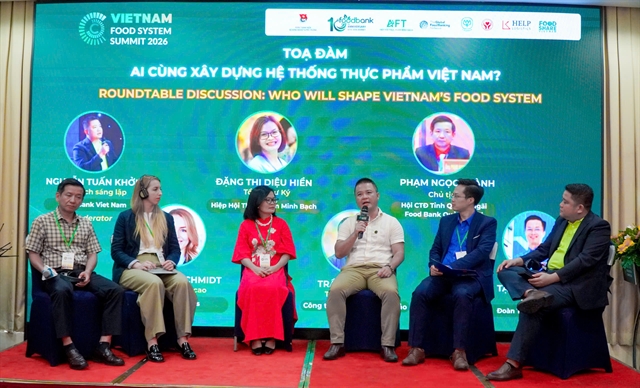
| Delegates, international experts, and corporate leaders gather at the Vietnam Food System Summit 2026 under the theme "From Food Hero to Food Innovator" held in HCM City on October 10. |
Tạ Hồng Sơn, secretary of the Youth Union of the Ministry of Agriculture and Environment, called on young people to step up as co-creators of the future food system. Youth must not merely be a force responding to campaigns. Young people must directly co-create and manage the food system of the next 20-30 years, he said.
“Our contribution should not be measured solely by how many tonnes of produce we grow, but by the added value created on every inch of land, every drop of water, and every unit of raw material."Youth union initiatives will focus on five concrete commitments to realise this vision. Rural youth and farm owners will pioneer VietGAP, organic, and eco-farming while converting agricultural by-products into useful resources such as straw for mushroom growing, rice husk briquettes, and biogas.
Young intellectuals and students will focus on developing practical solutions like drought-resistant crops, biodegradable packaging, and rapid test kits while fostering a green consumer culture.
Logistics workers will standardise cold chain procedures, optimise delivery routes, and minimise post-harvest loss.
Community digital technology teams will assist farmers with digital farm logs, QR code generation, planting area codes, and e-commerce livestreams.
|
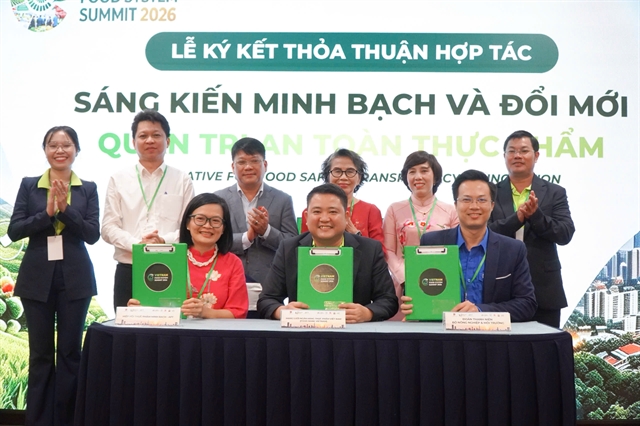
| Representatives of Food Bank Vietnam, the Association of Transparent Food, and the Youth Union of the Ministry of Agriculture and Environment sign a strategic cooperation agreement on food safety transparency and innovation in HCM City on October 10. |
The Mobile Food Bank network will gather surplus agricultural produce near its expiration date to distribute to charity kitchens and vulnerable groups.
Food Bank Vietnam signed a strategic co-operation agreement with the Association of Transparent Food during the summit and introduced the "Food Check by Food Bank" initiative to enhance food traceability and supply chain transparency.
The event also marked the launch of the Food Leaders Community, a strategic initiative connecting executives, experts, and corporate partners committed to driving food system innovation and sustainable practices.
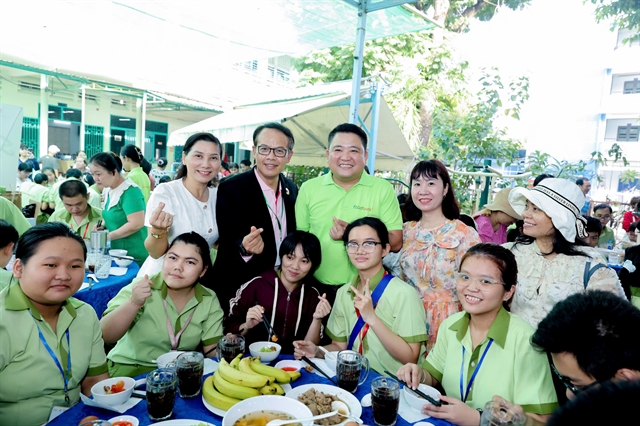
Leaders and chefs came together on October 9 at the HCM City Centre for Sponsoring - Voctional Training and Employment Introduction during the “Leaders as Cookers” event to prepare and deliver 1,000 nutritious meals and gifts to students with special needs and local shelters.
|
| Students at the HCM City Centre for Sponsoring - Vocational Training and Employment Introduction enjoy warm meals and meaningful gifts distributed during the community outreach activities on October 10. |
It is restructuring its operations around three core pillars while looking ahead to its second decade.
Food access is guaranteed, community nutrition is improved through programmes like Nourish Vietnam and The Love Kitchen, and emergency response capabilities are strengthened under SOS Food as part of the first pillar focusing on food for the community.
Food lifecycle management and waste reduction form the second pillar, which optimises the food lifecycle through initiatives like Farm to Foodbank, Community Foodbank Garden, Food Donation, and Green Hero Solution that converts organic food waste into bio-fertilisers.
The third pillar emphasises a food data system, innovation, and policy impact by building a digital data hub, investing in cold-chain logistics training, promoting food education, and contributing to national food security policies. — VNS
Society
 Society
 Society
 Society
 Society
 Society
 Society
 Society
 Society
 Society
 Society
 Society
 Society
 Society
 Society