 Society
Việt Nam-Cuba Friendship Hospital works with Operation Smile on free surgical programme
1.
|
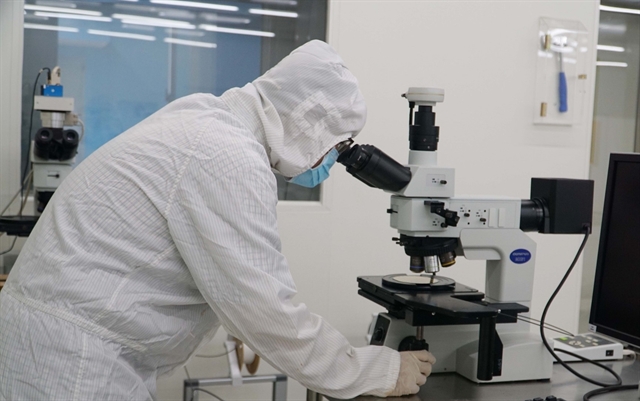
| Researchers at the semiconductor laboratory at the Sài Gòn High-Tech Park in HCM City. The city is making personnel policies flexible to attract top talents to strategic technology projects. — VNA/VNS Photos |
HCM CITY — HCM City is developing a comprehensive ecosystem to attract and retain high-quality talent in key strategic fields such as high-tech agriculture, biotechnology, semiconductors, artificial intelligence, and project management, recognising that competitive salaries alone are no longer enough to lure or keep experts in areas critical to the city’s development.
The strategy combines flexible recruitment mechanisms with modern research infrastructure, greater professional autonomy, and evaluation systems based on practical results.
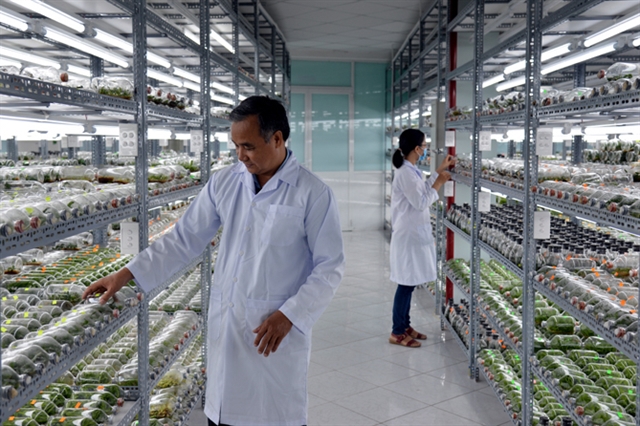
At the HCM High-Tech Agriculture Park, demand for experts is growing as research expands beyond traditional fields into biotechnology, gene editing, robotics, automation, artificial intelligence, the Internet of Things, digital technology, and green transition in agriculture.
Between 2015 and 2023, the park hired seven scientists specialising in plant and animal breeding and applied biotechnology.
Nguyễn Thanh Hiền, its deputy head, said recruitment must go hand in hand with effective utilisation, support, and empowerment.
"The objective is not merely to recruit highly qualified personnel, but to establish an environment where they can maximise their capacity, produce valuable scientific and technological products, and directly solve practical challenges."
To achieve this, the park sets specific tasks, expected outcomes, implementation timelines, and professional authority from the outset.
“It also ensures working conditions and research facilities are fully prepared for scientists upon arrival.”
In managing experts, it maintains an open, democratic approach, respects independent scientific views, and incorporates sound technical feedback.
Experts are empowered to propose solutions, select research methodologies, and carry out tasks within their assigned scope.
Nevertheless, park managers acknowledge continuing challenges, particularly the lack of recruitment criteria for high-tech agriculture.
Some scientists have strong academic credentials and numerous international publications but limited practical experience in applying technology to production.
Conversely, some others lack advanced academic qualifications but excel at mastering processes, resolving practical problems, and transferring technology from laboratories to production lines.
Demand for high-quality personnel is expected to grow as the city expands its network of high-tech agricultural parks.
The HCM High-Tech Agriculture Park currently needs nine experts in strategic planning, biotechnology, crop and livestock production, aquaculture, digital transformation, and AI systems.
At the research laboratories of the Sài Gòn High-Tech Park (SHTP Labs), the demand for top talent is closely linked to strategic technology development and international integration.
Before 2018, SHTP Labs had several foreign experts for strategic research and consultancy, but compensation levels fell sharply starting in 2018.
Combined with the impact of the COVID-19 pandemic, this made it increasingly difficult to attract foreign experts.
Since 2022, SHTP Labs has contracted two foreign experts. One serves as scientific director, while the other leads a gas sensor research project with applications in biomedicine, smart cities, and agriculture.
Across the city, demand for high-quality talent is shifting towards stronger leadership, interdisciplinary expertise, and technology transfer capabilities.
The city's Department of Science and Technology said the requirement now is for 43 senior personnel, including 39 experts, three “exceptional talents”, and one project architect.
|
| Scientists work at the tissue culture laboratory at the HCM City High-Tech Agriculture Park. The park is actively recruiting experts to expand research into biotechnology, robotics, and digital transformation in agriculture. |
Creating major challenges to solve
The city is developing a comprehensive policy framework covering the identification, recruitment, assignment, remuneration, evaluation, and retention of expert personnel.
This reflects a broader shift in approach: from merely filling vacant positions to tackle major tasks, and from competing primarily on pay to attracting people through longer-term opportunities and value creation.
The city plans to use three approaches: attraction, recruitment, and selection.
Under the framework, it will contract experts and exceptional talent for key programmes, while recruiting new high-level personnel and selecting outstanding individuals from the existing workforce.
Remuneration will be linked to contributions.
Experts and exceptional talent recruited under attraction contracts may receive an initial one-off support allowance ranging from 15 to 100 times the Region I minimum wage, or VNĐ80-530 million ($3,080-$20,400), depending on their qualifications and standing.
Monthly incomes for this group is projected at 20 to 50 times the region’s minimum wage, or VNĐ100-265 million ($3,850-$10,200).
Remuneration will also be linked to the value of products once an expert’s work is commercialised.
For regular high-level personnel, monthly income support will be directly linked to performance evaluations.
Beyond financial incentives, the city is focusing on creating an enabling environment by setting major national and municipal challenges, providing access to laboratories and data, and allocating research funding, equipment, and support staff.
Trịnh Xuân Thắng, director of SHTP Labs, said the city is focusing not simply on the number of people it attracts, but on creating major challenges for talent to work on and placing emphasis on recognising and rewarding domestic talent.
Mechanisms for international experts need to be more flexible, allowing them to hold concurrent positions abroad, work remotely, and be assessed on deliverables rather than administrative hours, he said.
"Granting clear professional autonomy gives scientists room to decide research directions and maximise their potential," he said.
He proposed initial research funding of VNĐ300 million to VNĐ500 million ($11,550-$19,250) a year depending on a scientist’s position.
This seed funding would enable newly recruited experts to immediately start work without waiting for lengthy project approval processes. — VNS
Society
 Society
 Society
 Society
 Society
 Society
 Society
 Society
 Society
 Society
 Society
 Society
 Society
 Society
 Society