 Society
Students to compete in first national dance talent contest
1.
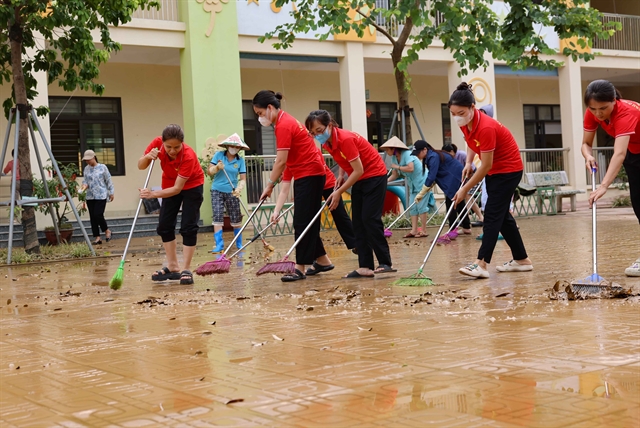 |
| Residents of Thanh Tri Commune, Hanoi, join hands to clean up the environment and create a bright, green and clean rural landscape. |
From voluntarily donating land to widen roads and contributing to community facilities to taking part in environmental clean-ups, local residents are playing a direct role in transforming rural areas of Hà Nội. As the capital enters a new phase of rural development, community strength is not only helping improve infrastructure but is also becoming an important resource for creating more modern, civilised and liveable rural communities.
When residents become a driving force for development
After years of implementing the new-style rural development programme, Hà Nội is entering a new phase with higher expectations for living standards, the environment, livelihoods and grassroots governance. The focus is no longer simply on completing infrastructure and meeting basic criteria, but on ensuring that the achievements already made translate into lasting improvements in people's daily lives.
In Thanh Trì Commune, the role of local residents as key participants in rural development can be seen through a range of practical contributions. Across the commune, residents have donated 3,874sq.m of land, contributed more than VNĐ200 billion in socialised funding and provided tens of thousands of working days for community projects.
Residents of Tự Khoát Village donated 300sq.m of land, while those of Vạn Phúc 1 Village contributed 176sq.m to widen roads. Notably, more than 310 households voluntarily dismantled structures, relocated material storage areas and handed over land to facilitate construction of a road along the Tô Lịch River.
These contributions have helped expand local roads, improve the rural landscape and gradually upgrade infrastructure. More importantly, they demonstrate that when people see clear benefits from projects serving the community as a whole, their consensus and participation can become a powerful development resource.
Community participation in Thanh Trì is also reflected in everyday activities. During the 2026 campaign day themed “Volunteering Together to Build New Rural Areas”, young union members and teachers joined efforts to clean and improve school grounds, tidy classrooms, maintain flower beds and ornamental plants, and organise books and teaching equipment. They also put up national and Party flags and decorated roads and schools.
At local kindergartens, children took part in age-appropriate activities such as making maps of Việt Nam and wearing shirts featuring the national flag. Though simple, these activities help nurture love for the homeland and a sense of community among younger generations.
Alongside infrastructure development, Thanh Trì is working to increase the value of agricultural production as the area of farmland gradually declines amid urbanisation. Farmers are encouraged to restructure crops and livestock, apply scientific and technical advances and develop higher-value production models.
By combining State resources with community contributions, the commune has gradually improved rural roads, field irrigation systems, public lighting, clean water supplies, schools, markets and cultural facilities. These efforts provide a foundation for raising incomes and living standards while shaping a more prosperous, civilised and modern rural community.
.jpeg) |
| As part of new rural development efforts, Phuc Tho Commune, Hanoi, pays attention to healthcare and improving residents' quality of life. |
Building new rural areas through stronger communities
While Thanh Trỉ demonstrates how community participation can generate tangible improvements in infrastructure and production, Hát Môn Commune illustrates another important task in the new phase of rural development: consolidating communities following the reorganisation of residential areas.
Under the local plan, 60 villages were reorganised into 17 new villages, including Thanh Đa, Thanh Hồng and Tiền Giang. Following the mergers, stabilising village operations, assigning responsibilities, addressing residents' concerns and strengthening community cohesion have become key priorities.
Tiền Giang Village, officially established on July 1, 2026 through the merger of five former villages, now has 960 households with more than 4,100 residents. The newly formed community has mobilised more than VNĐ100 million to install an LED screen at its cultural centre for communications, meetings and cultural activities. It has also introduced initiatives such as “Reading Room – Nurturing Dreams” and “Digitalising the Cultural Centre – Inspiring Knowledge”, with more than VNĐ15 million mobilised for these activities.
Nearly 20 opinions from local residents, mainly concerning land, drainage and other everyday issues, have been received for consideration and resolution. On nearly 95 hectares of agricultural land, residents continue farming, while handicrafts, trade and services are also being maintained and developed, helping create livelihoods and raise incomes.
These figures reflect more than the activities of a newly established village. They also point to an ongoing process of building trust and community cohesion. A new village is not created simply by changing administrative boundaries; it takes shape through shared community spaces, responsive grassroots governance and the ability of residents to work together to address everyday concerns.
In Phúc Thọ Commune, community spirit is reflected in another practical example: residents voluntarily donating land to widen a road.
At Alley 3 in the former Ô Thôn area of Thọ Lộc Village, a roughly 60-metre stretch of road has long been too narrow for cars and larger vehicles, while the limited access could also hamper the arrival of fire engines and rescue vehicles in emergencies.
After village officials visited households to explain the benefits of widening the road, on July 28, the families of Nguyễn Duy Phán and Khuất Bá Tịnh voluntarily donated more than 40 square metres of land and dismantled boundary walls and gates to make the road wider.
“It is our family’s land, but the road belongs to everyone. If each of us contributes a little, our neighbourhood will become more spacious and convenient, and future generations will benefit as well,” Phán said.
More than 40sq.m may seem small compared with a major infrastructure project, but for a household it represents a tangible asset. The case demonstrates that resources for new rural development do not come solely from State budgets. They also lie in land, labour, time and, above all, the consensus of local communities.
Nguyễn Đình Hoa, Deputy Director of the Hanoi Department of Agriculture and Environment, said that after more than 15 years of implementing the National Target Programme on New Rural Development, Hà Nội had established an important foundation for rural development. Before the two-tier local government model was introduced in July 2025, all of the capital's communes had met new rural standards, while 229 communes had achieved advanced new rural standards and 109 had met model new rural standards.
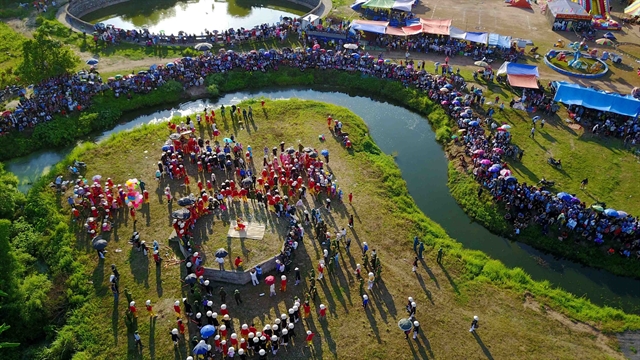 |
| Phù Đổng Commune mobilises community participation in new rural development while preserving and promoting traditional cultural values, contributing to a new look for rural Hà Nội. Photos courtesy of the Hanoi Office for Coordination of the New Rural Development Programme |
For 2026-2030, Hà Nội aims to have 80 per cent of its communes meet advanced new rural standards and 20 per cent meet modern new rural standards by 2030. The target signals a deeper phase of rural development, in which the emphasis is shifting from simply building new infrastructure to creating sustainable improvements in people's lives.
A liveable rural community is not measured only by wider roads or better-equipped public facilities. It is also a place where people have stable livelihoods, the environment is protected, cultural life is enriched and residents have a voice in matters affecting their communities.
From Thanh Trì and Hát Môn to Phúc Thọ, stories of land donations, community contributions, cultural facilities and collective efforts to address local issues point to a simple but powerful message: when residents become active participants in development, every contribution, large or small, can help shape meaningful change. This community-driven approach provides a strong foundation for Hà Nội's rural areas to move towards more civilised, modern and sustainable development.
* In collaboration with the Hanoi Office for Coordination of the New Rural Development Programme.
Society
.jpg) Society
Society
 Society
 Society
 Society
 Society
 Society
 Society
 Society
 Society
 Society
 Society
 Society
 Society
 Society