 Society
Malaysian tourist rescued after falling into 10-metre-deep hole in Đà Lạt
1.
|
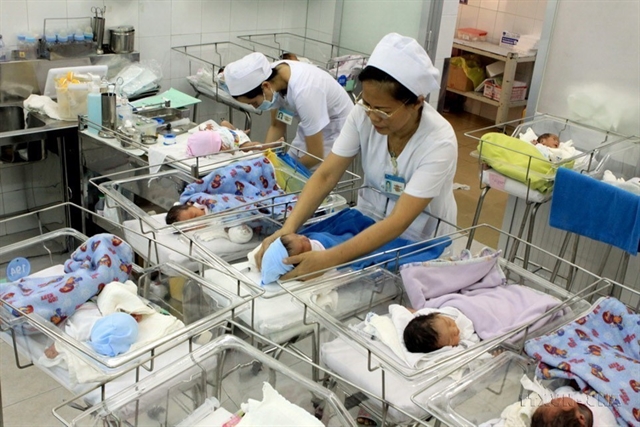
| Newborns at Từ Dũ Hospital in HCM City.. The Ministry of Health has proposed incentives to reduce son preference, balance the sex ratio at birth and maintain a sustainable fertility rate. — VNA/VNS Photo |
HÀ NỘI — The Ministry of Health is seeking public comment on a draft circular that would allow authorities to provide rewards and support to families and individuals contributing to population policy goals.
One proposal drawing attention is support for families with at least two daughters under 16.
Under the draft, eligible families would need to meet criteria such as raising healthy children and having children who perform well at school or achieve success. Support could include public recognition, help with students’ health insurance and school milk, as well as other measures decided by local authorities.
Lê Thanh Dũng, director general of the Ministry of Health’s Department of Population, said the policy was not new. Circular 01/2021/TT-BYT already allowed local authorities to support families with only daughters, and some provinces have provided financial assistance.
The latest draft, however, more clearly defines the target group by referring to girls under 16, in line with the Law on Children.
Dũng said the policy aims to reduce male preference, improve the status of girls and help address Việt Nam’s skewed sex ratio at birth. He stressed that it was not intended to encourage families to have daughters.
“A family with two daughters does not mean it has no sons,” Dũng said, pointing out that families can decide how many children they have.
The proposal follows Politburo Conclusion No. 149, issued on April 10, 2025, which calls for measures to narrow the sex imbalance at birth and bring it back toward the natural level.
Responding to concerns that the policy could create inequality, Dũng said it was designed to address a specific population issue. The ministry is continuing to consult local authorities, experts and scientists before finalising the regulations.
The draft would replace separate policies for high- and low-fertility areas with a broader goal of reaching a sustainable replacement fertility rate.
Villages and residential groups where at least half of women have a second child for three consecutive years could receive recognition, rewards or financial or in-kind support. Greater support may be considered if the rate is sustained for five years. Similar criteria would apply to communes.
Individuals could receive help with infertility screening, pregnancy-related costs and support for children until at least 12 months old.
The draft also proposes funding genetic counselling and pre-marital health checks for people with a family history of congenital conditions, as well as ethnic minority communities in mountainous areas affected by child and consanguineous marriage.
The measures are based on the Law on Population, which encourages pre-marital counselling and health checks. — VNS
Society
 Society
 Society
 Society
 Society
 Society
 Society
 Society
 Society
 Society
 Society
 Society
 Society
 Society
 Society