 Society
LOAN Foundation awards scholarships to disadvantaged students on 10th anniversary
1.
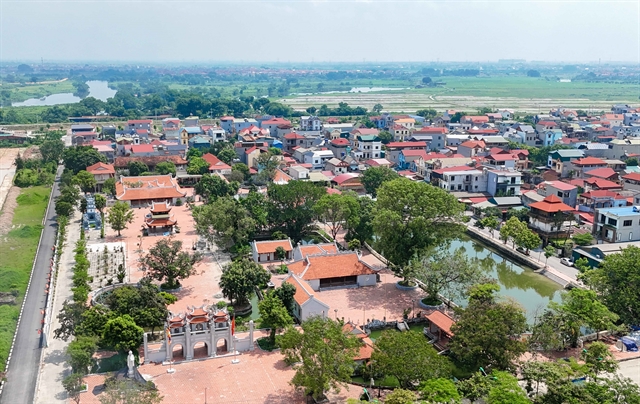 |
| Thư Lâm Commune in Hà Nội pilots the “socialist commune” model, focusing on developing cultural spaces to boost tourism while putting people’s happiness at the heart of development. |
As one of two localities selected by Hà Nội to pilot the “socialist commune and ward” model, Thư Lâm Commune is turning the goal of making people’s happiness and satisfaction a measure of effective governance into tangible improvements in everyday life. From upgrading infrastructure and improving the environment to promoting digital transformation and encouraging community participation, the new approaches being adopted in Thư Lâm are helping shape a more modern, civilised, green, clean and livable rural community.
A cleaner village road, flower-lined streets, the removal of long-standing rubbish sites, more convenient administrative procedures or an elderly resident receiving help to use online public services – these seemingly small changes are becoming tangible signs of a happier life in Thư Lâm.
Happiness begins with everyday changes
Under Hà Nội’s pilot scheme for the “socialist commune and ward” model, the assessment system comprises 54 criteria, including 52 quantified core criteria and two composite indicators measuring people’s satisfaction and happiness.
Speaking to the press, Nguyễn Xuân Lưu, Vice Chairman of the Hà Nội People’s Committee, said the 52 quantitative criteria provide the foundation for developing the two composite indicators. The city has assigned its departments and agencies 18 specific tasks to further analyse and translate the criteria into practical requirements that are easy to understand, implement and, most importantly, verify through results in people’s daily lives.
According to Lưu, the criteria will be tested in practice during the pilot period and regularly reviewed so that adjustments can be made where necessary and the model remains focused on substantive results. Ultimately, every measure implemented should contribute to two overarching goals: greater public satisfaction and greater happiness among the people.
This approach brings the concept of “happiness” down to earth. It means people spending less time traveling to complete administrative procedures; cleaner and more attractive village roads and residential areas; better learning environments for children; easier access to healthcare for older people; timely support for disadvantaged groups; and legitimate concerns raised by residents being listened to and resolved.
Happiness, therefore, is not separate from development. It is the combined outcome of effective governance, income and employment, infrastructure, education, healthcare, environmental quality, social welfare, culture and community safety.
An initial review found that Thư Lâm has met or basically met 34 of the 54 criteria, while the remaining 20 require further implementation plans. Among them are major requirements related to planning and infrastructure, particularly transport and urban infrastructure, which require substantial resources and continued support from the city.
Yet Thư Lâm is not waiting for large-scale projects to be completed before people can experience change.
According to Phạm Trọng La, Chairman of the Commune People’s Committee, the commune is starting with small but practical measures that can produce visible improvements in daily life. These include promoting digital transformation, maintaining environmental hygiene, improving local landscapes, addressing problems in residential areas and implementing projects and activities under the “100 Days of Action for Thư Lâm’s Development – For the Happiness of the People” campaign.
“Small changes that earn recognition from the people are what happiness feels like,” said La.
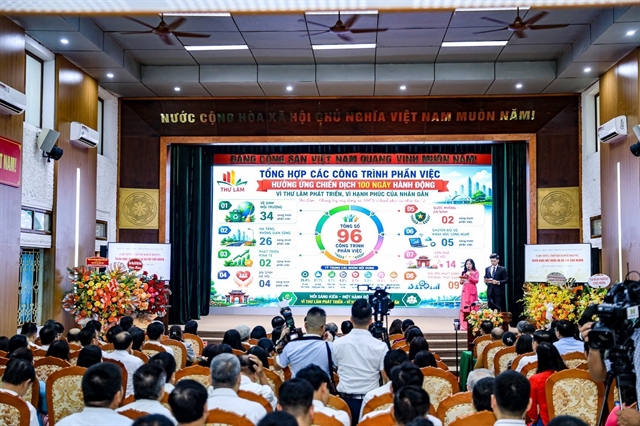 |
| Thư Lâm Commune announces 96 projects and initiatives as part of the “100 Days of Action for Thư Lâm’s Development – For the Happiness of the People” campaign. |
Such changes are also building blocks for new rural development.
New rural development is not simply about wider roads, stronger infrastructure or completing a set of criteria on paper. It is also about creating a healthy living environment, attractive landscapes, stronger communities, accessible public services and greater opportunities for residents to participate in the affairs of their own communities.
From cleaning and planting flowers along a village road to removing a long-standing rubbish site, from applying digital technology to public services to providing assistance to residents, each improvement contributes to a more civilised, modern and livable rural environment.
People at the heart of new rural development
With a population of around 100,000 people across an area of approximately 43sq.km, Thư Lâm faces increasingly diverse demands on local governance. In this context, digital transformation is becoming an important means of bringing local authorities closer to residents.
People can access a growing range of public services from home. Community digital transformation teams have been encouraged to “go to every alley, knock on every door and guide every person”, with particular attention given to elderly residents and those who have limited digital skills.
However, the number of online applications alone cannot demonstrate whether people are satisfied. What matters is whether residents actually save time and travel costs, receive clear guidance, avoid having to repeatedly supplement their applications and, ultimately, have their problems resolved.
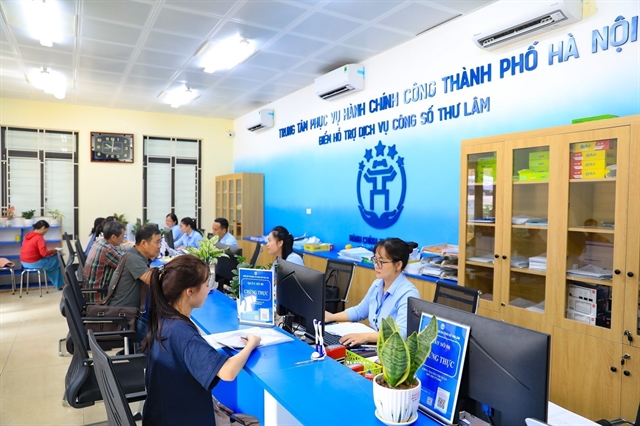 |
| Residents complete administrative procedures at the Thư Lâm Digital Public Service Support Point in Hà Nội. |
Behind the figures on digital transformation lies a more fundamental issue: people and the quality of public service.
La believes that reform must begin with the local officials themselves, with a shift from a management mindset to one focused on governance and serving the people. It is not enough to follow procedures; officials must do things correctly, quickly and responsibly, and see them through to the end.
Significantly, under Thư Lâm’s approach, residents are not merely beneficiaries of development but also actively participate in identifying what needs to be done. Villages and local mass organisations are encouraged to choose projects and activities that respond directly to the needs of their communities.
During the 100-day campaign, 96 projects and activities were registered. Some were simple but meaningful, such as cleaning and planting flowers along stretches of road about 200m long. Others, such as installing village entrance signs following the administrative rearrangement, have helped give local communities a renewed appearance.
“It is not the Government bringing tasks down to the people; the initiatives come from the people themselves. Every small contribution, good idea and initiative helps make the model successful,” said the Chairman of the Thư Lâm People’s Committee.
This gives “happiness” a broader meaning. People are not only beneficiaries of development; they are also participants in creating it.
A road improved at the initiative of the local community is therefore more than just a better-looking road. It also gives residents a sense that their voices matter, that they have a responsibility for their surroundings and that they are contributing to the development of their hometown.
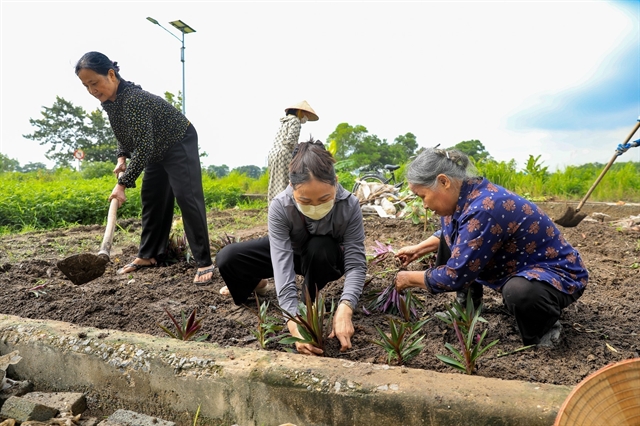 |
| Residents plant flowers and create green, clean and attractive landscapes in Giao Tác Village, Thư Lâm Commune, contributing to new rural development. Photos courtesy of Hanoi Office for Coordination of the New Rural Development Programme |
This is also an important value of new rural development: people are at the heart of the development process. New rural development is not simply a story of infrastructure investment. It is equally a story about people, communities and a form of governance that listens.
When residents and local authorities jointly identify priorities, participate in implementation and monitor results, each project creates not only material value but also stronger community bonds. Cleaner roads, greener spaces, better-kept residential areas and community facilities thus become visible signs of a rural landscape changing day by day.
To ensure that people’s voices become a regular part of local governance, Thư Lâm plans to organise forums such as “The Fatherland Front Listens to the People” and “People’s Ideas for Building the Commune”, while strengthening the supervisory role of the Vietnam Fatherland Front and socio-political organisations in monitoring projects, activities and the resolution of residents’ concerns.
Happiness is a broad concept that cannot be captured fully by a single number. Yet when based on reliable data, reflecting people’s actual experiences and linked to responsibility for policy adjustment, a happiness index can become a useful tool for local authorities to assess the effectiveness of governance.
For Thư Lâm, the most convincing measure may not be found in a statistical table, but in changes that people can see and feel in their daily lives: cleaner roads, more attractive landscapes, more convenient public services, a better environment, stronger community ties and a greater sense that their voices are being heard.
These are also concrete steps toward new rural development – a process in which progress is measured not only through figures on infrastructure and economic growth, but also through the quality of life and happiness of the people.
After each week and each month, and at the conclusion of the 100-day campaign, the key question is not simply how many projects have been completed, but how those projects have changed people’s lives.
When people’s ideas become a basis for Government action, when projects grow from the needs of the community, and when the fruits of development return to improve people’s quality of life, “happiness” is no longer a distant goal.
It becomes a measure of governance that is close to the people and serves the people, while providing momentum for the development of Vietnamese rural communities that are increasingly modern, civilized, green, clean and livable – places where new rural development is seen not only in a changing landscape, but also felt in the happiness of every resident.
In collaboration with the Hanoi Office for Coordination of the New Rural Development Programme
Society
 Society
 Society
 Society
 Society
 Society
 Society
 Society
 Society
 Society
 Society
 Society
 Society
 Society
 Society
.jpg)