 Society

Vietnamese writer, illustrator nominated for 2028 Hans Christian Andersen Award
1.
HCM CITY — As countries increasingly invest in preventive healthcare to protect population health, Việt Nam is stepping up efforts to prevent diseases and cancers associated with human papillomavirus (HPV).
In 2026, HPV vaccination was introduced into the National Immunisation Programme (NIP) through a phased rollout, initially targeting 11-year-old girls in selected localities, with plans for broader expansion in the coming years.
In this context, the National Institute of Hygiene and Epidemiology (NIHE), in collaboration with MSD Vietnam, hosted a scientific symposium entitled “The Evidence Base for HPV Prevention: 20 years of Long-Term Follow-up and Real-World Impact”.
Chaired by Prof. Phan Trọng Lân, MD, PhD, director of NIHE, the symposium brought together leading experts as well as regional and global MSD medical experts.
 |
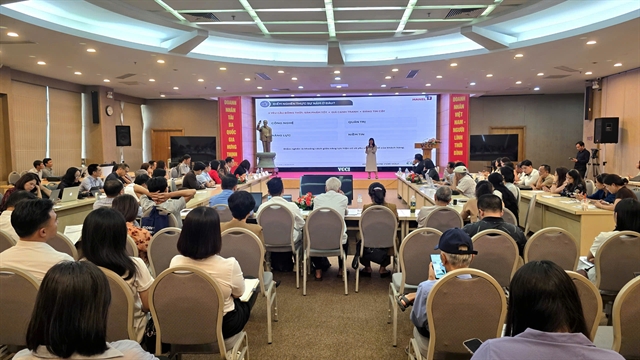
| The symposium brought together leading local and international experts to share scientific evidence, long-term data, and real-world insights on HPV prevention at the symposium entitled “The Evidence Base for HPV Prevention: 20 years of Long-Term Follow-up and Real-World Impact”. — Photo Huỳnh Như |
The symposium focused on reviewing scientific evidence, long-term follow-up data, and real-world experience in HPV prevention, while discussing approaches to strengthen prevention efforts in Việt Nam.
In his remarks at the symposium, Prof. Phan Trọng Lân, MD, PhD, director of NIHE, emphasised: “HPV is one of the most common sexually transmitted infections. While most HPV infections clear spontaneously, persistent infection with high-risk HPV types can lead to cervical cancer as well as several other cancers, including vulvar, vaginal, anal, penile, and oropharyngeal cancers."
"This reminds us that HPV is not solely a women's health issue, but rather a cancer prevention issue affecting both females and males. Việt Nam is now presented with a significant opportunity as HPV vaccination begins to be introduced through the National Immunisation Programme in 2026 in selected localities and is expected to expand gradually. This is not simply the addition of another vaccine to the programme. More importantly, it is an opportunity to establish an organised HPV prevention strategy aimed at achieving high, equitable, and sustainable coverage, while strengthening links between vaccination, screening, diagnosis, and treatment.”
 |
| Prof. Dr. Phan Trọng Lân, director of NIHE, makes a speech at the event, emphasising that HPV is not only a women's health issue but also an important cancer prevention issue for both women and men. — Photo Huỳnh Như |
According to GLOBOCAN 2024, HPV-related cancers continue to pose a substantial global burden, accounting for approximately 870,000 new cases and nearly 392,000 deaths annually. Cervical cancer represents the largest share, with more than 604,000 new cases and nearly 280,000 deaths each year.
In Việt Nam, HPV-related cancers are estimated to cause more than 10,000 new cases and over 5,200 deaths annually, including approximately 8,270 new cervical cancer cases and 4,110 deaths each year. Many cases are still diagnosed at later stages, reducing treatment effectiveness, increasing healthcare costs, and negatively affecting patients' quality of life.
Throughout the symposium, experts reviewed long-term follow-up data and real-world evidence accumulated over more than two decades from HPV prevention programmes worldwide. The evidence demonstrated that HPV vaccination has been associated with reductions in HPV infections, precancerous cervical lesions, and HPV-related diseases, particularly when implemented early and with high vaccination coverage.
Experts also discussed current vaccination schedules, evidence on immunogenicity and effectiveness, as well as key considerations in translating scientific evidence into policy and clinical practice.
According to Assoc. Prof. Dương Thị Hồng, MD, PhD, deputy director of NIHE: “Experience from countries that have implemented cervical cancer prevention strategies over nearly two decades shows that investment in HPV prevention offers long-term value for healthcare systems. HPV vaccination is an effective proactive preventive intervention. Appropriate policies that support early increases in vaccination coverage can help reduce treatment burden and the long-term impact of disease on patients, families, and society, while bringing Viet Nam closer to the goal of eliminating cervical cancer in the future.”
Speaking at the symposium, Mr. Ramar Rubentiran, medical director of MSD HH Vietnam, stated: “MSD is a global biopharmaceutical company with more than 130 years of history. We are committed to using the power of leading-edge science to save and improve lives around the world. In the 30 years of partnering with the healthcare sector in Viet Nam, we are proud to contribute to scientific exchange, disease awareness initiatives, and evidence-based prevention and treatment solutions. This reflects MSD’s long-term commitment to helping improve the health of people in Việt Nam.
HPV remains an important public health issue, associated with cervical cancer and several other diseases affecting both women and men. In the field of HPV prevention, around two decades of research, long-term follow-up and real-world evidence continue to reinforce the scientific foundation for vaccination and prevention strategies.”
In his closing remarks, Prof. Phan Trọng Lân noted that Việt Nam now has effective prevention tools and a growing body of scientific evidence. The next challenge is to translate evidence into appropriate policies, policies into equitable and sustainable coverage, and ultimately coverage into measurable public health impact.
The symposium contributed to advancing scientific dialogue, updating the latest evidence, and strengthening multi-disciplinary collaboration. Through the exchange of knowledge and practical experience, the event supported ongoing efforts to prevent HPV-related diseases in Việt Nam, with the goal of reducing the long-term burden of HPV-related diseases and cancers, and enhancing the protection of public health. — VNS
Society
 Society
 Society
.jpg) Society
Society
 Society
 Society
 Society
 Society
 Society
 Society
 Society
 Society
 Society
 Society
 Society