 Society

Drive to Great: BAIC FOTON Africa Partners Conference Set to Open
1.
|
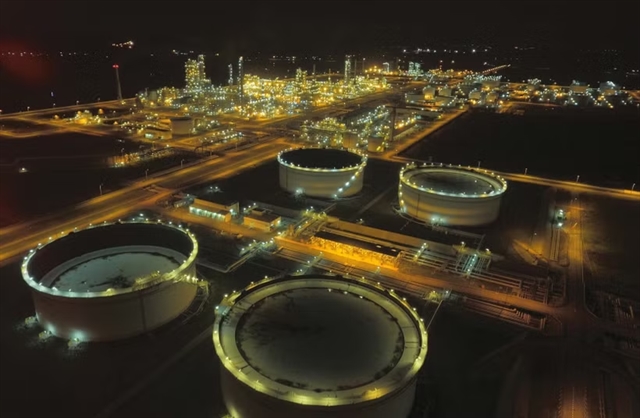
| An overview of the Dung Quất Oil Refinery in Quảng Ngãi Province. — VNA/VNS Photos |
HÀ NỘI — As digital technology continues to transform production, business operations and corporate management, Việt Nam National Petroleum Group (Petrolimex) is accelerating its digital transformation across a wide range of areas, from sales and logistics to internal management.
The firm aims to become a smart energy group, with operational decisions increasingly driven by real-world data and artificial intelligence.
Digital transformation a strategic priority
Petrolimex currently holds approximately 40 per cent of the domestic petroleum market share. To improve operational efficiency and competitiveness, the group has identified digital transformation as one of the three key pillars of its 'three transformations' strategy.
According to Petrolimex General Director Lưu Văn Tuyển, the strategy aims to build "a smart energy corporation where every operational decision will be made based on real-world data and AI".
To realise that goal, Petrolimex has developed a digital transformation plan extending to 2030 aimed at integrating technology into the group's operations, ranging from sales and logistics to internal management.
One of key initiative is automating operations at the firm's depots and petrol stations. The group has also expanded cashless payment systems, integrated RFID technology and smart cameras and implemented a system to issue electronic invoices for every transaction.

|
| A resident refuels with E10 RON95-V biofuel at a Petrolimex station in Phố Hiến Ward, Hưng Yên Province. |
At the same time, Petrolimex has developed the Petrolimex+ mobile app to assist consumers with payments, location services and maintenance scheduling, helping to enhance transparency, improve risk management and provide a better customer experience.
Digital governance platform
Digital transformation at Petrolimex also extends to management and operational activities. The group has carried out an order management system and Business Intelligence reporting and expanded its digital office capabilities, and uses software systems such as SAP-ERP, EGAS and PLXID.
These activities help the group leverage data for operational oversight, providing a foundation for timely and strategic decision making.
In addition, Petrolimex is also accelerating the application of AI across several areas. Key applications include inventory and logistics optimisation, consumer behaviour analysis for personalised services, quality monitoring and risk management, market simulation and support for oil price forecasting and supply planning under various scenarios.
The company has set a target to apply AI in most of its key decision-making processes by 2028, and to reach 100 per cent adoption by 2030.
Smart petrol stations plan
To advance its digital transformation goals, Petrolimex has partnered with Viettel Group to develop digital infrastructure and smart operations. This collaboration involves implementing Smart Petrol Station management solutions and applying AI and IoT technologies for tank gauging, flow monitoring and leak detection across Petrolimex’s network of retail stations, depots and pipelines.
|
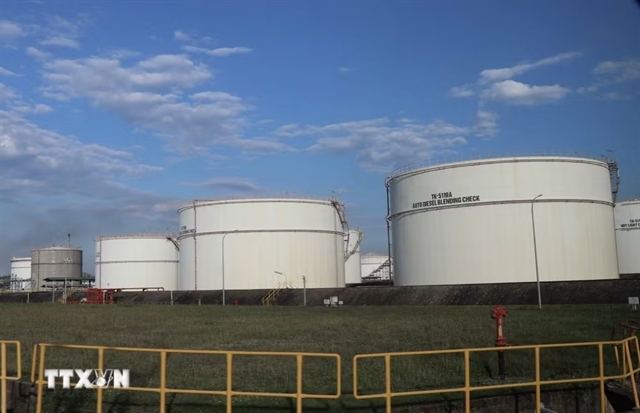
| The Dung Quất Oil Refinery is managed and operated by Bình Sơn Refining and Petrochemical Joint Stock Company, a subsidiary of Petrovietnam. |
Petrolimex also uses Viettel’s cloud computing services to enhance system security and availability.
The two sides are working together to deploy cashless payment solutions across Petrolimex’s network of petrol stations using ePass transport accounts as well as the Viettel Money and My Viettel platforms.
According to Petrolimex Chairman Phạm Văn Thanh, the partnership between Petrolimex and Viettel is strategically significant to both the energy and digital infrastructure sectors.
If effective, the collaboration could create value for both enterprises while accelerating digital transformation and better serving the public, businesses and the wider economy. — VNS
Society
 Society
.jpg) Society
Society
 Society
 Society
 Society
 Society
 Society
 Society
 Society
 Society
 Society
 Society
 Society
 Society