 Society
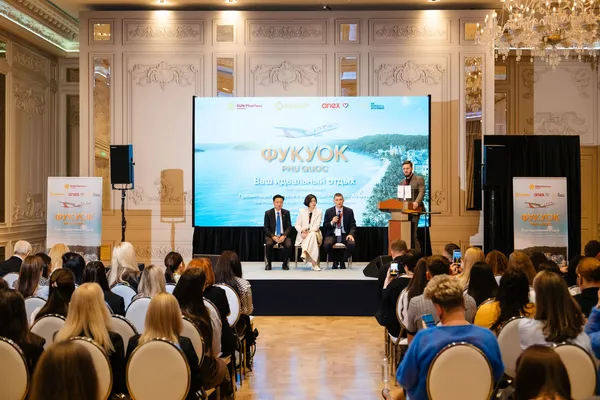
Sun PhuQuoc Airways expands Russian partner network ahead of Moscow route launch
1.
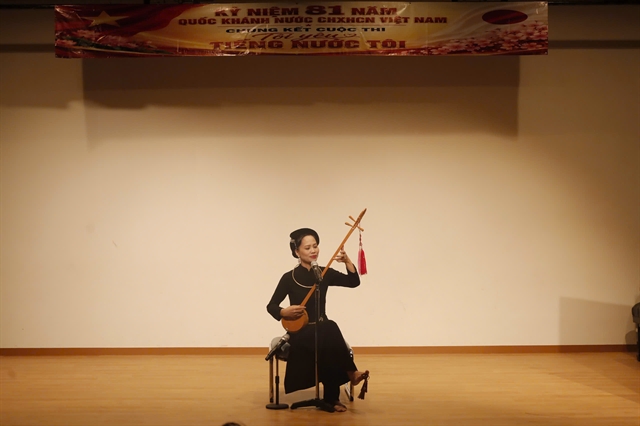 |
| Vương Thị Toán, one of the 12 finalists selected for the final round performs a folk song with đàn tính, a traditional long-necked gourd lute of Northern Việt Nam's ethnic groups. Photos courtesy of the Organising Committee |
HÀ NỘI – On the occasion of the 81st anniversary of the August Revolution (August 19, 1945-2026) and the National Day (September 2) of the Socialist Republic of Việt Nam, the “I Love My Mother Tongue” (Tôi yêu Tiếng nước tôi) contest’s final took place on August 23 in Higashi Osaka, Japan.
The event saw the participation of representatives from Vietnamese diplomatic missions, various associations, artists, parents, and the Vietnamese community living in the Kansai region.
The contest aims to preserve, practise, and promote the Vietnamese language within the Vietnamese community in Japan, with a particular focus on the younger generation born or raised in the host country. Furthermore, it serves to implement the Politburo’s Resolution No 23-NQ/TW, dated August 2, 2026 on the affairs related to overseas Vietnamese in the new era.
Aiming to create a platform for the community to use Vietnamese and to encourage families to maintain their native language, it also provides an opportunity for the younger generation to learn more about Vietnamese history, culture, and traditions, according to organisers.
A key highlight of the contest is the integration of language with expressive arts, rather than a simple test of linguistic knowledge. This allows participants to showcase their Vietnamese proficiency, individual talents, and personal feelings regarding their family, homeland, culture, and the Vietnamese people.
Twelve finalists were selected from the qualifying rounds to compete in the final stage, during which each contestant was given a maximum of four minutes to complete two performance categories. These performances were presented in Vietnamese through various creative formats, through which the judges evaluated the contestants' language proficiency, presentation skills, content, and emotional resonance.
Speaking at the event, the Vietnamese Consul General in Osaka, Nguyễn Trường Sơn, spoke highly of the contest's significance in fostering a Vietnamese-speaking environment in Japan, especially for children and youth who are born and educated in a Japanese-language environment.
“The Vietnamese language is more than just a tool for communication, it embodies historical values, culture, and national identity, serving as a vital bridge connecting overseas Vietnamese generations with their families and their homeland,” said Sơn.
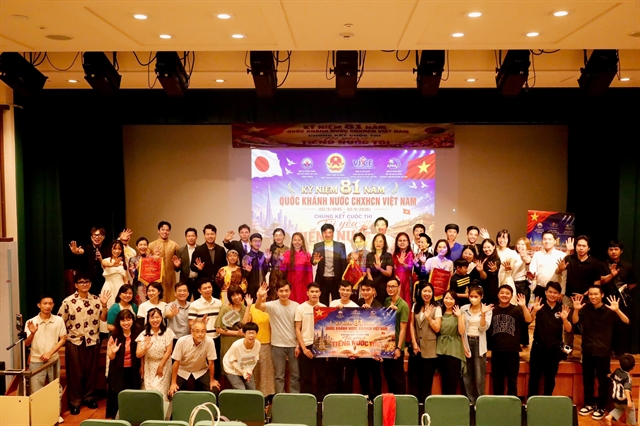 |
| The event saw the participation of representatives from Vietnamese diplomatic missions, various associations, artists, parents, and the Vietnamese community living in the Kansai region. |
The Consul General noted that preserving the mother tongue requires collective efforts from various stakeholders, including diplomatic missions, community associations, schools, and most importantly, individual families.
“Encouraging children to use Vietnamese in daily life and engaging them in language classes, cultural activities, and community platforms will ensure the language is maintained in a natural and sustainable way,” said Sơn.
Commending these efforts, he expressed his hope for more practical initiatives as such models would allow the younger generation to integrate successfully into Japanese society while remaining deeply rooted in their Vietnamese heritage.
According to Head of the Organising Committee, Lê Thương, a growing challenge for the Vietnamese community in Japan is the increasing number of children being born and raised entirely within the Japanese educational system. Without an environment for regular practice, their Vietnamese language proficiency risks declining across successive generations.
Consequently, language preservation efforts must be diversified and engaging, moving beyond the traditional classroom setting to spark genuine interest among learners.
"To translate policy into reality, we must start with concrete actions tailored to the community's needs. Whether it is a language class, a contest, an art performance, or a historical exploration activity, each serves to encourage children to use Vietnamese more frequently,” said Thương.
“The key is to create an environment where the language remains a constant presence in the lives of the younger generation."
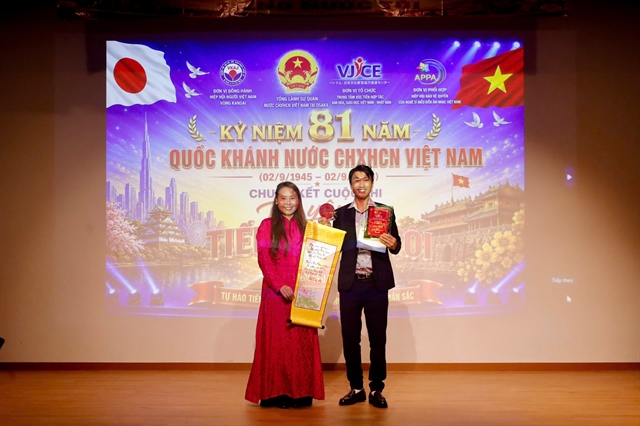 |
| Head of the Organising Committee, Lê Thương (right) presents the first prize to contestant Hoàng Anh Hòa. |
She added that "I Love My Mother Tongue" also seeks to intertwine language with culture and history, ensuring that young people do more than just speak the language as they understand the profound values it conveys.
This approach also demonstrates how community organisations can implement the spirit of Resolution 23-NQ/TW at the grassroots level: by identifying practical issues facing the diaspora and developing sustainable, targeted programmes.
The event atmosphere was rich in Vietnamese identity, featuring a solemn flag-raising ceremony, vibrant Vietnamese-language performances, and moving stories of family and heritage shared across multiple generations.
For the overseas Vietnamese community, major national holidays serve as vital opportunities for the younger generation to explore their history and strengthen their bond with their homeland through activities adapted to their life in the host country. VNS
Society
 Society
 Society
 Society
 Society
 Society
 Society
.jpg) Society
Society
 Society
 Society
 Society
 Society
 Society
 Society
 Society