 Society
Việt Nam, Singapore promote cooperation through Party-to-Party channel
1.
|
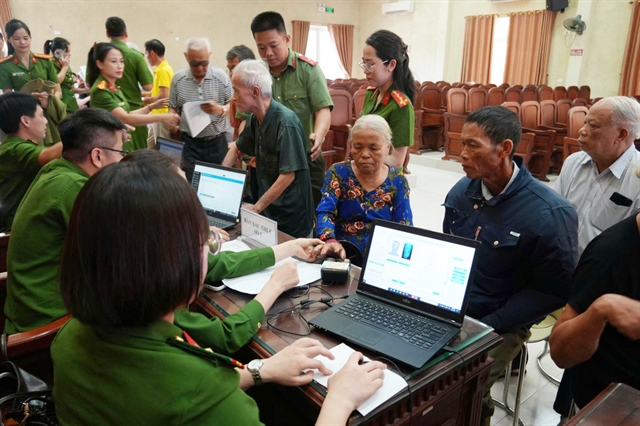
| Relatives of martyrs provide samples for DNA testing in Nghệ An Province. — VNA/VNS Photos |
HÀ NỘI — Waiting times can last for months, years, or, in rare cases, an entire lifetime.
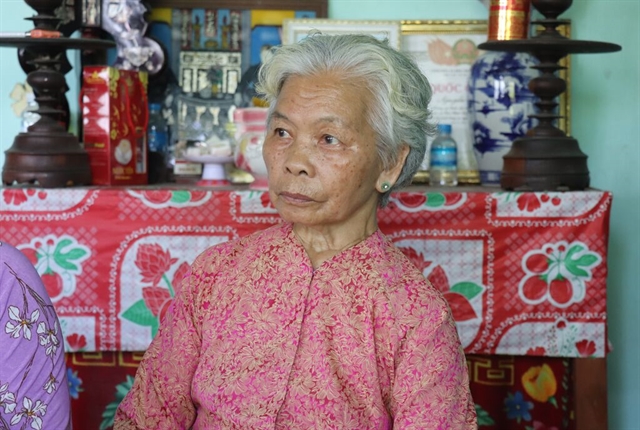
At a police station in Nghệ An central province, elderly people sit quietly waiting to provide DNA samples. Many are in their 70s or 80s. They carry faded death notices, old photographs and a hope they have held for more than half a century to find the remains of relatives who fell during the war.
Among them is 74-year-old Trần Thị Ngụ.
Nearly six decades have passed since her eldest brother, Trần Đình Kiên, was killed in action at the age of 18. Yet in his sister's memory, he remains a fair-skinned young man with a gentle smile who always gave the best food to his younger siblings.
“That memory has never changed,” Ngụ told Vietnam News Agency.
“Many times, I have tried to imagine what my brother’s face would look like if he were still alive today. But in my memory, Kiên will always remain an 18-year-old young man with a gentle smile and loving eyes for his younger siblings.”
Of the family's four children, three joined the army. Two returned with war injuries. The eldest never came home.
For years, the family travelled from place to place, following leads and asking for information. Two of Ngụ's brothers even went to Cambodia, where Kiên had fought, hoping to find his grave.
They returned empty-handed.
Before they died, Ngụ’s parents urged their children to do everything possible to find their eldest son’s grave.
Now, sitting in line to provide a DNA sample, Ngụ is placing her hopes in a different kind of search.
No longer does the family have to rely only on word-of-mouth accounts, the memories of former comrades or long journeys following uncertain clues.
This time, the hope lies in data, technology and science.
A nationwide effort
That approach lies at the heart of a nationwide '500-Day Campaign' to accelerate the search for, collection and identification of martyrs' remains.
The campaign brings together the military, police, scientists, war veterans and historical witnesses in an effort to solve a problem that has remained unresolved for generations.
The military searches for and collects remains. Police gather biological samples from relatives. Scientists conduct DNA tests. Veterans and witnesses provide information and help cross-check historical records.
Some US veterans have also voluntarily returned to Việt Nam with documents, maps and other information retained from the war, providing additional clues about the possible resting places of fallen soldiers.
The effort links archival records, declassified documents, population data, digital technology and DNA testing.
|
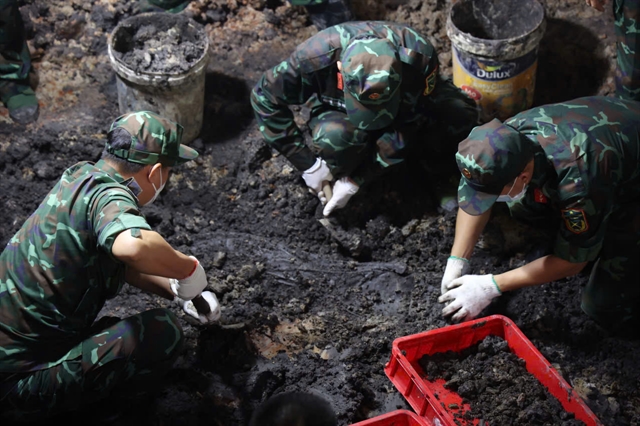
| Excavation work to search for martyrs’ remains at Lê Thị Riêng Park in HCM City. |
According to Colonel Lê Văn Sơn, Deputy Director of the Social Policy Department under the General Department of Politics of the Việt Nam People's Army, the campaign aims to locate and recover around 7,000 sets of martyrs' remains, collect samples from about 230,000 unidentified graves, conduct DNA tests on around 18,000 samples and gradually establish a nationwide genetic database of martyrs' relatives.
Modern technology is increasingly being used alongside traditional sources of information.
At Lê Thị Riêng Park in HCM City, authorities have used combat maps and witness accounts together with ground-penetrating radar to identify areas suspected of containing mass graves before excavation begins.
The approach is painstaking, but the stakes are high.
As of July 21, search teams had recovered the remains of 1,482 martyrs and located seven mass graves, according to authorities. More than 8,462 hectares contaminated by bombs, mines and unexploded ordnance had also been cleared, with work largely completed in the core area of Vị Xuyên in Tuyên Quang Province.
Samples had been collected from 71,491 graves containing the remains of unidentified martyrs.
Nearly 250,000 biological samples from relatives had been collected, while around 66,000 had been analysed and matched against the national population database.
The figures may sound dry. But behind every sample is a family. Behind every grave is a name. And behind every file is a life left unfinished.
Science against time
For decades, the search for fallen soldiers depended largely on archives, witness accounts and field surveys. But time has taken its toll.
Bones have decomposed. DNA has fragmented. Witnesses have grown old or died. Many families who once searched for their sons, brothers or husbands are now represented by younger family members.
According to authorities, around 175,000 fallen soldiers remain unaccounted for and approximately 230,000 graves have yet to be identified.
For the families waiting, the uncertainty can last a lifetime.
DNA technology is now offering new hope.
Mitochondrial DNA testing was previously the main method used to identify remains. But it worked best when samples were relatively well preserved and there were sufficient reference samples for comparison.
After decades buried in the ground, many remains have suffered severe deterioration. In some cases, only tiny fragments of genetic material remain.
The rate of DNA extractions that meet forensic identification standards was previously around 22 per cent, according to researchers.
|
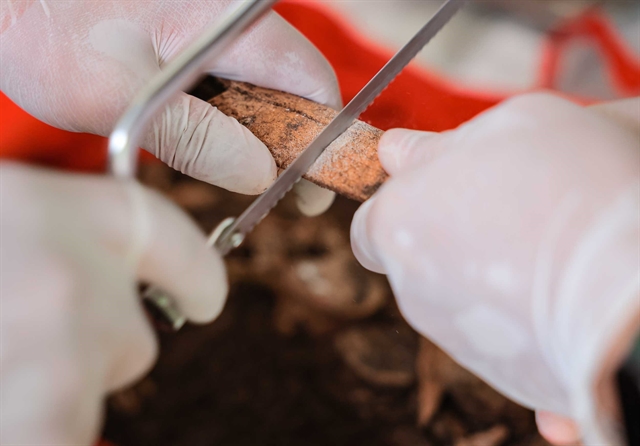
| A fragment of a martyr's remains is taken for DNA testing. |
Vietnamese scientists began searching for a way to extract more information from damaged samples.
After years of research and technology transfer carried out under a US-funded official development assistance project on improving the forensic identification of war remains, with technical co-operation from the International Commission on Missing Persons, the Institute of Biotechnology developed a method based on single nucleotide polymorphisms, or SNPs, and next-generation sequencing.
The new approach examines genetic variations at individual points across the genome, allowing scientists to work with more fragmented genetic material.
In trials at Trường Lĩnh Cemetery in Cao Bằng Province, the rate of DNA extraction meeting forensic identification standards reached 87.3 per cent, nearly four times the previous rate.
For researchers, the figure marks a major advance in the science of identification.
For families, however, its meaning is far more personal. It could help a son finally locate his father's remains, give an ageing mother an answer after decades of uncertainty, or replace the words “Unknown Martyr” on a gravestone with the name of the person who lies beneath it.
Associate Professor and Doctor Phí Quyết Tiến, Director of the Institute of Biology under the Việt Nam Academy of Science and Technology, said Vietnamese scientists had spent years researching and refining DNA testing methods to improve the identification of fallen soldiers.
But science alone cannot solve a problem of this scale.
More than a search
The campaign has brought together central agencies, local authorities, the armed forces, veterans' organisations and communities.
According to Lieutenant General Hoàng Khánh Hưng, chairman of the Việt Nam Association for Support of Martyrs' Families, the association has helped collect and compare information from graves, correct errors in names and military units, co-ordinate DNA sampling and support the return of remains to their hometowns.
Some of its work involves correcting information already carved in stone.
Names, dates of birth, hometowns and military units can sometimes contain errors because historical documents differ or military units changed their designations during the war.
When discrepancies are found, officials return to the original records, search for former comrades and cross-check every detail.
Sometimes, the process leads to a family reunion after decades of uncertainty.
The search for the dead is also taking place alongside efforts to care for those who survived the war.
In Quảng Trị Province, new homes have been built for families of people who rendered services to the revolution.
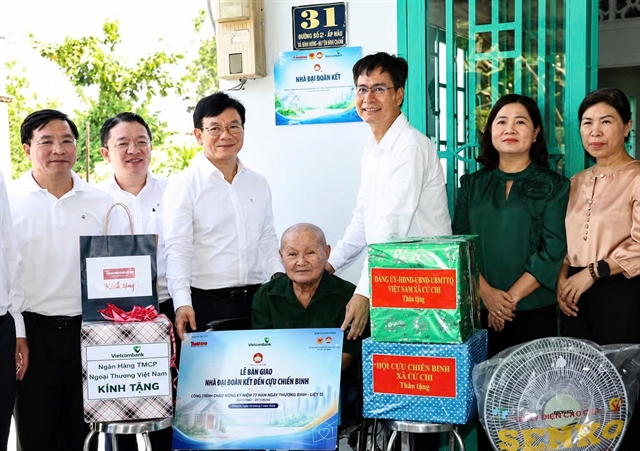
In HCM City, wounded soldier Châu Văn Đực recently received a new Great Unity house after years of living with a leaking roof.
“This is not only a new home. It is also a reminder to our children and grandchildren to always remember the sacrifices of previous generations,” he said.
|
| A Great Unity house is presented to wounded soldier Châu Văn Đực in HCM City. |
During the 2020-2025 period, the national Gratitude Fund raised more than VNĐ3 trillion, built nearly 36,000 gratitude houses, repaired almost 31,000 others and provided more than 57,000 savings books to beneficiaries and relatives of fallen soldiers.
The government is also seeking greater contributions from businesses and the wider public to support people with meritorious services and the families of those who died for the country.
Acting Minister of Home Affairs Nguyễn Tiến Hải said the effort reflected a broader understanding of gratitude.
It is not limited to ceremonies or remembrance. It also means housing, healthcare, financial support and the use of modern science to resolve the unfinished business of war.
A promise across generations
The work continues quietly.
In laboratories, scientists examine tiny fragments of bone.
In the field, search teams follow old maps and listen to the memories of witnesses who are themselves growing older.
The tasks are different, but the goal is the same, to restore the identity of those who fell.
For Vietnamese families, the effort is rooted in the traditional principle of Uống nước nhớ nguồn (When drinking water, remember its source).
But remembrance also carries a responsibility to the living.
The country is preparing to mark the 80th anniversary of War Invalids and Martyrs' Day in 2027. New amendments to policies for people with meritorious services are being introduced, including expanded eligibility, additional benefits and improved housing support.
|
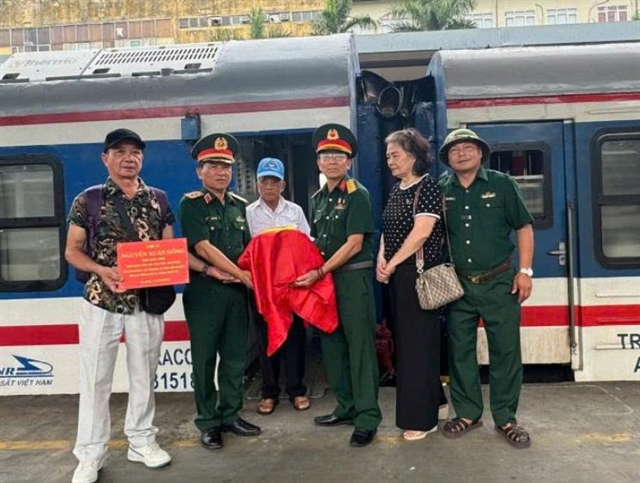
| Returning the remains of a martyr to his hometown. |
Yet, the remaining task is immense.
“More than 50 years after national reunification, around 175,000 martyrs' remains have yet to be found and approximately 230,000 martyrs' graves have yet to be identified,” Prime Minister Lê Minh Hưng said at a recent national conference.
He described the issue as a painful burden carried by a country where mothers once searched for sons and wives for husbands – many of whom are now old or have passed away.
The search is becoming a race against time. With each passing year, witnesses disappear, memories become less reliable and records are lost. The families who have waited for decades are growing older too.
For them, the greatest act of gratitude may be to finally locate their loved one, restore a name to a gravestone and bring the fallen home. — VNS
Society
 Society
 Society
 Society
 Society
 Society
 Society
 Society
 Society
 Society
 Society
 Society
 Society
 Society
 Society