 Society

AIMCONNECT 2026 Held in Singapore, Bringing Global Automotive Leaders Together to Explore the Future of AI, Trust and Connected Mobility
1.
|
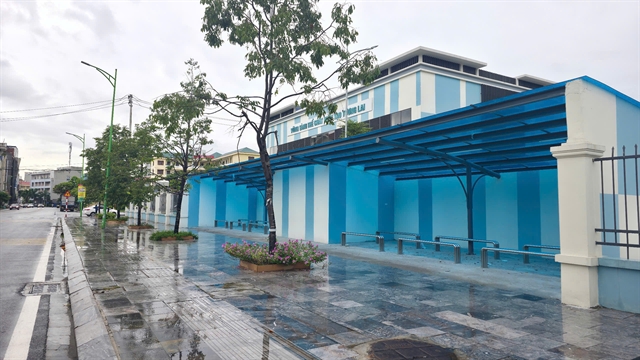
| A designated school bus pick-up point at Trọng Điểm Secondary School in Hạ Long Ward. Photo suckhoedoisong.vn |
QUẢNG NINH — The northern province of Quảng Ninh has approved a pilot scheme to transport students to and from school using electric buses in three wards – Hạ Long, Hồng Gai, and Hà Tu – during the 2026–27 academic year.
The initiative is part of the province's broader strategy to promote green transport, improve road safety, reduce private vehicle use and traffic congestion around schools, while gradually encouraging students to adopt public transportation.
Under Decision No. 2662/QĐ-UBND, the service will be available to primary, lower secondary and upper secondary students who register to use it. Preparations are scheduled to be completed by August 30, 2026, allowing the system to begin operations at the start of the new school year.
The initial network will comprise six electric bus routes, expected to serve more than 2,150 of roughly 2,600 students who have registered for the service, covering approximately 82.9 per cent of demand.
Around 50 electric buses, each with a capacity of 30 seats, will be deployed in the first phase. Additional vehicles may be introduced based on operational results, although the total fleet will not exceed 100 buses under the approved plan.
All buses must comply with national technical standards and be equipped with onboard cameras, GPS tracking systems, fire prevention and firefighting equipment, emergency escape tools and other mandatory safety features.
The scheme also calls for greater use of digital technologies to manage operations, monitor vehicle movements and facilitate information sharing among schools, parents and service providers. Bus routes, pick-up and drop-off locations, timetables and a dedicated hotline for feedback and complaints will be made publicly available.
To ensure the project stays on schedule, the provincial People's Committee has assigned the Department of Construction to lead implementation, coordinate with relevant agencies and local authorities, finalise operational mechanisms, and select service providers. Bus routes will only be launched after meeting all regulatory and safety requirements.
Supporting infrastructure, including pick-up and drop-off points, parking areas, charging stations and power supply systems, must also be completed before the service officially begins. — VNS
Society
 Society
 Society
 Society
 Society
 Society
 Society
 Society
 Society
 Society
 Society
 Society
 Society
 Society
 Society