 Society
Vietnamese scientist wins ASEAN-US Science Prize for Women
1.
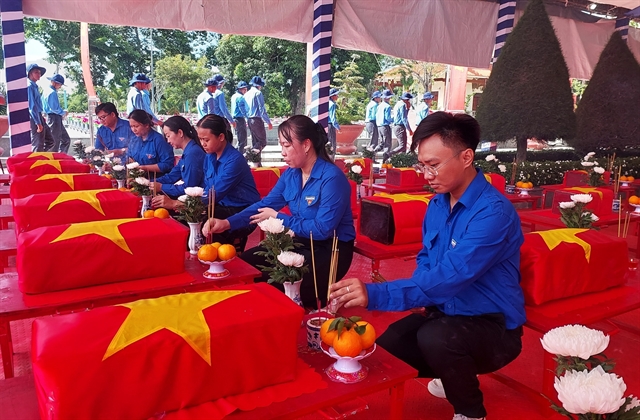 |
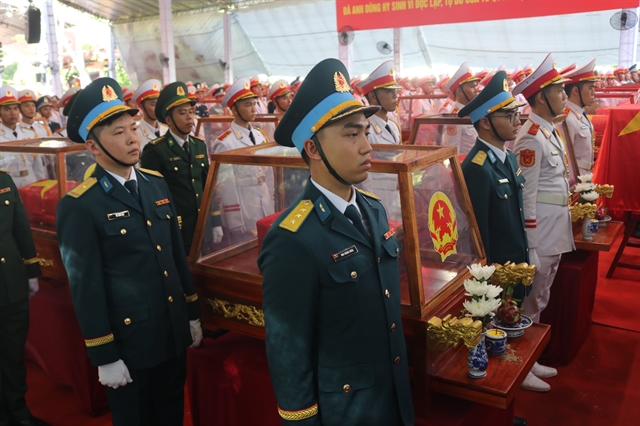
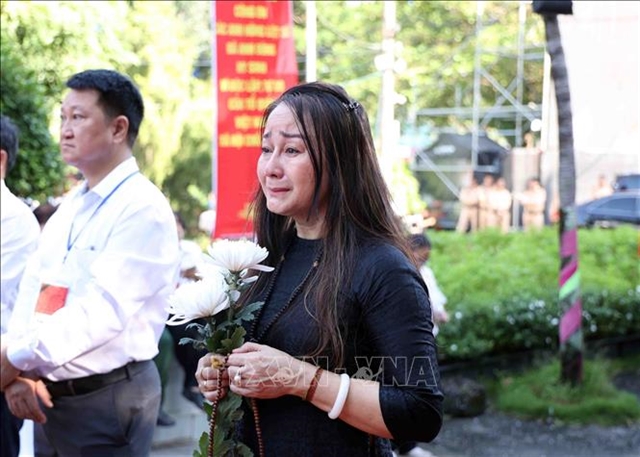
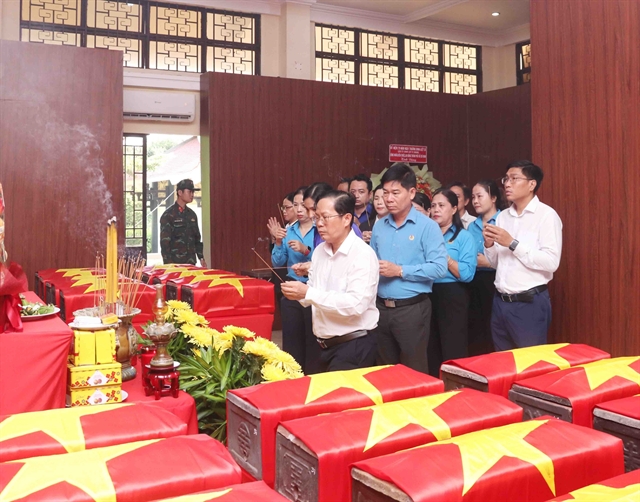
| Youth union members offer incense in tribute to Vietnamese volunteer soldiers and experts whose remains were repatriated from Cambodia during a memorial ceremony held in Đồng Nai City on June 30. — VNA/VNS Photo |
Khánh Dương
HÀ NỘI — Some answers are waiting in the smallest fragments of bone. Others are buried in millions of pages of wartime records.
Across laboratories, military archives and former battlefields, Vietnamese and international experts are now working together to help families finally learn what happened to soldiers who went missing in action decades ago.
As Việt Nam's 500-day campaign to search for, recover and identify war martyrs' remains continues, advances in DNA technology and newly accessible wartime records are giving fresh momentum to a humanitarian mission that has already lasted generations.
According to the Social Policy Department under the General Department of Politics of the Việt Nam People's Army, since 1993, foreign individuals and organisations have provided Việt Nam with around 800,000 pages of documents on the burial locations of Vietnamese soldiers fighting in the South, helping authorities locate and recover the remains of nearly 1,000 war martyrs.
Colonel Lê Văn Sơn, the department’s deputy director, said expanding international cooperation had become one of the key measures to improve the effectiveness of efforts to locate and identify Vietnamese war martyrs’ remains.
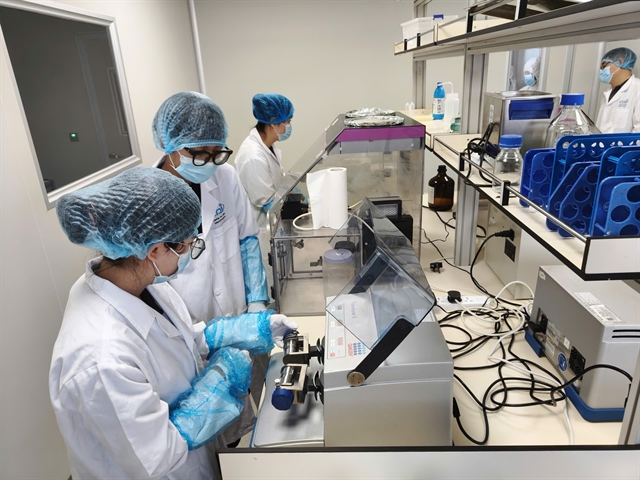
At the Centre for DNA Identification under the Institute of Biology of the Việt Nam Academy of Science and Technology, Vietnamese researchers are working tirelessly on DNA analysis to identify victims of armed conflicts, disasters and missing persons, using DNA technologies shared by the International Commission on Missing Persons.
.jpg) |
| A laboratory technician at the Centre for DNA Identification prepares sample trays for DNA amplification and next-generation sequencing (NGS) library preparation. —VNA/VNS Photo Lê Phú |
Nguyễn Trung Nam, the institute's deputy director, said international cooperation had become a strategic priority in helping the institute access advanced scientific developments, master modern technologies and strengthen its research and forensic capabilities.
The two sides had exchanged expertise on building DNA databases, optimising procedures for analysing highly degraded skeletal remains, improving genetic data analysis and exploring advanced technologies suitable for Việt Nam's conditions, Nam said.
Unlocking archives
While advances in DNA technology are making it increasingly possible to identify recovered remains, another strand of international cooperation is helping Vietnamese authorities determine where those remains may be found in the first place.
Among the initiatives supporting Việt Nam's ongoing campaign, the Việt Nam War Missing Persons Initiative at Texas Tech University has emerged as a notable example of how archival research can help resolve decades-old wartime cases.
The initiative is a scientific and humanitarian programme supported by the US Department of War, with Texas Tech University playing a leading role in researching and analysing archival materials related to the war in Việt Nam, in coordination with agencies and partners in both the US and Việt Nam.
The university aims to apply archival science, digital technologies and artificial intelligence to analyse millions of pages of war-era records held in the US, particularly those from the Captured Document Exploitation Centre.
By cross-referencing, analysing and verifying data, the initiative provides additional evidence to support the search for and recovery of the remains of fallen Vietnamese soldiers, as well as the identification of Vietnamese personnel who went missing during the war.
According to the research team, during the first six months of 2026, they selected, processed and analysed more than 200 representative files from the centre, uncovering information related to over 1,500 Vietnamese military personnel named in US archival records.
Based on these findings, much of the information has been made publicly available, enabling communities, veterans and families of fallen soldiers to help verify and cross-check the records.
The team has made important contributions to the search for fallen soldiers at Lê Thị Riêng Park in HCM City, where a collective burial trench about 30 metres long was identified.
In early July, the team submitted a report decoding the military code name Unit 962, linked to documents associated with remains recently discovered at Lê Thị Riêng Park, along with burial maps and several other soldiers' military records.
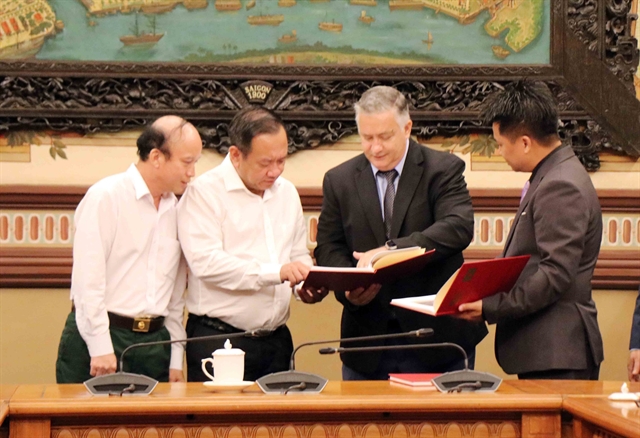 |
| Stephen Maxner, director of the Vietnam Center and Sam Johnson Vietnam Archive at Texas Tech University (second right), exchanges historical archives with HCM City authorities in June. — VNA/VNS Photo Xuân Khu |
Stephen Maxner, director of the Vietnam Center and Sam Johnson Vietnam Archive at Texas Tech University, said the project was dedicated to collecting and preserving the history of the Việt Nam War, and to promoting education, understanding and reconciliation about those experiences.
“We use our historical collections at Texas Tech, materials that are available at the US National Archives and the Vietnamese National Archives in Hà Nội and HCM City. The goal is to try to find as much information as possible to lead to the successful finding of remains and returns to families,” Maxner said.
Since the war ended over 50 years ago, the US has about 1,560 soldiers who are still missing. However, Việt Nam has over 200,000. He said that it was his honour to be working with the US Government, the Vietnamese Government, Deputy Prime Minister Phạm Thị Thanh Trà's office, National Steering Committee 515 and all the friends and partners in Việt Nam and the US to help provide information that hopefully would lead to the recovery of missing soldiers and the return of their remains to their families.
“We can only do so much in terms of historical research, analysing military maps and overhead imagery. What we really need more than anything else is information from living witnesses, from veterans and from family members,” Maxner said.
Texas Tech was playing a small part. The most important thing was work together as communities, as nations, and share the information and hopefully get the feedback that would help find the locations of the missing and, again “bring some sense of closure and solace to the families who have been waiting for so long to find out what happened" to their loved ones, he added.
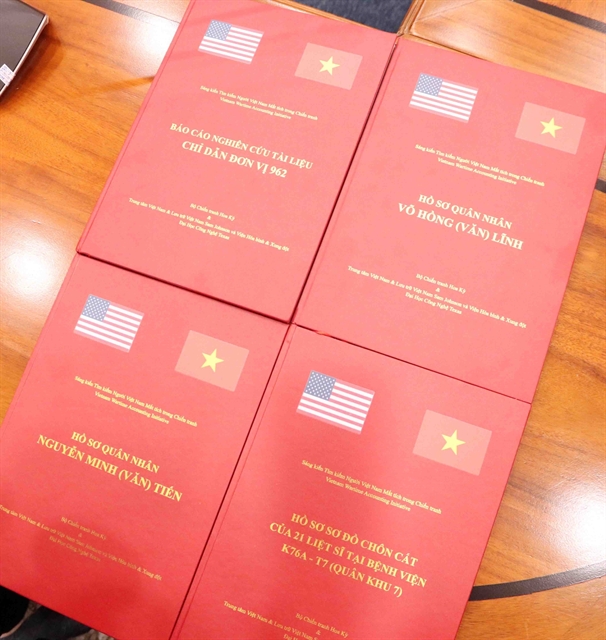 |
| In early July, the Việt Nam War Missing Persons Initiative handed over documents to HCM City authorities on military records of fallen soldiers and a report on archival documents. — VNA/VNS Photo Xuân Khu |
Utilising partners
Advances in DNA identification, together with the continuing declassification of wartime archives and aerial photographs, were creating new opportunities for progress, said Andrew Wells-Dang, senior adviser to Mission: POW-MIA, a non-profit organisation that supports the US Department of Defence in efforts to locate, document and repatriate US service members missing in action in Việt Nam.
After travelling across Việt Nam with a delegation of US veterans and families of missing servicemen in April this year, he said that, with support from partners and Việt Nam’s own commitment, the 500-day campaign's targets were eminently achievable.
For Vietnamese families, obtaining physical remains — or at least personal belongings — of the deceased is central to traditions of ancestor veneration. The cultural value placed on recovering wartime remains in both Việt Nam and the United States would add to its importance as a cornerstone of the bilateral Comprehensive Strategic Partnership, he said.
Beyond scientific and archival cooperation with international partners, collaboration with other countries has helped Việt Nam relocate more remains of fallen soldiers.
Colonel Lê Văn Sơn from the Social Policy Department, who is also deputy chief of the Office of the National Steering Committee for the Search, Recovery and Identification of Fallen Soldiers' Remains, said that in recent years, Việt Nam has strengthened cooperation with countries whose forces fought in Việt Nam to obtain information on the original burial sites of Vietnamese soldiers killed or missing during the war.
Việt Nam has also stepped up cooperation with countries whose troops participated in the war, including the United States, Australia and Thailand.
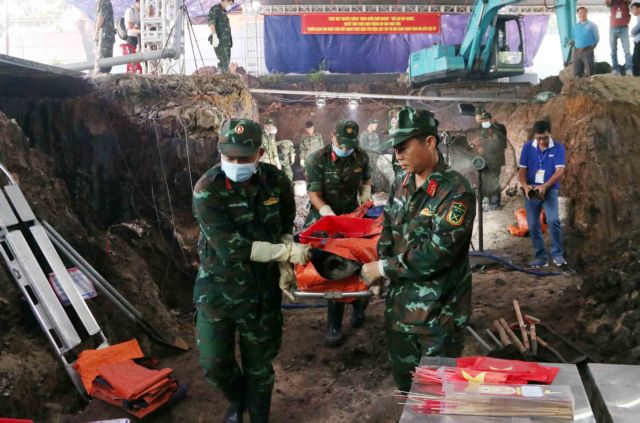
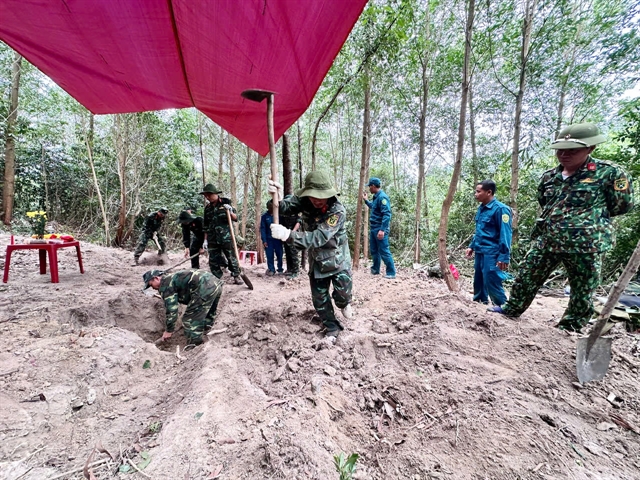
"As of now, Việt Nam has basically completed the search and repatriation of the remains of volunteer soldiers who died in Laos and Cambodia," Sơn said.
Those outcomes have been made possible thanks to special working committees between the governments of the three nations. The Việt Nam-Laos special working committees on the search and recovery of the remains of Vietnamese volunteer soldiers and experts who died in Laos were established in 1993 and have held annual meetings to review progress and agree on plans for the following year.
To date, the committees have signed 31 records of talks, while Việt Nam's Ministry of National Defence maintains eight recovery teams operating across all provinces of Laos.
Việt Nam and Cambodia also signed an agreement in 2000 and established joint specialised committees to coordinate the search and recovery of the remains of Vietnamese volunteer soldiers and experts who died in Cambodia.
So far, the Vietnamese and Cambodian committees have signed 24 records of talks, while Việt Nam's Ministry of National Defence has maintained 11 recovery teams working throughout Cambodia.
Sơn said his department would continue advising the Ministry of National Defence to further expand cooperation with countries whose forces fought in Việt Nam, encouraging them to provide any information they possess on the burial sites of Vietnamese soldiers. — VNS
Society
 Society
 Society
 Society
 Society
 Society
 Society
 Society
 Society
 Society
 Society
 Society
 Society
 Society
 Society