 Society
Vietnamese scientist wins ASEAN-US Science Prize for Women
1.
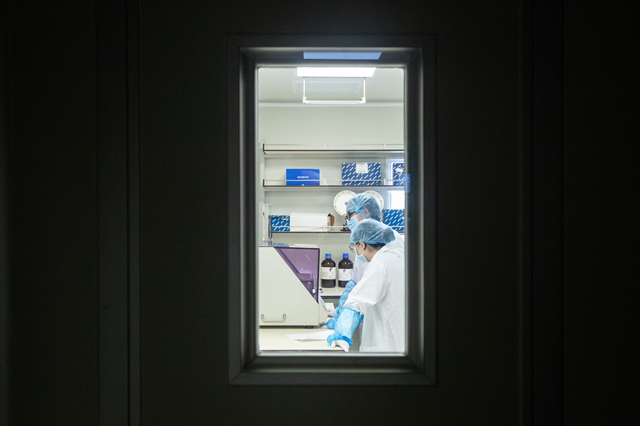 |
| Technicians work inside the laboratory at the DNA Identification Centre of the Institute of Biotechnology under the Việt Nam Academy of Science and Technology. — VNS Photo Khánh Long |
By Khánh Linh
HÀ NỘI — The room is quieter than a hospital ward.
Inside a sterile cabinet, Lê Thị Dung, a forensic researcher at the DNA Identification Centre under the Institute of Biotechnology of the Việt Nam Academy of Science and Technology, studies a fragment of bone no larger than a fingernail.
It is all that remains of an unidentified fallen soldier recovered from a war martyrs' cemetery. The fragment has spent more than half a century underground, weathered by soil, moisture and time.
To most people, it would look like little more than a piece of mineralised tissue.
To Dung, it may still contain a name. The sample has already begun a carefully controlled scientific journey. After arriving at the laboratory, it is cleaned to remove decades of soil and contaminants before being prepared for DNA extraction.
"If enough DNA survives, it may still reveal the identity of the soldier who carried it," Dung said.
Her work is part of Việt Nam's 500-day campaign to accelerate the search, recovery and identification of fallen soldiers' remains, running until the end of July 2027.
The campaign aims to collect DNA samples from around 230,000 unidentified graves in war martyrs' cemeteries nationwide, making it one of the country's largest forensic identification efforts.
For decades, identifying missing war dead in Việt Nam relied largely on wartime records, eyewitness accounts and personal belongings. As witnesses passed away, records disappeared and former battlefields changed beyond recognition, those methods became increasingly limited.
DNA offered a scientific solution, but for years technology struggled to unlock usable genetic information from decades-old remains.
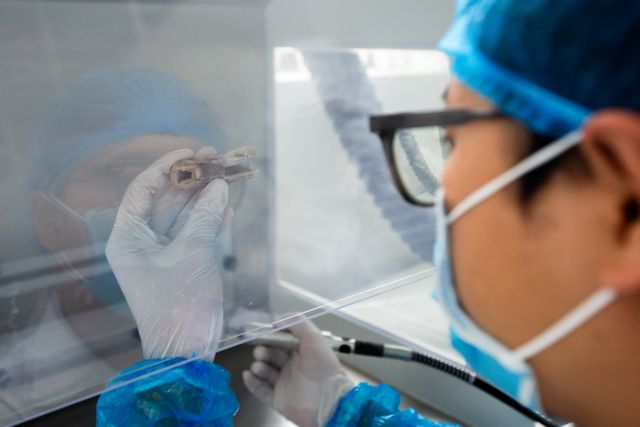 |
| Most bone samples have undergone severe degradation, making DNA identification significantly more challenging. VNS Photo Khánh Long |
According to Dr Trần Trung Thành, director of the DNA Identification Centre, the remains arriving at the laboratory are among the most challenging samples in forensic science.
Most have been buried for decades, often in makeshift graves, under vastly different climatic conditions nationwide. Many have suffered severe decomposition, while soil minerals, chemicals and microorganisms have further damaged the genetic material.
“Processing these remains is one of the most difficult challenges in forensic science because DNA in bone and teeth is usually broken into extremely short fragments, chemically degraded, and contaminated by substances and microbes from the environment,” Thành said.
For many years, Vietnamese scientists relied mainly on mitochondrial DNA analysis. While effective when close maternal relatives were available for comparison, the technique struggled with heavily degraded remains. In many cases, surviving DNA fragments measured only 50 to 70 base pairs, leaving only about 20 per cent of samples with sufficient genetic information for reliable comparison.
The breakthrough came with next generation sequencing–single nucleotide polymorphism (NGS-SNP) technology. Instead of analysing only a limited number of genetic markers, the new method examines thousands of variations across the nuclear genome, making it possible to infer more distant family relationships through both maternal and paternal lines.
"This upgrade allows us to analyse severely degraded remains and infer complex kinship relationships even after long exposure to harsh environmental conditions," Thành said.
Early pilot projects have already demonstrated the technology's potential.
At Trà Lĩnh War Martyrs' Cemetery in Cao Bằng Province, scientists successfully identified two soldiers from 58 heavily degraded sets of remains.
Encouraged by the results, the programme has since expanded to larger sites, including Giồng Riềng War Martyrs' Cemetery in Kiên Giang Province, where hundreds of additional samples are now undergoing DNA analysis.
Inside the clean room
The most striking thing about the laboratory is not the sequencing machines. It is the obsession with preventing contamination.
"It is impossible to tell by sight whether a bone still contains recoverable DNA," Dung said. "Every sample must therefore undergo exactly the same rigorous handling procedures."
Before entering the clean room, technicians change into full protective clothing and follow tightly controlled entry procedures designed to eliminate contamination.
The bone is first cleaned, then sealed inside specialised equipment and ground into fine powder. Scientists then extract and purify whatever DNA remains before preparing it for sequencing. Millions of DNA fragments are analysed simultaneously, producing the genetic data used for kinship matching.
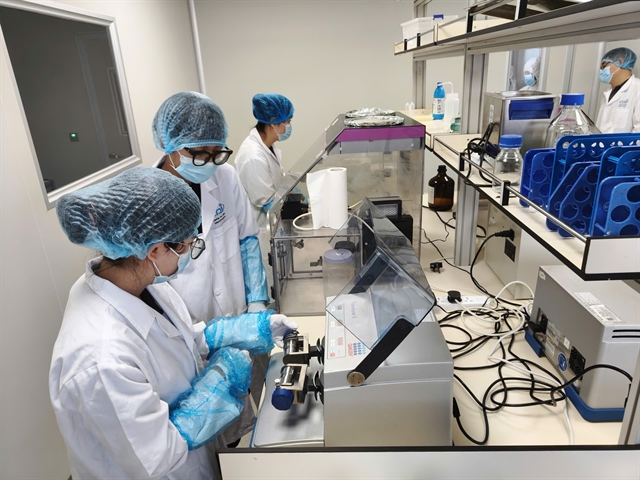 |
| After cleaning, a bone sample is ground into fine powder under sterile conditions in a specialised biosafety cabinet inside the clean room before DNA extraction. VNS Photo Khánh Linh |
The work is painstakingly slow. To ensure complete traceability, every sample receives a unique identifier. Every stage, from cleaning and grinding to sequencing and data analysis, is digitally recorded and can be traced throughout the entire process.
"Only when all scientific criteria are met can the result be used as evidence for identification," Dung said.
The centre is expected to conduct more than 6,600 analyses of soldiers' remains during the 500-day campaign, placing enormous pressure on the laboratory's scientists. Yet Dung said motivation had gone far beyond science.
"We are racing against time to complete the work. What keeps me in this profession is my love for science, for the country, and a desire to thank the generations who sacrificed for the peace we enjoy today," she said.
Decades of hard work
The programme has also drawn the attention of the international forensic community.
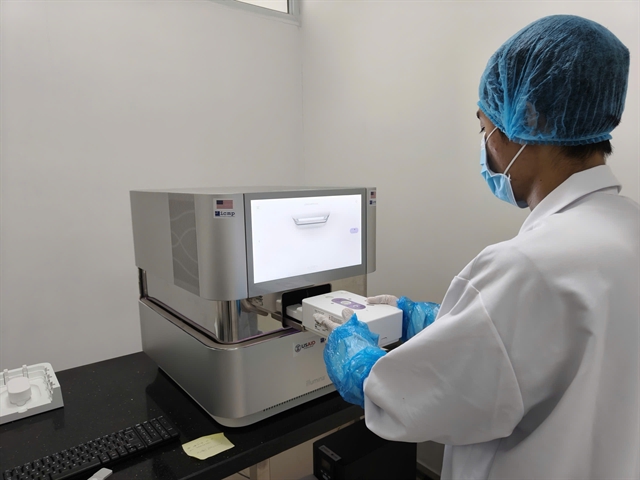 |
| DNA is extracted from the bone sample during the final laboratory stage, a crucial step in determining whether the sample can be genetically analysed. VNS Photo Khánh Linh |
Thomas Parsons, senior scientific adviser to the International Commission on Missing Persons and a professor at the College of Health Sciences at VinUniversity, who has been advising the DNA Identification Centre, said Việt Nam was entering a new phase in its decades-long effort to identify missing war dead.
"The Government has prioritised DNA identification of the missing for many years. Now there are new technological advances that broadly open new capabilities, and Việt Nam is working hard to implement them on a large scale," Parsons said.
He noted that identifying missing martyrs in Việt Nam remained one of the world's most difficult forensic challenges because decades of exposure to heat, humidity and microbial activity leave DNA heavily degraded, while the large number of missing soldiers and limited identification records further complicate the work.
"By committing itself to this major programme of human identification based on cutting-edge scientific methods, Việt Nam is emerging on the international centre stage of forensic science innovation and practice," he said.
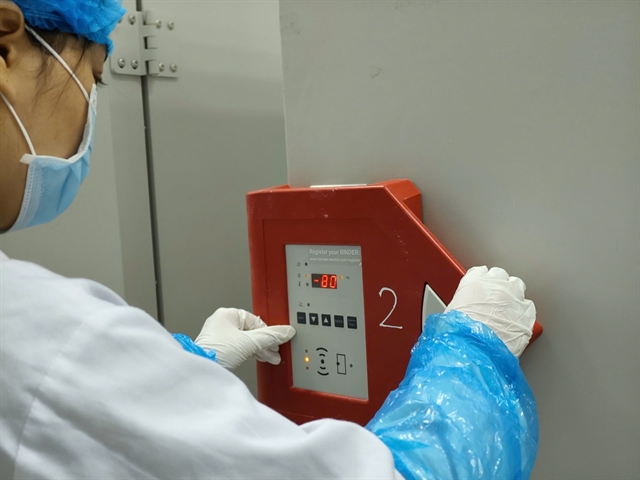 |
| Processed DNA samples are stored in specialised freezers at -80°C before being used for genetic matching. VNS Photo Khánh Linh |
For Thành and his colleagues, helping restore the identities of those who died for the country and returning them to their families through scientific evidence is both a professional responsibility and a profound honour.
"Each successful identification not only brings joy to a family, but also gives us the motivation to continue this extraordinary mission," he said.
Back inside the clean room, another fragment of bone waits for examination. To most people, it is simply a remnant of a war that ended more than half a century ago.
To the scientists working here, it may still contain a name.
And for someone, somewhere, that name may be the one they have been waiting decades to hear. — VNS
Society
 Society
 Society
 Society
 Society
 Society
 Society
 Society
 Society
 Society
 Society
 Society
 Society
 Society
 Society