 Society

Dream of the visible 1300 years of history in the heart of Hà Nội starts to take shape
1.
|
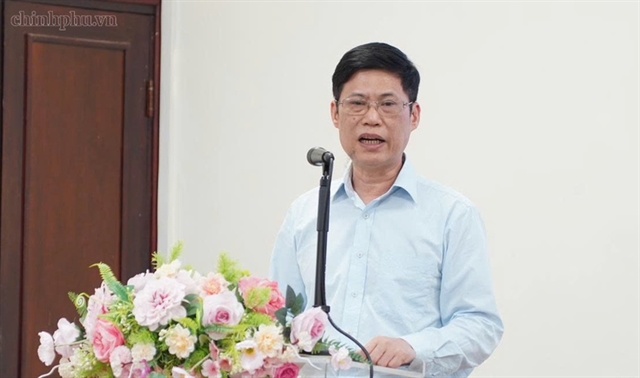
| Nguyễn Thanh Hưởng, head of Risk Management and Compliance Supervision at Petrovietnam, delivers a speech at a seminar in Hà Nội on Wednesday. — Photo baochinhphu.vn |
HÀ NỘI — Việt Nam must work to guarantee energy security wherever development takes place, according to Nguyễn Thanh Hưởng, head of Risk Management and Compliance Supervision at the Vietnam National Industry - Energy Group (Petrovietnam).
Hưởng made the recommendation at a seminar titled 'Energy Security – a pillar of national security amid non-traditional security risks' held in Hà Nội on Wednesday morning.
For the energy sector and Petrovietnam, energy security should be integrated from the very beginning of strategy formulation and investment planning to technology selection and operational organisation, Hưởng said.
He went on to say that infrastructure expansion must go together with reserve capacity and recovery capabilities; digital transformation must be linked with the protection of control systems, data and cyberspace; and integration must go hand in hand with self-reliance and the protection of national interests.
The seminar was jointly organised by the Institute of Non-Traditional Security Studies under the University of Economics and Business, Việt Nam National University Hà Nội, the Government's Information and Communications Department and Petrovietnam.
It aimed to clarify immediate and long-term risks facing Việt Nam’s energy security, while proposing solutions and risk management strategies for State management agencies, corporations, State-owned enterprises and businesses operating in the energy sector.
Hưởng also said that energy security today must be viewed as part of an overall national security framework, closely linked with economic, financial, technological, cyber, data, environmental and human security.
“The energy transition must be safe and orderly, and avoid creating new forms of dependence,” he added.
Việt Nam needs to develop a greener and cleaner energy system while ensuring sufficient supply, reasonable prices, stable operations, reserve capacity and gradual mastery of domestic industries and technologies, Hưởng noted.
The energy transition does not mean an immediate abandonment of traditional energy sources, but rather a rational restructuring of the energy mix, efficient use of resources and the development of gas, liquefied natural gas, renewable energy, clean fuels, energy storage and new technologies.
A strong shift is needed to move from responding to incidents to proactively managing risks and building resilience, the Petrovietnam representative said.
He added: "In the new era, energy security is not only about protecting what we already have, but also about creating an environment for rapid and sustainable national development and preventing the country from being caught off guard by unexpected changes.
"A strong energy system is not merely one with large capacity, but one that ensures sufficient energy supply, withstands crises and recovers quickly after shocks," he said.
Ensuring energy security is essentially about safeguarding the country’s development space.
For Petrovietnam, the responsibility is not only to maintain the flow of energy, but also to contribute to sustaining production, promoting growth, ensuring social stability, protecting national sovereignty and strengthening confidence in the future, Hưởng noted.
Meanwhile, Deputy General Director of the Vietnam Refining and Petrochemical Corporation Mai Tuấn Đạt recommended that Việt Nam diversify crude oil sources, improve refinery flexibility, build a resilient national energy security model and establish early warning systems for supply chains.
He also said the country should support investment in green technologies, biofuels, sustainable aviation fuel and emissions reduction.
In another address at the seminar, Đặng Quang Hùng from the PetroVietnam Fertiliser and Chemicals Corporation said the country needs to improve early warning mechanisms and carbon policies, ensure stable gas supplies for production and accelerate green transformation, digitalisation, risk management and cybersecurity.
It should strengthen coordination between the State, Petrovietnam and enterprises as well, he said.
Trần Việt Thắng, deputy head of the Risk Management Strategy Division at the Vietnam Petroleum Exploration and Production Corporation, said Việt Nam should adopt portfolio-based risk management instead of addressing each incident separately, while strengthening financial capacity, personnel and governance capabilities to improve resilience.
“Resilience does not mean the ability to avoid every shock, because that is impossible in an uncertain environment,” he said, adding that resilience means the ability to absorb shocks, maintain essential functions and recover quickly.
“That is the value that risk management contributes to energy security.”
|
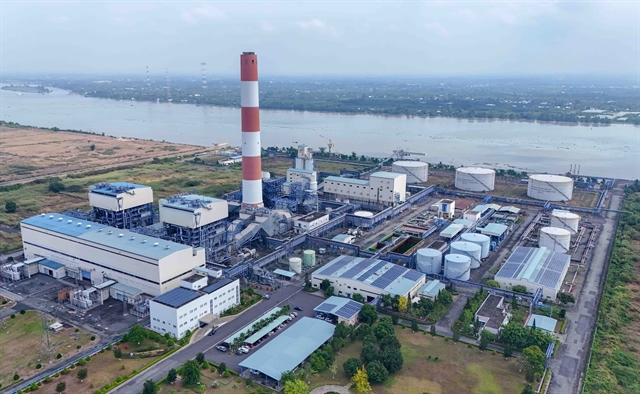
| A thermal power energy project in the southern city of Cần Thơ. — VNA/VNS Photo |
Challenges ahead
Hưởng pointed out that energy is the foundation of development, national defence and security, while current risks are becoming increasingly interconnected and amplified.
Geopolitical conflicts, supply chain disruptions, climate change, technological competition, cyberattacks and the global energy transition are simultaneously posing major challenges to the security and resilience of every country, he said.
Đạt said that as the world faces increasingly complex non-traditional security risks, energy security is no longer simply a matter of supply availability, but also depends on processing capacity and the resilience of the entire system.
Meanwhile, Hùng said the relationship between energy security, food security and economic security is under growing pressure from geopolitical developments, supply chains, climate change, green transition requirements and cybersecurity risks.
The three pillars of security are inseparable, he said, adding that a proper understanding of their relationship is the starting point for all policies and response measures.
Thắng identified six major risk groups currently affecting energy security: geopolitical fluctuations and maritime disputes; strategic competition over resources; disruptions to equipment and technology supply chains; energy price volatility; climate change; and cybersecurity threats.
“These risks do not exist independently,” he noted.
A geopolitical conflict can simultaneously trigger price volatility, disrupt equipment supply chains and constrain investment resources.
They must therefore be managed as an interconnected risk portfolio rather than addressed separately as individual events, he said. — VNS
Society
 Society
 Society
 Society
 Society
 Society
 Society
 Society
 Society
 Society
 Society
 Society
 Society
 Society
 Society