 Society

Sơn La holds second coffee festival, targeting stronger businesses in future
1.

|
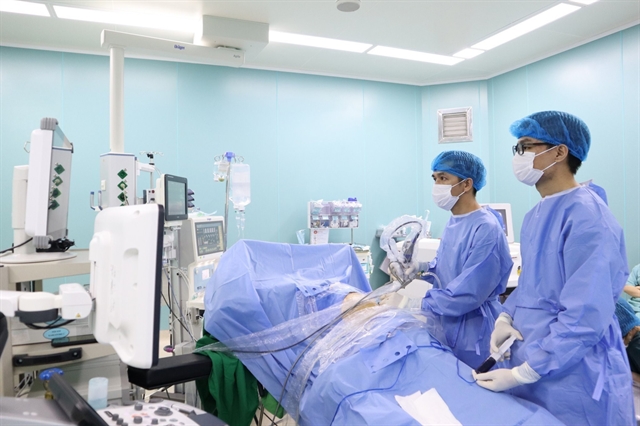
| Doctors and medical staff at the intensive care unit of Việt Đức Hospital in Hà Nội. Long shifts and heavy workloads are the root cause of burnout and other mental health issues found in medical workers. — VNA/VNS Photo Minh Quyết |
HCM CITY — A significant number of medical practitioners suffer from burnout and other mental health issues, but negative judgements about these issues are holding them back from seeking professional help.
Studies on Vietnamese healthcare workers post COVID-19 showed that occupational burnout occurred in 30-58 per cent of those surveyed, and depression and anxiety were reported by between 20-50 per cent.
However, few workers seek professional help as they believe there are stigma and misconceptions against the conditions, according to Dr Nguyễn Văn Vĩnh Châu, deputy director of HCM City’s Department of Health.
The issues were discussed during the recent annual conference of the Hồ Chí Minh City Medical Association, Tuổi trẻ (Youth) newspaper reported.
Speaking at the conference, Dr Châu stressed that despite taking responsibility for patients’ health, health workers often neglect their own health and endure illnesses by themselves, including mental trauma.
"[They] seem to suffer from the syndrome of 'physician invincibility', believing that they are healers who can treat everyone, and healers don’t get sick,” he said.
“Especially with mental illness, similar to the general public, they still associate mental health issues with ‘madness’ or ‘insanity,’ and therefore, deny having those problems.”
According to a recent survey conducted by the department on barriers to accessing mental healthcare for healthcare workers, nearly 41 per cent of those surveyed said they would turn to their mother or partner when they need mental health support, not a psychologist, Châu added.
A psychological counselling clinic was established for healthcare workers and medical staff at the city’s Hospital for Tropical Diseases in 2016-17, but almost no one had sought help there since its opening, he said.
Deep-rooted problems
The root cause of burnout in healthcare workers is the system’s overload, according to Châu.
Long shifts and heavy workloads are common, while there’s often not enough staff at medical facilities as recruitment can’t keep up with the staff turnover.
"Apart from that, healthcare workers are often exposed to illness, injury and death, especially those working in intensive care units," he said.
Societal expectations also add to the pressure.
“People often think that they are the ‘angels in white’ that will cure them and that they can’t get sick,” said Châu.
To help medical workers take better care of themselves, multi-layered solutions are needed, he added.
At the individual level, they must be equipped with self-care skills and skills for coping with psychological trauma, stress and depression.
At the professional service level, there must be more psychological and psychiatric support services designed specifically for healthcare workers, and confidentiality must be maintained.
“At the organisational level, the leadership culture that assumes ‘no employees in my unit have mental health problems’ needs to be eliminated,” Châu said.
At the societal level, policies should be developed, social resources mobilised, and workplaces designed to help medical professionals address these issues.
"One thing for sure is that burnout in healthcare workers is not just an individual failure; it’s a systemic problem," said Châu.
There are over 850,000 medical practitioners working in more than 70,000 medical facilities nationwide, according to data released in October 2025 by the Ministry of Health’s Department of Medical Service Administration.
The doctor-to-population ratio stood at 15 doctors per 10,000 people by the end of last year, which is set to increase to 15.3 doctors per 10,000 people this year.
According to a 2023 report by the ministry, about 15 per cent of the total population – equivalent to about 15 million people – suffers from at least one of the 10 most common mental disorders.
People suffering from depression account for 2.8 per cent of the total, those with anxiety 2.6 per cent, schizophrenia 0.4 per cent, and substance abuse 4-5 per cent. — VNS
Society
 Society
 Society
 Society
 Society
 Society
 Society
 Society
 Society
 Society
 Society
 Society
 Society
 Society
 Society