 Society
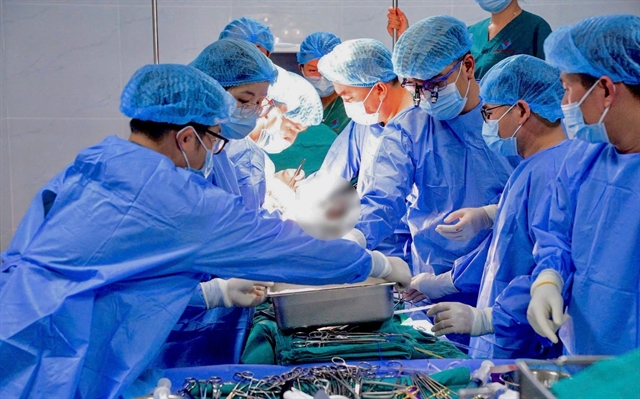
Kidney transplant succeeds after 1,800km journey across Việt Nam
1.
|
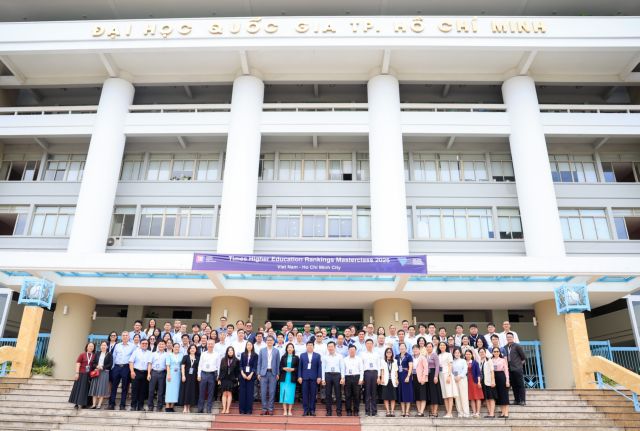
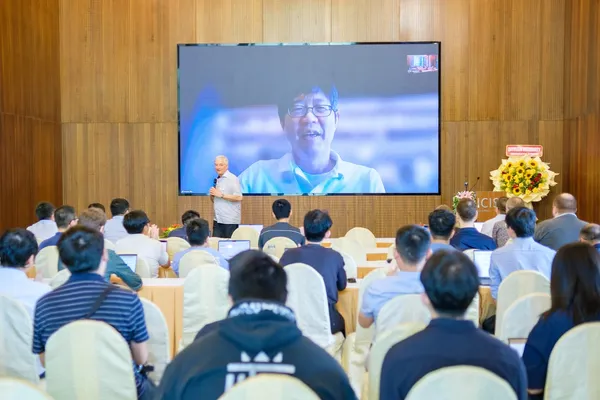
| Delegates from the Việt Nam National University–HCM City member universities, Times Higher Education, and various higher education institutions attend the workshop on July 17. — Photos Courtesy of VNU–HCM |
HCM CITY — Việt Nam National University–HCM City (VNU–HCM), in collaboration with Times Higher Education (THE), hosted the "THE Rankings Masterclass 2026" on Friday to explore international higher education trends and bolster institutional strategy.
The event, held at the VNUHCM Administration Building, attracted more than 130 delegates, including senior leadership from VNU-HCM, international experts from THE, and data and quality assurance specialists from member universities.
It also drew representatives from over 15 higher education institutions across the country, including Đà Nẵng and Cần Thơ cities, and Đồng Tháp, Vĩnh Long, and Trà Vinh provinces.
Driving quality and sustainability
As global university rankings increasingly serve as vital benchmarks for institutional prestige and international partnerships, understanding evaluation methodologies has become essential for domestic institutions.
Trần Cao Vinh, vice chancellor of VNU–HCM, said university ranking is not a race for positions, but a measurement tool for improvement.
“Our ultimate goal is to build a strong educational environment that delivers real value to students and society. When the quality of training and research is sustainably improved, good ranking results will naturally follow."

|
| Trần Cao Vinh, vice chancellor of Việt Nam National University-HCM City, speaks at the THE Rankings Masterclass 2026 on July 17. |
Puden Tsang, regional director at THE, said rankings should never be viewed as an end goal.
"Benchmarking should shape strategy, and recognition should be a spur to move us to improving rather than a finish line," he said.
"We believe data should inform your decisions instead. The focus should very much be about the quality of your research, the quality of your teaching, and in the way you contribute to society."
He highlighted VNUHCM’s distinctive position within the country's higher education landscape as one of only two national universities reporting directly to the Prime Minister.
Founded in 1995 through the merger of nine institutions, VNU–HCM has grown into a genuine anchor of the country’s research and innovation ambitions, which bridges academic research and industry via its high-tech park.
He also praised VNUHCM’s core value of community service, noting its alignment with THE’s mission to measure academic progress against the United Nations Sustainable Development Goals (SDGs).
"This is a way to shine a spotlight on a university's ability to engage with communities and tackle local development problems, an area where Southeast Asian universities, and indeed Việt Nam, shine."
Data-driven governance
The masterclass offered an in-depth analysis of global higher education metrics, focusing on three key areas: THE World & Asia University Rankings, which offers a detailed breakdown of performance indicators and methodologies for the World University Rankings (WUR) and Asia University Rankings (AUR); THE Impact Rankings & SDGs, which features the introduction to the United Nations’ SDG evaluation criteria, featuring practical insights from UEH University’s highly regarded green campus initiatives presented by Dr Le Thi Hanh An, Deputy Head of the Department of Communications and Partnerships at UEH; and the Data-Driven Governance, which entails a live demonstration of the THE DataPoints platform, guiding institutions on how to leverage strategic data dashboards to identify development gaps.

|
| Mei Mei Lim, president of APAC for Times Higher Education, presents an in-depth breakdown of global university performance metrics at the workshop on July 17. |
Mei Mei Lim, president of THE Asia-Pacific, said THE’s methodologies are heavily research-intensive, with the Research Environment and Research Quality pillars accounting for nearly 60 per cent of the total WUR score.
The remaining weight evaluates Teaching, International Outlook, and Industry metrics.
The rigorous validation processes behind the rankings, which combine performance data, annual reputation surveys, and Scopus bibliometric datasets, urged Vietnamese universities to regularly review their institutional data profiles to ensure global research visibility.
Puden Tsang said having met with various universities across the country over the past week, he sees immense promise for Việt Nam to build world-class universities at a rapid but high-quality pace.
“This momentum aligns closely with national policies to strengthen research, embed digital innovation, expand international partnerships, and attract global talent.”
In his closing remarks, Vice Chancellor Vinh said international ranking criteria complement domestic educational missions by benchmarking core academic responsibilities against global standards.
He said that when they strove to improve indicators such as faculty-to-student ratios, international publications, technology transfer, and the SDGs, their lecturers and students were the first to benefit.
"These data tools are only useful when we actively apply them to our own quality improvement strategies."
The masterclass marks a concrete step forward in deepening the partnership between VNU–HCM and THE, supporting the international integration of Vietnamese higher education while affirming VNU–HCM’s commitment to sustainable development. — VNS
Society
 Society
 Society
 Society
 Society
 Society
 Society
 Society
 Society
 Society
 Society
 Society
 Society
 Society
 Society

.jpg)



