 Society

Masan’s national brands bolster global expansion
1.
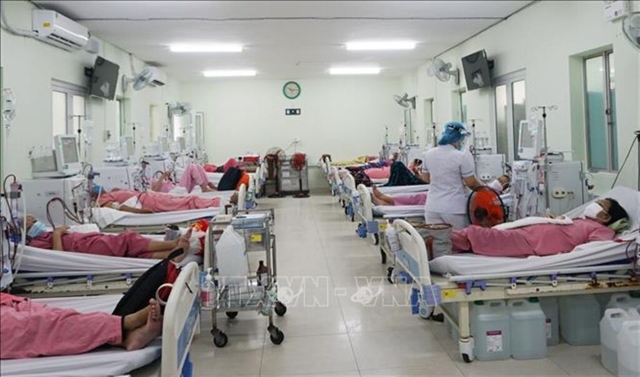 |
| Patients receive hemodialysis treatment at Chợ Rẫy Hospital in HCM City. —VNA/VNS Photo |
HCM CITY — Dialysis systems at many hospitals in HCM City are operating at full capacity but still fall short of the growing demand for treatment.
Việt Nam currently has more than 10 million people living with chronic kidney disease, accounting for 10-13 per cent of the population, according to statistics from the Ministry of Health.
Tens of thousands of these patients progress to end-stage kidney disease, requiring either hemodialysis or kidney transplants.
For patients requiring periodic dialysis, treatment costs can range from VNĐ9.6 million to VNĐ22.5 million (US$365-855) per month.
Many households must allocate the majority of their income to sustain treatment.
The Artificial Kidney Department of Chợ Rẫy Hospital in HCM City were packed with patients on June 24, with dialysis machines operating at near-maximum capacity.
As soon as a four-hour dialysis session concludes, beds and machines are quickly prepared to accommodate the next patient.
Dr. Nguyễn Minh Tuấn, head of the Artificial Kidney Department at Chợ Rẫy Hospital, said the department currently manages 427 routine dialysis patients with 74 machines.
Each day, the department performs around 220 routine dialysis sessions and around 50-75 emergency blood filtrations.
The hospital struggles to keep pace with the rapid surge in treatment demand. On average, each machine must run four sessions a day.
Thống Nhất Hospital in HCM City currently manages around 250 patients undergoing dialysis with 50 hemodialysis machines. The hospital’s department maintains three treatment shifts daily, operating continuously even on weekends, but remains unable to accommodate additional patients requiring regular dialysis.
Dr. Nguyễn Minh Quân, Deputy Head of the Nephrology and Dialysis Department at Thống Nhất Hospital, said that overcrowding is a common issue at many dialysis centres within tertiary hospitals.
This situation puts significant pressure on both patients and medical staff. Patients are forced to wake up very early or return home late at night, stay in rented accommodations, or struggle to find a hospital with available slots.
Meanwhile, doctors and nurses must work under intense pressure. Many patients unable to find medical facilities near their homes have to seek emergency care or rent accommodation in other localities to receive treatment.
Quân suggested that priority should be given to increasing investment in equipment and personnel, alongside expanding dialysis capacity at provincial and district-level hospitals.
Developing regional dialysis centres, standardising procedures, and training personnel will help patients receive treatment closer to home and reduce the burden on tertiary hospitals, he said.
Organ donation from brain-dead donors is crucial to expanding the source of kidney transplants, he said.
In the long term, the most effective solution remains early detection and prevention of chronic kidney disease, he added.
Experts attribute the primary cause of the surge in chronic kidney disease to the rapid increase in non-communicable diseases such as hypertension, diabetes, and cardiovascular disease, which are leading risk factors for chronic kidney disease.
In addition, unhealthy lifestyle habits, including physical inactivity, prolonged high-salt diets, and the overuse of painkillers, are also contributing significantly to the risk of kidney damage. — VNS
Society
 Society
 Society
 Society
 Society
 Society
 Society
 Society
 Society
 Society
 Society
.jpg) Society
Society
 Society
 Society
 Society