 Society

SBV to curb property price inflation, enforce lending rate rules
1.
|
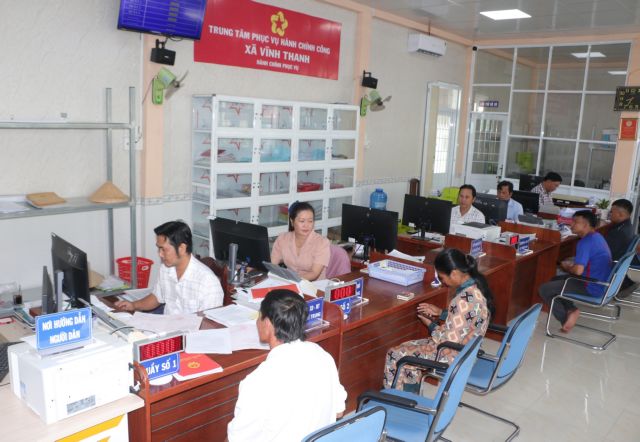
| The Vĩnh Thanh Commune Public Administrative Service Centre in Cà Mau Province has been upgraded with modern facilities to better serve residents. The province is accelerating administrative reform alongside digital transformation. — VNA/VNS Photo |
CÀ MAU — The southernmost province of Cà Mau is accelerating digital transformation under the Politburo’s Resolution No. 57, achieving progress in governance, public services and socio-economic development through technology and innovation.
More than a year after the Politburo issued Resolution No. 57 on breakthroughs in the development of science, technology, innovation, and national digital transformation, the southernmost province has recorded notable progress in building digital infrastructure, reforming administrative procedures and expanding digital services.
At a conference on June 22 to review 18 months of implementing the resolution, the province Department of Science and Technology reported that with the motto “Breakthrough action, widespread impact”, the province has completed 143 of the 273 assigned tasks set under the resolution, achieving more than 52 per cent of its planned targets.
More than 97 per cent of administrative dossiers are now processed on time, while all administrative procedures are publicly disclosed in accordance with regulations.
In 2025, Cà Mau ranked 20th among 34 provinces and cities nationwide in the Satisfaction Index of Public Administrative Services, which measures citizen satisfaction with state administrative services.
Telecommunications infrastructure has become one of the province’s key strengths.
Broadband internet and telecommunications services now cover 100 per cent of the population.
All hamlets and residential areas have been connected to fibre-optic networks, creating favourable conditions for digital transformation from provincial to grassroots levels.
Several digital transformation models are already delivering tangible results.
|
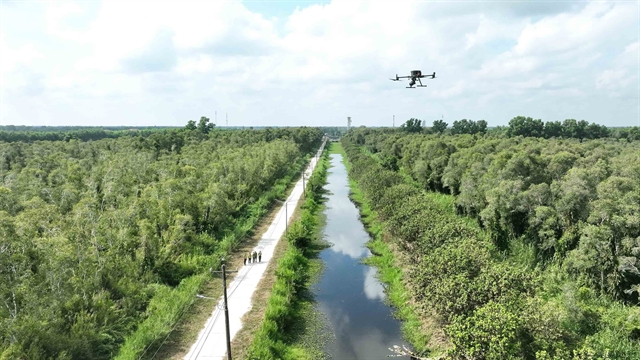
| Forest rangers use drones to monitor U Minh Hạ National Park. Cà Mau Province is expanding the application of technology in forest management and protection. — VNA/VNS Photo |
According to the province Department of Agriculture and Environment, the implementation of Resolution No. 57 has been integrated with agricultural restructuring, environmental protection, climate adaptation and sustainable rural development programmes.
The agriculture and environment sector is also building interconnected databases and information systems while gradually applying cloud computing, Big Data, Artificial Intelligence (AI) and the Internet of Things to agricultural production monitoring, natural resource management and disaster forecasting.
All erosion-prone sites across the province have been digitised, allowing authorities to strengthen monitoring, provide early warnings and respond more effectively.
In the collective economy sector, agricultural authorities have supported the development of effective co-operative models.
A total of 20 co-operatives received support this year, including five that were assisted in applying information technology and digital transformation solutions.
|
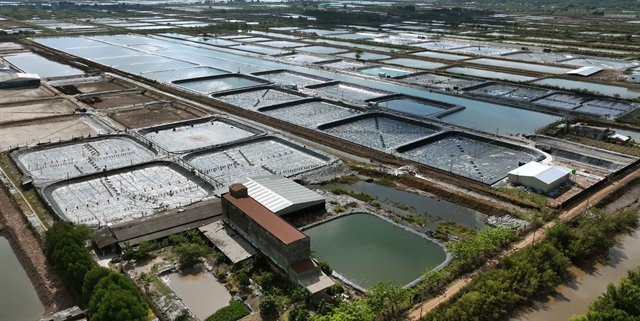
| A commercial shrimp farming zone in Vĩnh Hậu Commune applies a recirculating super-intensive farming model with minimal water exchange and strict biosecurity. Cà Mau Province is prioritising high-tech shrimp breeding, with the goal of becoming Việt Nam’s shrimp industry hub. — VNA/VNS Photo |
In culture, sports and tourism, local authorities have developed a Smart Tourism mobile application and digitised many tourist sites using 360-degree imaging and virtual reality technology.
These solutions allow visitors to explore destinations online and learn about attractions before travelling.
Despite the progress, the province faces several challenges, including a shortage of high-quality human resources, limited investment capital and uneven digital skills, particularly at the grassroots level.
Provincial leaders have therefore urged sectors to strengthen workforce training, mobilise investment resources, accelerate the application of core technologies such as AI and real-time data management, and promote technology transfer.
Digital inclusion
To further implement Resolution No. 57, the province People's Committee on March 24 issued Plan No. 153, outlining key tasks for the next phase.
The plan focuses on comprehensive digital transformation in state agencies, promoting science, technology and innovation as growth drivers, increasing investment in digital infrastructure and shared data platforms, and expanding the “Digital Literacy for All” movement.
It also includes a public investment programme for science, technology and digital transformation during 2026–30, along with policies to support high-tech enterprises and innovative start-ups.
The province is placing strong emphasis on bringing digital transformation closer to local communities.
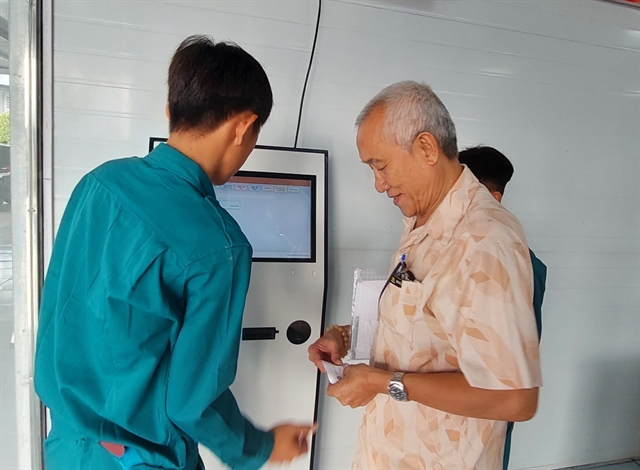
|
| A staff member at the Phong Thạnh Commune Public Administrative Service Centre guides a resident in registering for online public services. — VNA/VNS Photo |
In late May, U Minh Commune became the province’s first locality to launch the “Digital Waves of U Minh” campaign in response to Resolution No. 57.
The initiative aims to help residents access and effectively use digital technologies in learning, work, agricultural production, business activities and online public services.
The commune also introduced programmes such as “Old Phones – New Value”, “Zero-Cost SIM – Instant Connection”, “Digital Literacy for All” and “One Youth Union Member Supports One Household” to improve digital skills within the community.
Huỳnh Khánh Duy, Deputy Chairman of the U Minh Commune People's Committee, said: “Digital transformation is no longer a task solely for state agencies or businesses. It has become an inevitable requirement across all areas of social life.”
“With the theme ‘Digital Waves of U Minh’ and the message ‘Digital transformation from the heart – Leaving no one behind’, we hope to spread the spirit of digital transformation to every citizen, household and business,” he said.
The province is also linking administrative reform more closely with digital transformation.
In 2026, Cà Mau aims to improve its rankings by at least two places in the Public Administration Reform Index, the Satisfaction Index of Public Administrative Services and the Provincial Competitiveness Index compared with 2025.
It also targets providing online public services for all eligible administrative procedures and integrating all full and partial online public services into the National Public Service Portal.
It is accelerating the implementation of the Prime Minister’s Decision No. 06, issued on January 6, 2022, expanding the use of VNeID electronic identification accounts and strengthening data connectivity among information systems.
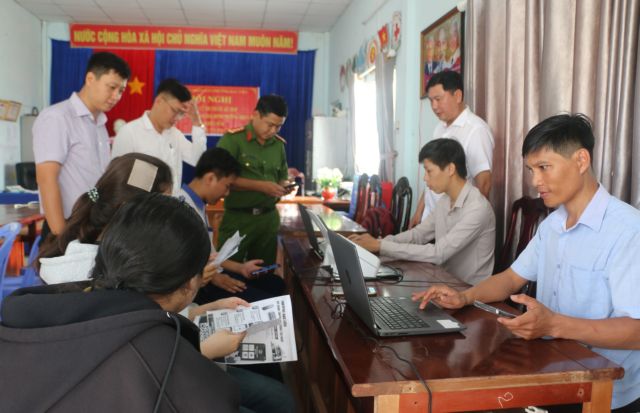
|
| Officials of Bạc Liêu Ward assist students in using online public services at the residential quarter No. 2 office. On June 10, the Bạc Liêu Ward People's Committee launched the “Digital Model at the Grassroots Level” initiative. Bạc Liêu Ward is one of 20 communes and wards selected by Cà Mau Province to pilot the model. — VNA/VNS Photo |
Nguyễn Hồ Hải, Secretary of the Province Party Committee, said agencies and localities had made significant efforts in implementing Resolution No. 57 through a range of effective models.
“Science and technology, innovation and digital transformation are no longer supporting solutions. They are now the decisive driving force and the key to national development,” he said.
He called on agencies and local authorities to continue to renew their thinking and actions, taking practical results and the satisfaction of people and businesses as measures of effectiveness.
“Leaders and officials at all levels, especially heads of agencies and units, must be pioneers who dare to think, act and take responsibility. They must be committed to turning digital goals into reality in their agencies and localities through practical actions rather than formalities,” he said. — VNS
Society
 Society
 Society
 Society
 Society
 Society
 Society
 Society
 Society
 Society
 Society
 Society
.jpg) Society
Society
 Society
 Society