 Society
SBV to curb property price inflation, enforce lending rate rules
1.
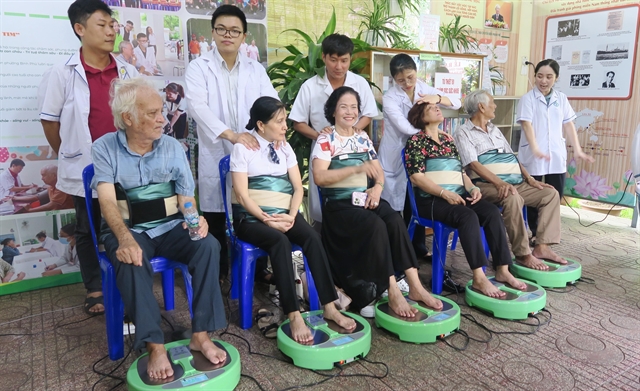 |
| On June 6, 2026, the People's Committee of Bình Phú Ward in HCM City launched a community center for the elderly to create a place for activities and interaction for the elderly in the area. This is the first community center for the elderly in HCM City and is also one of the solutions to care for the health and spiritual life of the elderly people. — VNA/VNS Photo |
HÀ NỘI — The Ministry of Home Affairs has asked ministries, sectors and local authorities to review and develop policies aimed at fostering Việt Nam's “silver economy”, seeking to turn the country's rapidly ageing population into a driver of sustainable economic growth.
In an official dispatch sent to ministries, provincial authorities, the Việt Nam Fatherland Front and the Việt Nam Association of the Elderly, the ministry requested a comprehensive assessment of existing mechanisms and the formulation of new policies, programmes and plans for developing the silver economy through 2030, with a vision to 2045.
The initiative follows Government Resolution No. 109/NQ-CP issued in April, which updated the Government's action programme to implement the 14th National Party Congress Resolution and the socio-economic development strategy for 2026–30.
Authorities have been asked to focus on two major areas: evaluating current policies related to the silver economy and proposing new measures and initiatives to support its development.
The review will examine policies concerning employment, healthcare, financial and insurance services, social security, culture, tourism, sports, digital inclusion and infrastructure for older people.
Agencies are also expected to assess public awareness of the silver economy, demographic trends, the quality and structure of the ageing population and the labour market participation of older citizens.
The ministry said that, alongside achievements, authorities should identify shortcomings and bottlenecks that have hindered the development of the silver economy.
Based on the findings, ministries and localities are expected to propose policy adjustments and new initiatives in areas such as finance, investment, business development, labour, healthcare, education, technology and infrastructure.
According to the Việt Nam Association of the Elderly, the silver economy has emerged as a global development trend as populations age rapidly worldwide.
Data from the United Nations Population Fund shows that around 58 million people "join" the elderly demographics each year globally, and the number of older persons is expected to more than double by 2050. Global life expectancy is projected to reach 73.5 years in 2025, while the population aged 80 and above is growing the fastest.
Việt Nam officially entered the ageing phase in 2011 and is among the countries experiencing one of the world's fastest demographic transitions.
The country currently has around 17 million elderly people, including more than nine million who remain economically active through household businesses, family farms and small enterprises. Tens of thousands of businesses and farms are owned and operated by older people, making significant contributions to economic growth and job creation.
Officials said the ageing trend presents both challenges and opportunities, increasing pressure on social welfare systems while also creating new markets and opportunities for innovation and sustainable development. — VNS
Society
 Society
 Society
 Society
 Society
 Society
.jpg) Society
Society
 Society
 Society
 Society
 Society
 Society
 Society
 Society
 Society