 Society
SBV to curb property price inflation, enforce lending rate rules
1.
.jpg)
|
| Forces from An Giang Province during the mission to identify and repatriate remains of fallen Vietnamese soldiers in Cambodia. — VNA/VNS Photo |
HÀ NỘI — The Ministry of National Defence has recovered 1,255 remains of fallen soldiers in the first six months of this year, including 314 sets of remains in Việt Nam, 173 in Laos and 768 others in Cambodia, as well as uncovering three mass graves in Tuyên Quang Province.
These figures were revealed on Thursday at a conference of the National Steering Committee for the Search, Recovery and Identification of Fallen Soldiers' Remains to review its performance in the first half of 2026 and outline key tasks for the rest of the year.
The ministry has mobilised 24 teams in charge of searching and repatriating remains in Laos, Cambodia and Việt Nam.
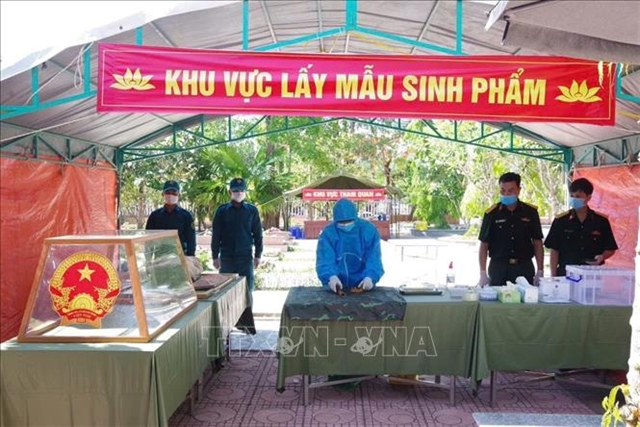
Alongside search and recovery efforts, the collection of samples from fallen soldiers' remains and biological samples from their relatives has been identified by the ministry as a key task to support identification through DNA technology.
The defence ministry has issued procedures for the collection, transportation, transfer, preservation and storage of samples from fallen soldiers' remains and has organised nationwide training programmes for the process.
To date, all seven military regions have completed the initial phase of sample collection from more than 15,400 martyrs' graves.
A total of 297 sampling teams, involving over 3,600 personnel, have been established.
Authorities nationwide have collected and stored 93,464 biological samples from relatives of fallen soldiers, of which more than 53,000 have been analysed and integrated into the national database.
The Ministry of Public Security has also launched a nationwide campaign to collect DNA samples from relatives of unidentified fallen soldiers.
It has coordinated with experts to develop and refine technical standards for the collection and preservation of biological samples, while formulating a plan to expand the national DNA database and enhance DNA testing capabilities to support the identification of fallen soldiers' remains.
Deputy Prime Minister Phạm Thị Thanh Trà, head of the steering committee, said that only a few days remain before the end of the first half of 2026. This is a critical period that requires agencies and units to intensify efforts to fulfil targets set under the programme for the search, recovery and identification of fallen soldiers' remains, particularly the ongoing 500-day campaign, she noted.
According to the deputy PM, the effectiveness of these efforts must be measured by tangible results, as the task is not only a political responsibility, but also a concrete expression of Việt Nam's tradition and moral commitment to honouring those who sacrificed their lives for the nation.
Databases on fallen soldiers, martyrs' graves and cemeteries, and DNA records are being developed more rapidly to ensure data is accurate, complete, clean and continuously updated.
The office of the National Steering Committee for the Search, Recovery and Identification of Fallen Soldiers' Remains, in coordination with Viettel Group, has completed the deployment and operational launch of a software system for managing information on samples collected from fallen soldiers' remains, as well as a platform for monitoring the progress and outcomes of the 500-day campaign.
Launched on March 15, the nationwide 500-day campaign to speed up efforts to locate, identify and repatriate martyrs’ remains will last until July 27, 2027, which coincides with 80th Anniversary of War Invalids and Martyrs' Day.
The campaign looks to repatriate approximately 7,000 sets of fallen soldiers' remains to their hometowns or to martyrs' cemeteries, and conduct DNA analysis on around 18,000 samples from the remains of fallen soldiers whose identities are still unknown. — VNS
Society
 Society
 Society
 Society
 Society
 Society
 Society
 Society
 Society
 Society
 Society
 Society
 Society
 Society
 Society