 Society
Vietnamese scientist wins ASEAN-US Science Prize for Women
1.

|
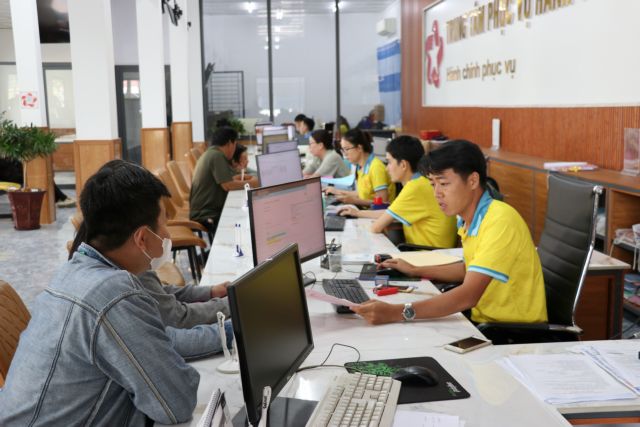
| A representative of CEP Microfinance Institution, Tân Thuận branch, advises workers at Tân Thuận Export Processing Zone on accessing loans. — VNA/VNS Photos |
HCM CITY — When her teenage son was rushed into emergency surgery after a traffic accident, garment worker T.T.T.S. faced a decision no parent should have to make.
With no savings to draw upon and bills mounting by the hour, she turned to a smartphone lending application and borrowed VNĐ20 million (US$759).
What appeared to be a lifeline soon became a trap.
Within months, interest charges and hidden fees had more than doubled the debt. Collection calls came day and night. Messages flooded her phone.
Debt collectors even tracked her down at work.
"My family lived under constant pressure," said S., who works at Tân Thuận Export Processing Zone after migrating from Cà Mau to HCM City in search of a better life.
"We couldn't focus on anything else."
Her story reflects a reality faced by thousands of low-income workers across country's largest economic hub, where rising living costs and limited financial reserves leave many households vulnerable to predatory lenders when unexpected crises strike.
For workers earning modest wages, a sudden illness, workplace accident or job loss can quickly push a family to the brink. Many resort to high-interest loans offered through mobile applications, social media platforms or informal lending networks.
The consequences can be devastating.
N.T.H.T.T., a worker at VSIP 2 Industrial Park in Bình Dương ward, knows that reality all too well.
After her husband lost his job because of deteriorating health and medical expenses for their young child continued to mount, the family borrowed money to stay afloat.
At first, the loan seemed manageable. Then the interest began to accumulate.
Debt collectors repeatedly called and threatened the family. Some even appeared at their rented accommodation.
"There were moments when I thought I would have to take my child back to our hometown because I could see no way out," she said.
A common struggle
Trade union officials say such stories are far from rare.
Behind many cases of illegal borrowing lie familiar hardships – illness, unemployment, workplace injuries or a sudden drop in income.
"When workers can no longer make repayments, lenders often target not only the borrowers themselves but also their relatives, colleagues and employers," said Nguyễn Hồng Bích, chairwoman of the trade union at Hai Thanh Co Ltd.
"The psychological pressure can be overwhelming and often affects both work performance and family life."
Loan-sharking operations have become increasingly sophisticated in recent years, exploiting technology to reach vulnerable borrowers.
According to Võ Văn Hùng, chairman of the trade union at Hansae Việt Nam in Tây Bắc Củ Chi Industrial Park, illegal lenders advertise aggressively through social media, text messages and networks operating within workers' rental communities.
"The problem is not only the debt itself," Hùng said. "It can lead to job losses, family breakdowns, labour disputes and broader social instability."
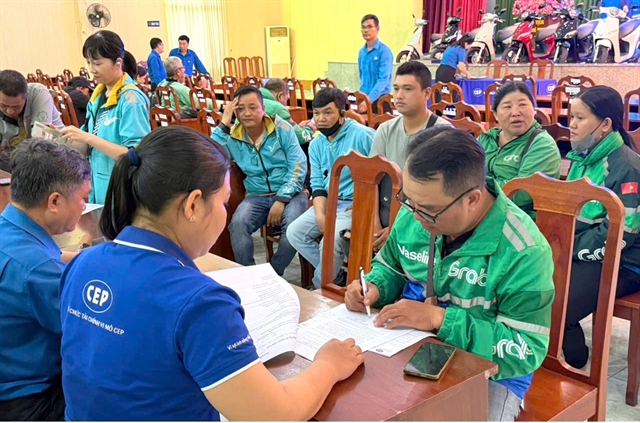
|
| A CEP Microfinance Institution representative, Bình Tân branch, counsels members of the Bình Tân motorbike taxi and ride‑hailing association on loans to convert petrol motorcycles to electric. |
Fighting the problem at its roots
Authorities say the situation has improved in recent years thanks to coordinated efforts by law enforcement agencies, trade unions and community organisations.
Police have intensified crackdowns on illegal lending rings while warning the public about evolving schemes, including app-based loans, online lending groups and debt collection services operating under the guise of legitimate businesses.
Campaigns to remove illegal loan advertisements from public spaces have also become commonplace.
Yet many labour advocates argue that enforcement alone cannot solve the problem.
The deeper challenge is ensuring workers have access to safe and affordable alternatives before financial distress pushes them towards loan sharks.
That is where CEP Microfinance Institution has emerged as an important part of the city's response.
Established by the HCM City Labour Federation, CEP provides small loans tailored specifically to low-income workers who often struggle to qualify for conventional bank credit.
Unlike many formal lenders, CEP does not require collateral. Loan procedures are simplified, and repayment schedules are designed to match workers' incomes.
For Nguyễn Phước Đại, chairman of the trade union at Juki Việt Nam, such access can make a critical difference.
"Many workers only need a few million đồng to get through a difficult period," he said.
"If they cannot obtain that money through legitimate channels, they become vulnerable to loan sharks. The consequences can be far greater than the amount they originally needed."
CEP representatives regularly visit factories, worker dormitories and rental housing areas to identify financial needs and provide advice on budgeting and personal finance.
The goal is not merely to lend money but to help workers build greater financial resilience.
More than a loan
For T.T.T.S., the support came at a crucial moment.
After being introduced to CEP through her trade union, she received a loan that allowed her to clear the high-interest debt and replace it with manageable monthly repayments.
The organisation also helped her develop a household budget and spending plan.
"Now the payments are within my means," she said.
"For the first time in a long while, I feel that my family can move forward."
According to Hoàng Văn Thành, chairman of CEP's Members' Council, the organisation currently serves more than 306,000 workers and maintains outstanding loans worth over VNĐ4.7 trillion.
Behind those figures, he said, are thousands of families that have avoided falling deeper into debt during difficult periods.
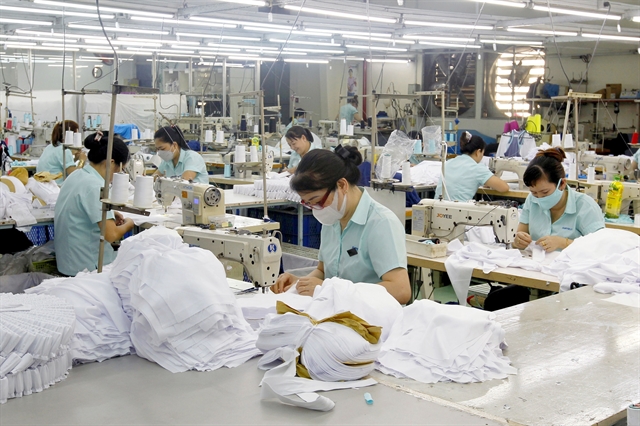
|
| Workers at AMPFIELD Co., Ltd., Tân Bình Industrial Park, HCM City. |
CEP's activities extend beyond credit. The institution also provides scholarships for workers' children, health insurance support, charitable housing and emergency assistance for families facing exceptional hardship.
CEP branches have recently teamed up with motorbike taxi associations to facilitate drivers' transition from gasoline motorcycles to electric models, as part of a larger initiative to promote workers' long-term financial stability.
Labour officials say the true impact of such programmes cannot be measured solely by the amount of money disbursed.
"When workers can access legal credit at reasonable costs, they gain stability and peace of mind," said Phùng Thái Quang, vice chairman of the HCM City Labour Federation.
"They can focus on their jobs, care for their families and plan for the future."
For many migrant workers, the difference between stability and crisis can be surprisingly small.
A loan worth only a few million đồng may determine whether a family keeps its home, maintains employment or avoids spiralling debt.
In the struggle against loan sharks, those modest sums are quietly helping build a grassroots financial safety net – one designed not only to provide emergency support but also to protect some of the city's most vulnerable workers from becoming trapped in a cycle of debt. — VNS
Society
 Society
 Society
 Society
 Society
 Society
 Society
 Society
 Society
 Society
 Society
 Society
 Society
 Society
 Society