 Society

Scenic Group Marks 40 Years with Global River & Yacht Expansion
1.
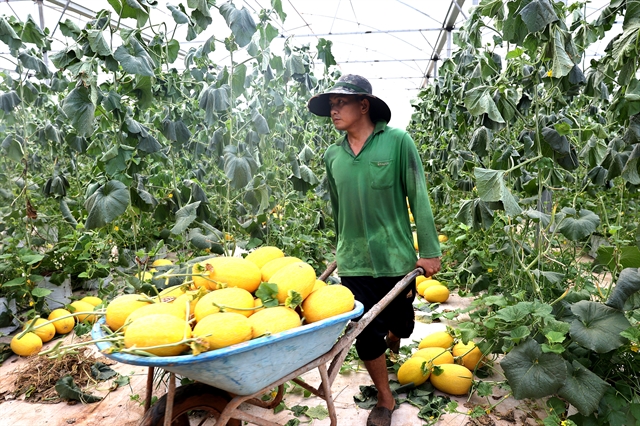 |
| Honeydew melons grown in automated greenhouses at the Long Tân Melon Co-operative in Đất Đỏ Commune are of high quality, making them increasingly popular among consumers. — VNA/VNS Photo Hoàng Nhị |
HCM CITY — Agricultural co-operatives in HCM City are restructuring production, adopting high technologies and building supply chains to increase the value of farm produce and expand export markets.
The Hắc Dịch Green-Skin and Pink-Flesh Grapefruit Co-operative in Tân Thành Ward has 40 members and links with dozens of households cultivating some 38ha of grapefruit.
Since its establishment in 2022, the co-operative has adopted a biologically safe production model and has applied advanced technologies, including automatic mist irrigation systems, a product washing area, and a packaging facility, to build a sustainable value chain.
Nguyễn Trọng Trung, the co-operative's director, said the co-operative has focused on upgrading orchards through scientific cultivation plans and modern machinery to reduce labour costs and improve productivity.
Members also share cultivation experience and apply microbial organic composting technology using livestock manure to cut costs and improve soil quality, he said.
The changes in farming methods have brought them clear benefits.
Voòng Cổng Mềnh, a member, said his family previously relied heavily on pesticides and growth stimulants, but after joining the co-operative, he switched to composted manure combined with microbial products and invested in automatic irrigation systems that save water and improve yields.
“I have learned grapefruit cultivation and care techniques from experienced farmers, and so productivity is higher. More importantly, output and prices are stable, giving farmers confidence to continue production.”
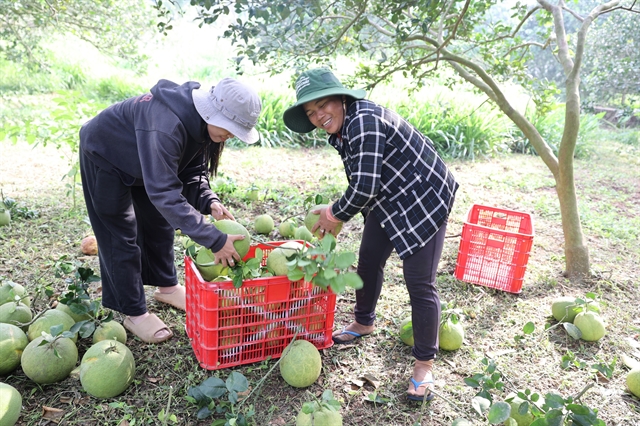 |
| Members of the Hắc Dịch Green-Skin and Pink-Flesh Grapefruit Co-operative in Tân Thành Ward harvest their fruits. — VNA/VNS Photo Hoàng Nhị |
Aquaculture co-operatives in the city have increased investments in technology to enhance production efficiency.
The Quyết Thắng Agricultural Co-operative in Long Hương Ward previously focused on traditional vegetables, rice and shrimp farming, but climate change, pollution and disease outbreaks exposed weaknesses in the model, leading to unstable productivity and high risks.
In 2019, the co-operative invested some VNĐ5 billion (US$190,000) in a super-intensive shrimp farming model using a recirculating aquaculture system, a closed-loop water filtration system operated inside greenhouse facilities.
The co-operative has allocated around 2ha to high-tech shrimp farming, with four farms and a well-planned system of sedimentation and water treatment ponds. Water is processed through several stages before entering the farming ponds to remove organic matter, heavy metals and harmful bacteria.
Thanks to the new technology, the co-operative has increased production from one shrimp crop a year in earthen ponds to three crops annually, with output reaching around 50-60 tonnes per crop across the four farms.
The co-operative uses a staggered farming model to ensure a year-round supply to the market.
Annual revenue now stands at VNĐ15-20 billion ($570,000-760,000), while profit after costs is about VNĐ8 billion ($303,000).
Nguyễn Kim Chuyên, director of the co-operative, said traditional shrimp farming previously stocked around 30 shrimp per square metre, while the high-tech model allows densities of about 500 shrimp per square metre.
“The most important factor in shrimp farming is controlling the farming environment. With high technology, the co-operative can manage this effectively, bringing major economic gains,” he said.
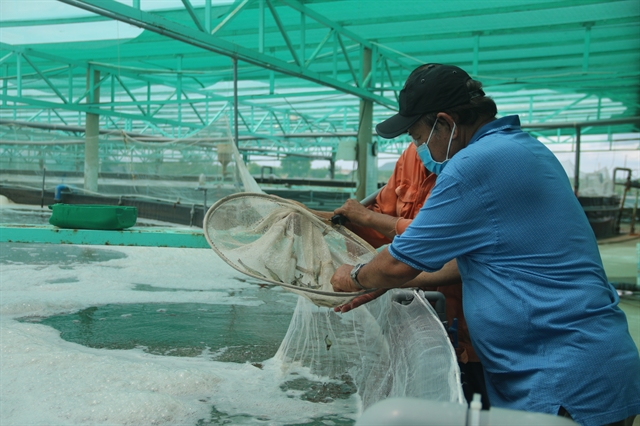 |
| Shrimp farming using high technology at the Quyết Thắng Agricultural and Service Co-operative in Long Hưng Commune. — VNA/VNS Photo Hoàng Nhị |
Alongside adopting technology, many co-operatives are building supply chains to increase product value and expand export markets.
The Châu Đức Cacao Co-operative in Bình Giã Commune is one example. From an initial 11 members farming around 60ha, the co-operative has expanded to 97 members with a total cultivation area of about 100ha.
Lê Ngọc Cần, the director, said the current output is still insufficient to meet signed orders.
“There are many partners placing orders, but supply remains limited. All harvested cacao is purchased immediately, so the co-operative’s members do not have to worry about output or prices,” he said.
The co-operative is working with businesses to build a closed production and distribution chain while investing in processed products such as chocolate, cacao powder and fermented drinks to increase added value.
The Châu Pha Agricultural Production and Services Co-operative in Châu Pha Commune is developing 55ha of vegetables grown under Vietnamese good agricultural practices (VietGAP) standards, including 20ha serving exports to the EU market.
The co-operative has adopted greenhouse systems, automatic irrigation and production management software to meet strict quality and traceability requirements.
Nguyễn Viết Tự, the co-operative's director, said the co-operative exports around three tonnes of herbs to the EU each week.
It aims to export chilli products to South Korea this year, he said.
The city currently has 316 agricultural co-operatives with 7,216 members, according to its Department of Agriculture and Environment.
Many are developing standardised cultivation areas and strengthening links with farmers and businesses to meet growing domestic and export demand.
Products from co-operatives, including seafood, grapefruits, red-flesh dragon fruit, longan, safe vegetables, VietGAP rice, honeydew melons, lingzhi mushrooms, cordyceps mushrooms, essential oils and clean pepper, are gradually strengthening their position in the market. — VNS
Society
 Society
 Society
 Society
 Society
 Society
 Society
 Society
 Society
 Society
 Society
 Society
 Society
 Society
 Society