 Society

LANDMARK Launches ‘Destination CENTRAL’: A District-Wide Invitation to Explore the Dynamism, Luxury, and Soul of Central
1.
|
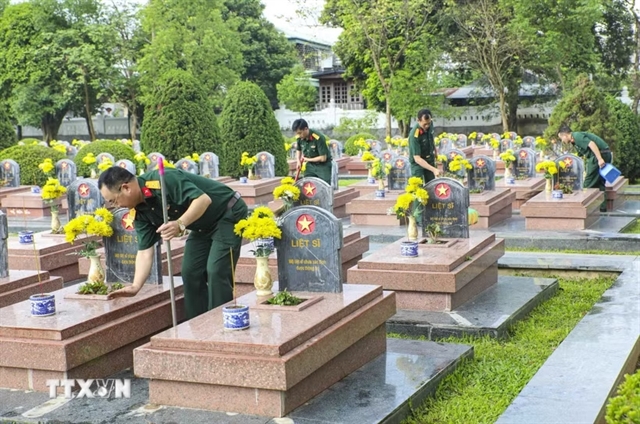
| According to the Ministry of National Defence, between March 15 and May 6, 2026, functional forces recovered 358 sets of martyrs’ remains, including 51 in Việt Nam, 36 in Laos and 271 in Cambodia. — VNA/VNA Photo |
HÀ NỘI — Deputy Prime Minister Phạm Thị Thanh Trà urged fresh ideas and better methods to enhance the search, recovery, and identification of fallen soldiers’ remains while addressing a Friday working session with the National Steering Committee's support team.
The Deputy PM noted that tasks such as decoding information, analysing data, locating mass graves and conducting DNA testing are extremely difficult and require a high level of scientific expertise. She said the complexity of the work means relevant agencies need to change their mindset and adopt new methods to achieve better results.
She recognised the standing body’s efforts in carrying out key tasks but noted that several ministries, sectors, and member agencies hadn’t fully met reporting requirements or followed coordination mechanisms, which has impacted the monitoring and evaluation of progress.
The Ministry of National Defence was requested to assign an additional 5–7 full-time officers to focus on the “500-day campaign” and complete operational regulations and plans for the support team in a more effective and clearly accountable manner.
Regarding communications, the Deputy PM requested a comprehensive strategy for the campaign, with the participation of central and local press agencies as well as digital platforms, social media and communications channels for foreign service, to highlight the campaign’s humanitarian significance.
Trà stressed the need for clear and measurable targets in each phase of implementation, asking agencies to accelerate sample collection and search activities in key areas in May and June, before the rainy season. She also demanded speeding up scientific workshops on potentially viable mass grave cases in Kon Tum, Quảng Ngãi, and Quảng Trị, so that excavation and field searches can begin promptly if conditions allow.
The Deputy PM called for faster development and deployment of software to manage the progress of the “500-day campaign” and automate reporting procedures at all levels, along with setting specific targets for DNA sample collection, archival research, dossier verification and communications activities.
According to the official, the National Steering Committee for the work will conduct a progress review, assign responsibilities and carry out inspections in localities and military zones. At least 500 sets of martyrs’ remains must be recovered and repatriated by July 27, 2026.
The “500-day campaign” to intensify the search, recovery and identification of martyrs’ remains was officially launched on April 2, 2026, and is currently entering an accelerated implementation phase.
According to the Ministry of National Defence, between March 15 and May 6, 2026, functional forces recovered 358 sets of martyrs’ remains, including 51 in Việt Nam, 36 in Laos and 271 in Cambodia. — VNA/VNS
Society
 Society
 Society
 Society
 Society
 Society
 Society
 Society
 Society
 Society
 Society
 Society
 Society
 Society