 Society
VN-Index ends lower despite liquidity hit over $1 billion
1.
|
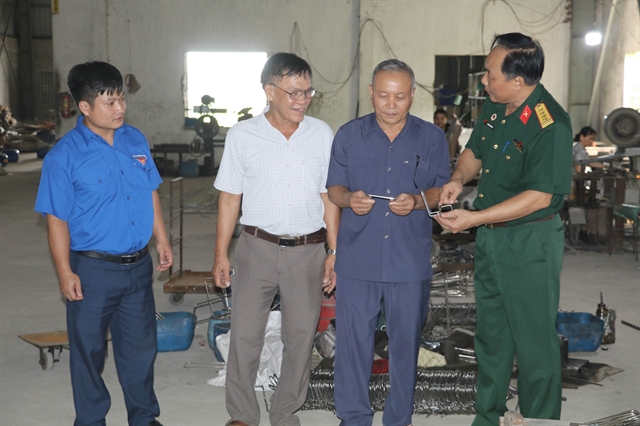
| Veteran Cao Xuân An (second left) at his mechanical workshop in Nam Trực Commune, Ninh Bình Province. |
NINH BÌNH — Former soldiers across the northern province of Ninh Bình who once stood on the front lines now lead on a different front, the economy.
With the same discipline and resolve forged in wartime, they are building businesses, transforming farmland, and creating livelihoods for their communities.
For them, peace did not mark the end of service. It simply changed the battlefield.
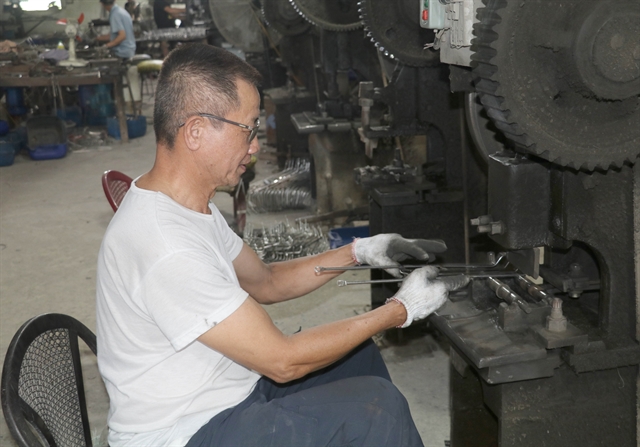
Inside a spacious workshop at the Đồng Côi Industrial Cluster, the clang of metal and the whirr of machinery fill the air. Here, veteran Cao Xuân An, 60, oversees a team of 22 workers producing components for motorbikes and electric bicycles.
Nearly four decades ago, An returned home from military service with little more than determination.
He enlisted in 1985 at the age of 19 and served in the Technical Department of Military Region 3, where he repaired and maintained ammunition and weapons. When he was demobilised in 1987, his family circumstances were modest and the rural economy offered few opportunities.
At that time, there had been nothing waiting for him except the determination to start over, he said.
Recognising the mechanical tradition of his locality in Nam Trực Commune, An began with a small household workshop handling basic repairs. The early years were marked by trial and error, long hours, and careful reinvestment of every profit.
Gradually, he expanded production, upgraded equipment and sought new technologies. The decisive step came in 2015, when he leased around 2,000sq.m of land in the industrial cluster to build a larger modern facility.
Today, the workshop produces around 30,000 items a month and generates annual revenue of roughly VNĐ15 billion (nearly US$570,000). Its products reach not only domestic customers but also markets in Laos and Cambodia.
More importantly, the enterprise provides stable jobs for residents, with monthly incomes ranging from VNĐ7 million to VNĐ15 million.
|
| A worker at Cao Xuân An's workshop. |
For Cao Văn Bính, who has worked with An for many years, the workshop is more than a workplace.
“We have stable jobs, we are trained in new techniques and we feel respected,” he told the Vietnam News Agency.
An attributes his steady growth to habits formed in the army: discipline, responsibility and attention to detail.
Nguyễn Văn Hùng, head of the Nam Trực Commune Veterans’ Association, said An is a pioneer not only in economic development but also in community engagement, regularly supporting social welfare activities and new-style rural development efforts.
Cultivating change
A short distance away in Nam Hồng Commune, another veteran has taken a very different path, from rice paddies to ornamental trees.
At the age of 20, Nguyễn Đức Hoạt enlisted in 1970 and served in Division 324, a main-force unit that took part in numerous major campaigns, including the 1972 Quảng Trị Liberation Campaign.
After national reunification in 1975, he returned to his native village, a rural area still struggling with poverty and low agricultural productivity.
At the time, his 3,600sq.m of rice fields yielded modest returns. Rather than accepting the status quo, Hoạt began searching for alternatives.
“I kept asking myself how to make the land more valuable,” he said.
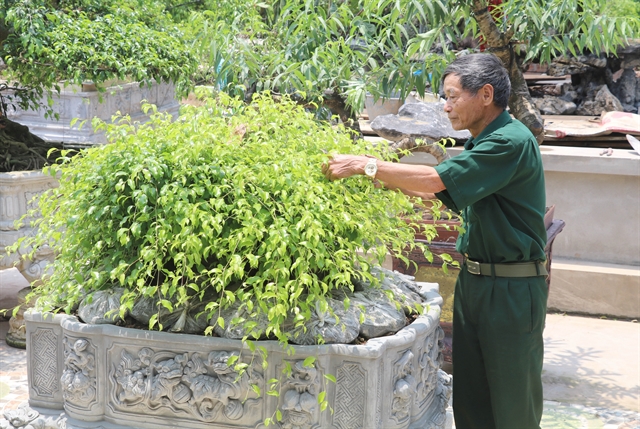
After studying ornamental plant cultivation models in and beyond the province, he made a bold decision to convert his rice fields into a garden of decorative and artistic trees, a move that many neighbours initially viewed with scepticism.
The early years tested his patience. He lacked experience, market connections and technical knowledge. Yet the perseverance shaped by his years in uniform carried him through.
Over time, the garden flourished. Many trees are now more than a decade old, carefully shaped and nurtured. Some have been valued at hundreds of millions of đồng, bringing stable income to his family.
|
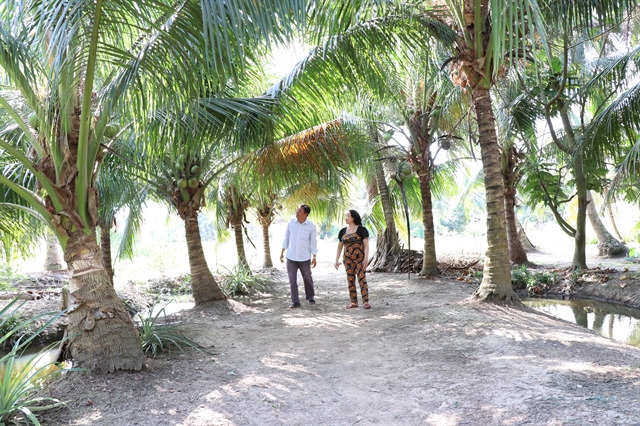
| Nguyễn Đức Hoạt with his ornamental trees. |
Hoạt’s model has encouraged other farmers to rethink traditional production patterns and consider higher-value crops.
Vice Chairman of the People’s Committee of Nam Hồng Commune, Ngô Duy Phương, said that such shifts are helping to modernise the rural economy and improve incomes.
Hoạt remains active in community affairs, encouraging residents to donate land for rural road construction, and participating in veterans’ association activities. For him, economic success and social responsibility go hand in hand.
“The army taught me never to retreat before difficulties,” he said. “In peacetime, that means not being afraid to change.”
According to local authorities, veteran-led economic models in Ninh Bình are becoming increasingly diverse, from mechanical production and handicrafts to horticulture and services. Together, they contribute to job creation, sustainable poverty reduction and the province’s broader new-style rural development programme.
Their stories share a common thread, with adversity met by resilience and opportunity seized with courage.
In workshops and gardens, former soldiers are proving that the qualities forged in hardship remain relevant long after the guns fall silent.
Their mission continues, not in uniform but in the steady work of building a more prosperous countryside. — VNS
Society
 Society
 Society
 Society
 Society
 Society
 Society
 Society
 Society
 Society
 Society
 Society
 Society
 Society
 Society