 Society
VN-Index ends lower despite liquidity hit over $1 billion
1.
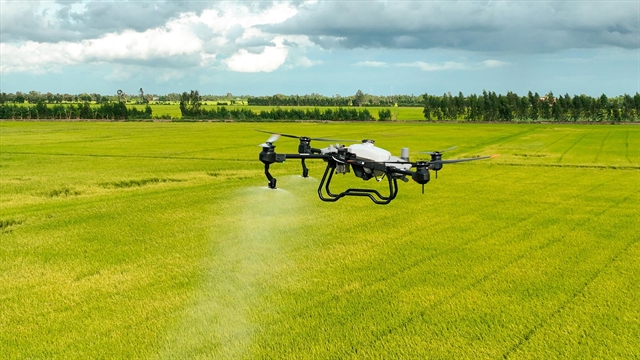 |
| A drone sprays pesticide over a rice field. — VNA/VNS Photo |
HÀ NỘI — Agricultural drones have moved rapidly from novelty to necessity across rice paddies, fruit orchards and coffee plantations, taking on jobs that once required teams of labourers and compressing days of work into hours.
The technology is showing real results: drone spraying uses up to 70 per cent less water and 50 per cent less pesticide than conventional methods while delivering equal or better pest control.
Drones also cover ground 30 times faster than manual sprayers and dramatically reduce farmers' direct exposure to hazardous chemicals.
"Before, spraying rice paddies or fruit trees took a lot of hands. Now, three to five drones can cover dozens of hectares in a single day," Phan Thanh Trung, sales director of AgriDrone JSC, told Dân Việt (People) Newspaper.
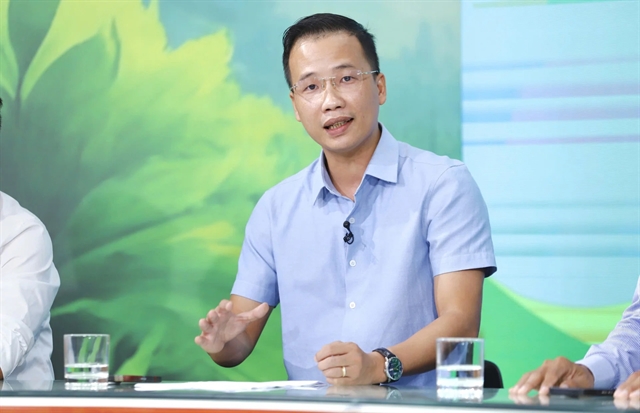 |
| Phan Thanh Trung, sales director of AgriDrone JSC. — Photo danviet.vn |
His firm is running 6,000 drone spraying teams across multiple regions – a figure that reflects just how quickly the sector has scaled up. Where drone services in the Mekong Delta once ran about VNĐ180,000 (US$6.80) per hectare, increased competition has driven prices down to roughly VNĐ120,000 ($4.60).
In the north, where plots are smaller and more fragmented, costs run somewhat higher but the economic case against manual labour is still compelling. Hiring a manual sprayer now costs around VNĐ350,000 ($13.30) per person, while a drone service runs about VNĐ400,000 ($15.20) per machine, often covering far more ground in far less time.
Phạm Văn Hướng, an award-winning farmer who heads a drone club in the northern province of Ninh Bình, said top operators at his club can treat up to 2,200ha per drone per season – the rough equivalent of 200 manual labourers.
At around VNĐ400,000 ($15.20) per hectare, a skilled drone pilot can earn a solid income. Drone teams have also become a source of stable local employment: a small operation running two or three machines typically supports five to seven jobs, creating a rural service trade that barely existed a decade ago.
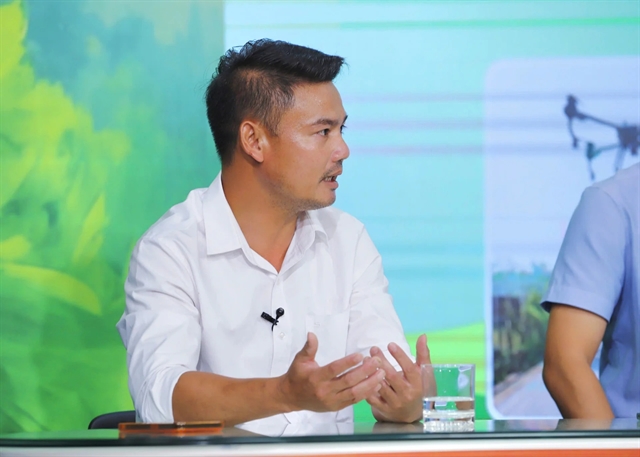 |
| Phạm Văn Hướng, an award-winning farmer who heads a drone club in the northern province of Ninh Bình. — Photo danviet.vn |
But the business carries real risks. Hướng was blunt about what happens when operators aren't properly prepared. A serious crash can result in losses exceeding VNĐ70 million ($2,700).
"Proper training is non-negotiable before anyone gets behind the controls. There are no shortcuts," he said.
Parts availability is another pressure point that can turn into a crisis. When a drone breaks down mid-season, sourcing replacement components can take five to seven days under normal circumstances, and up to 20 to 30 days when lithium batteries are in short supply.
Trung's recommendation: drone teams should maintain a stockpile of critical spare parts rather than waiting on orders. Given that roughly 80 per cent of a drone's components are sensitive electronics constantly exposed to corrosive agrochemicals and harsh outdoor conditions, proactive maintenance isn't optional.
Drone spraying is also more sensitive to weather conditions than manual application. Wind, heat and rain all affect how droplets reach the crop canopy.
Huỳnh Văn Nghi, who represents CropLife Vietnam's drone working group, recommends flying in the early morning or late evening, when temperatures are cooler and wind speeds are lower. Night operations are actually well-suited to drones equipped with GPS positioning and lighting systems, he added.
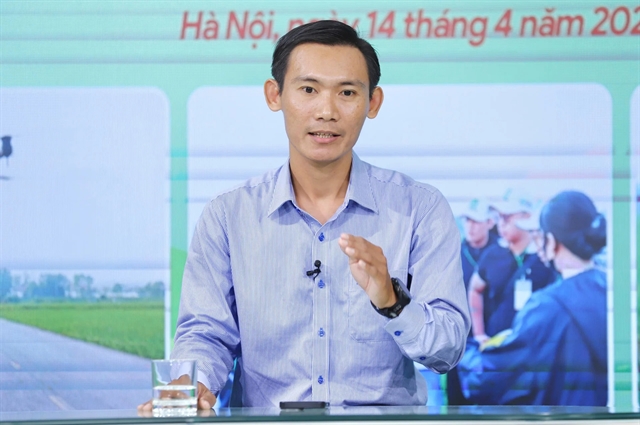 |
| Huỳnh Văn Nghi, who represents CropLife Vietnam's drone working group. — Photo danviet.vn |
Liquid formulations – solutions, emulsifiable concentrates and water-based products – work best; powders risk clogging nozzles and distributing unevenly.
Flight altitude matters too. For rice, the standard guidance is 1.8m to 2m above the top of the plant. Flying lower risks flattening stalks with rotor wash, particularly during the heading stage when the grain is most vulnerable.
Head of pesticide management at the Plant Production and Protection Department Bùi Thanh Hương said that these technical details all fall under what Vietnamese agricultural officials call the 'four rights' principle: the right chemical, at the right concentration and dosage, at the right time, and in the right way.
"Whether you're spraying by drone or by hand, those four principles don't change," she said.
 |
| Bùi Thanh Hương, head of pesticide management at the Plant Production and Protection Department. — Photo danviet.vn |
The regulatory environment is also maturing. Government Decree 288, which took effect in November 2025, established the most comprehensive legal framework for civilian drone operations.
All drones must now be registered and assigned an identification code. Operators are required to hold a pilot's licence and must be at least 18 years old, physically fit and sober while flying. Flight zones must be declared with the relevant authorities before each operation.
Trung called the decree a positive step.
"It gives the industry a clear legal foundation to grow. Compliant teams should maintain full documentation: the drone's origin and registration, the operator's credentials, flight logs and seasonal records," he said.
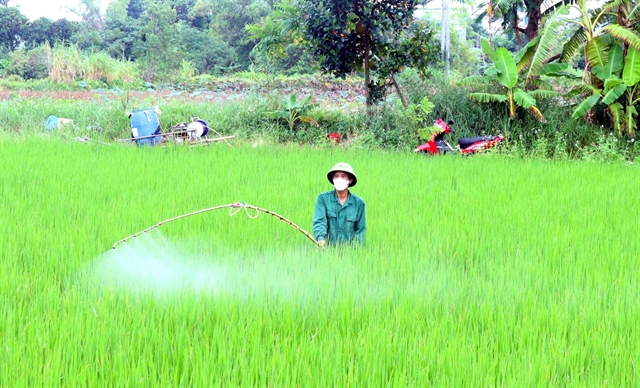 |
| A farmer sprays pesticide using a traditional backpack sprayer, a method experts say exposes workers to far greater chemical contact than drone application. — VNA/VNS Photo |
Trung said safety starts with where you fly. Operating near highways, residential neighbourhoods or anywhere with heavy foot traffic is a clear violation of basic safety principles, and operators who do so have no one to blame but themselves.
"If that situation occurs, the operator has done something wrong," he said.
One structural solution gaining traction is the formation of local drone clubs and cooperative spraying teams. Trung argued these groups do far more than just pool equipment.
"They're the foundation for a genuine smart agriculture service ecosystem," he said.
Clubs create regular channels for sharing field knowledge, bring in crop specialists for group training sessions, and standardise safe operating procedures. For equipment suppliers, they offer an efficient channel for pushing out technical updates, new regulatory guidance and maintenance training across a large operator base simultaneously.
Technology is also adding a new layer. RTK positioning systems now allow operators to map a field and programme a complete flight path in 10 to 15 minutes – work that once required a full day of manual boundary inspection.
The Plant Production and Protection Department and CropLife Vietnam have formalised their cooperation through a five-year strategic partnership, with annual training programmes, field demonstrations and jointly produced instructional content.
One area that both sides agree still needs more attention: what happens after the drone lands. Trung noted that some teams habitually rinse their tanks in nearby canals, a practice he called a serious ecological hazard.
Hương echoed this concern, urging operators to rinse equipment only at designated sites and collect pesticide containers for proper disposal.
"This isn't just about the farmer's own safety. It's about the environment for the whole community, and for future generations," she said. — VNS
Society
 Society
 Society
 Society
 Society
 Society
 Society
 Society
 Society
 Society
 Society
 Society
 Society
 Society
 Society