 Society
Viên dives again to popularise swimming passion
1.
 |
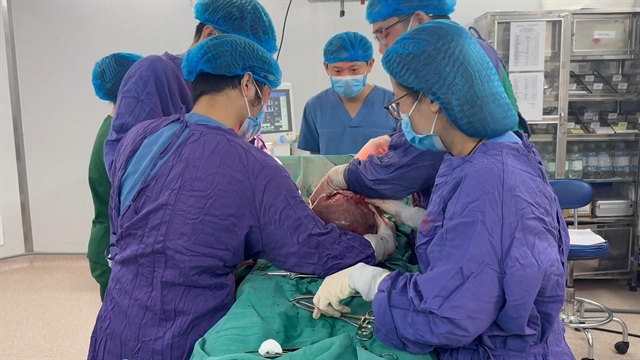
| Nguyễn Nguyễn Thái Bảo, deputy director of the Trauma and Orthopaedics – Plastic Surgery Centre (left) conducts a surgery. — VNA/VNS Photo Mai Trang |
HUẾ — As they seek new drivers of growth, the ability to attract and retain talent is becoming a key measure of competitiveness for each locality and for the nation as a whole.
For Huế, a city rich in cultural heritage and development potential, attracting talent goes beyond simplly inviting people and has become a structured long-term strategy.
The Central Huế Hospital is gradually establishing itself as a specialised medical centre for Southeast Asia, supported by a plan to attract and retain talent, particularly professionals from developed countries.
Mastering medical advancements
When she discovered that her daughter Uyên had malignant bone sarcoma, Trần Thị Tâm An, who lives in Huế, never imagined that her child’s life would one day return to normal. Now, alongside helping with housework and caring for her younger sibling, Uyên is able to go hiking with her family.
Just a few months ago, she faced the risk of having her entire leg amputated due to malignant bone sarcoma. After three rounds of chemotherapy, doctors recommended amputation. It was a critical period when the child had to confront the possibility of losing part of her body in order to survive.
After a multi-specialty consultation, Dr Nguyễn Thái Bảo, deputy director of the Trauma and Orthopaedics – Plastic Surgery Centre under the Central Huế Hospital, opted for a limb-preserving approach by removing the cancerous bone segment and replacing it with artificial material combined with a hinged joint above.
The surgery was successful. It was the first successful treatment of this disease in central Việt Nam and the Central Highlands last year. After surgery, Uyên recovered well, continued chemotherapy and underwent functional rehabilitation training.
Dr Bảo was once known as the champion of the National Golden Bell Ringing Contest in 2009 and runner-up of Road to Olympia Peak 2004.
He studied and worked at the Hamamatsu University Medical Hospital in Japan. In an international environment, he received a systematic scientific training system and was trained through multiple levels for advanced surgical techniques.
According to Bảo, the biggest difference between domestic and foreign environments is structure and training conditions. Abroad, experience is passed on systematically between generations, giving young doctors a solid foundation from the outset. He believes working conditions and remuneration are not the decisive factors. The most important element is personal goals and the desire to contribute. It was this that led him to return to Huế, the place he has been attached to since childhood.
“I think everyone will have concerns when facing such a choice. But every environment has difficulties, the important thing is to have a clear direction to overcome them. Central Huế Hospital is a place to apply what you learn, supported by teachers and the board of directors to develop,” Bảo said.
Last year, Bảo and his colleagues implemented many advanced techniques for the first time at the Central Huế Hospital and in the region, including hinged knee joint replacement, limb-preserving replacement for cancer patients, replacement of half the femur and hip joint for patients with long-segment bone resorption, tendon transfer for patients with irreparable rotator cuff injuries and development of arthroscopic surgery and specialised sports medicine.
Huế is homeland
On the journey to develop specialised medicine, Huế has also been shaped by the contributions of dedicated foreign experts.
At the Paediatric Centre of the Central Huế Hospital, many people recall Kazuyo Watanabe, President of the Asian Childcare Federation. For paediatric cancer patients and their families, she is affectionately known as the Japanese mother.
Nearly 30 years attached to Huế, Kazuyo Watanabe has made major contributions to improving paediatric cancer treatment quality. In 2018, she supported the construction of the fifth floor of the Paediatric Centre, used for the Paediatric Oncology – Haematology – Bone Marrow Transplant Ward and helped provide modern medical equipment.
She also facilitated training opportunities abroad for doctors and nurses in paediatric oncology. Thanks to this, the survival rate of paediatric cancer patients at the hospital has increased significantly from about 20 per cent in 2014 to 70 per cent in 2024.
More importantly, she has helped connect international experts to Huế, helping raise the professional capacity of the medical workforce.
Kazuyo Watanabe said: “Huế has become my second homeland. I want to continue accompanying the hospital and community to better care for paediatric cancer patients, helping them have more opportunities to live.”
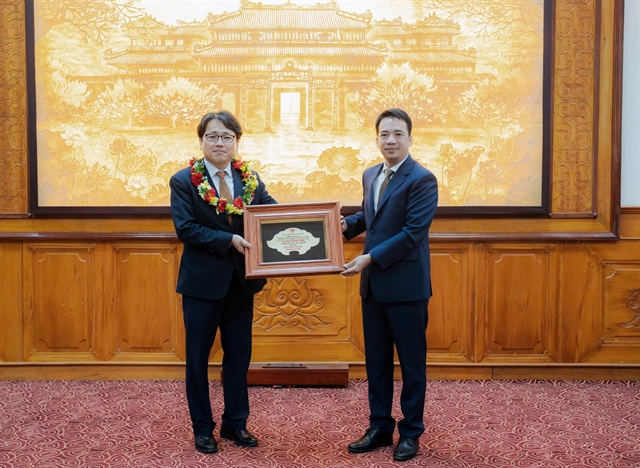 |
| Deputy Chairman of the Huế City People's Committee, Trần Hữu Thùy Giang, presents the "Honorary Citizen of Huế City" title to Kang Bong Jun. — VNA/VNS Photo Nguyên Lý |
For more than 15 years, Kang Bong Jun, a South Korean national and this year's Honourary Citizen of Huế City, has supported and taken part in a range of community projects in the city such as: Adjusting Huế City Master Plan (2011-2024); facilitating connection between businesses to organise programmes including Annual International Forum, promoting high-tech development cooperation by inviting South Korean information technology companies, and teaching students in Huế.
Kang Bong Jun said he would continue to promote cooperation between Huế and South Korean partners in urban planning, high technology and community development, helping the city become more globally integrated.
According to Deputy Chairman of Huế City's People's Committee Trần Hữu Thùy Giang, the locality always considers attracting and effectively utilising foreign experts as a key solution for preserving and developing its heritage.
Huế is continuing to improve its mechanisms and policies to facilitate the participation of international organisations and individuals in local projects, while strengthening cooperation in areas such as health care and education.
The city not only seek external support but also proactively learns to enhance its internal capacity. Its goal is to build a sustainable model in which heritage is preserved as a living resource, contributing to economic growth and improving people's quality of life.
Attracting talent
Amid the growing movement of high-quality human resources, attracting talent and foreigners coming to work is no longer Huế's work alone but has become an urgent requirement for the country.
Nguyễn Nguyễn Thái Bảo, deputy director of the Trauma and Orthopaedics – Plastic Surgery Centre, said that Huế should focus on two key factors. First, it needs competitive remuneration policies that enable professionals to live comfortably and commit fully to their work, not only in terms of income but also quality of life for their family, including education, healthcare, housing and long-term stability. Second, it should foster an open working environment that allow individuals to fully develop their capabilities, with performance-based evaluation rather than seniority, while encouraging innovation and the implementation of new ideas.
Nguyễn Văn Định, who studied in Japan before returning to work at the University of Economics under Huế University, noted that to attract talent, the city needs to create favourable investment conditions for businesses and research centres in sectors such as the digital economy, specialised health care, logistics and green technology.
In addition, sharing success stories of those who have returned, along with promoting Huế as a liveable city with green, clean, peaceful surroundings, rich cultural heritage, diverse cuisine and low living costs, can help position it as a place where talented individuals can enjoy a comfortable life while pursuing their passions and contributing to serving their homeland.
From a managerial perspective, Nguyễn Thị Thu Hương, deputy director of Huế City's Department of Science and Technology said the city introduced policies and resolutions to support scientific research, technology development, innovation and digital transformation.
In the near future, the city will continue to develop support mechanisms, improve the working environment and create opportunities suited to local conditions in order to attract, recognise and retain leading scientists.
Deputy Chairman Trần Hữu Thùy Giang added that the city was STRENGTHENING its human resources planning and development to meet its socio-economic development requirements by 2030.
Huế also aims to build a professional, transparent working environment with long-term career opportunities, while working to strengthen linkages among government agencies, educational institutions and businesses in training and using human resources. — VNS
Society
 Society
 Society
 Society
 Society
 Society
 Society
 Society
 Society
 Society
 Society
 Society
 Society
 Society
 Society